
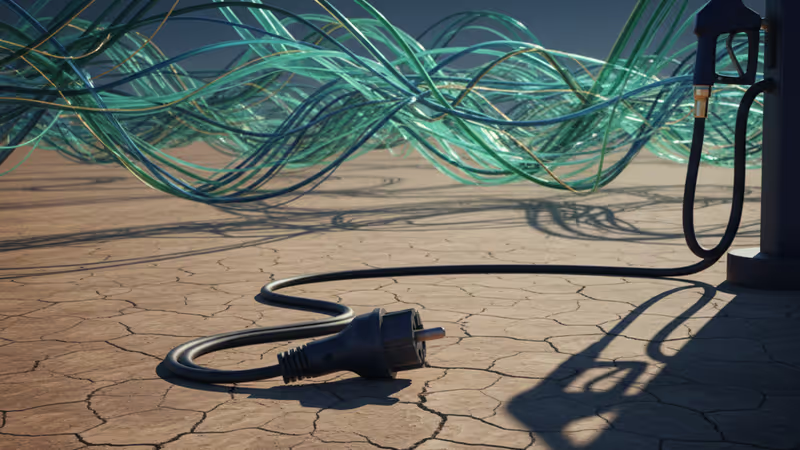
EV Gold Rush Is Over: Automakers Pivot Back to Gas Guzzlers After Billions Burned
The EV euphoria in the U.S. auto industry is over. Automakers like GM and Ford are pulling back on EV investments after billions in losses, pivoting back to profitable gas trucks and hybrids as consumer demand stalls.
The U.S. auto industry’s electric vehicle euphoria has slammed into a wall of realism. After wasting billions on an all-electric future that consumers didn't fully embrace, giants like and are hitting the brakes. They're now scaling back ambitious EV plans and refocusing on what sells: large, profitable gas-guzzling trucks and SUVs, with many executives admitting that government policies, not customers, were driving the charge.
A Costly Miscalculation
The financial fallout from this pivot is staggering. announced last week it expects to record about in special charges related to its restructuring and EV pullback. Meanwhile, has already disclosed a impact from its own scale-back, with more write-downs expected.
"We're following customers to where the market is, not where people thought it was going to be," CEO told CNBC. His counterpart at , CEO , noted it’s “too early to tell” what true EV demand is, suggesting the next six months will reveal the market’s natural level without heavy-handed incentives.
The Data Tells the Story
The numbers confirm the downturn. According to , U.S. EV sales peaked in September at of the new vehicle market, just before the administration killed federal incentives of up to . In the fourth quarter, that demand plummeted to a preliminary . Experts now believe the EV timeline is being “recalibrated.” forecasts EVs will make up of the U.S. market by 2030—a respectable figure, but one that doesn't justify the colossal upfront investments.
The 'Tesla Delusion' and the Rise of Hybrids
A core strategic error, analysts say, was misinterpreting ’s success. "Tesla wasn't creating a battery-electric vehicle market. They created a market for the Tesla brand," said Stephanie Brinley of . Consumers were making a "tech-buy," not simply choosing an EV. When legacy automakers tried to replicate this, they found customers weren't interested. Now, the industry is embracing what calls the "mosaic of powertrains." is refocusing on hybrids, plans to offer plug-in hybrids, and even is allocating production for hybrids at its new Georgia plant.
The era of rewarding 'all-in' EV strategies is over. For investors, the focus is shifting from pure-play EV growth stories to automakers with flexible production capabilities. Companies that can pivot between EVs, hybrids, and traditional ICE vehicles based on real-time market demand are now positioned as the more resilient, and potentially more profitable, long-term investments.
本コンテンツはAIが原文記事を基に要約・分析したものです。正確性に努めていますが、誤りがある可能性があります。原文の確認をお勧めします。
関連記事

テスラ株が過去最高値を更新。ロボタクシーへの期待が株価を押し上げる一方、販売不振や『マスク・リスク』も顕在化。投資家が知るべき光と影を専門家が徹底分析します。
ファイルコイン(FIL)が2.2%下落。$1.33の抵抗線で機関投資家の売りが観測される一方、$1.28のサポートラインでは強い買い支えが見られ、今後の方向性が注目されます。
約20年の低収益に苦しんできた日本板硝子(NSG)が、英子会社の技術を活かし、次世代の超薄型「ペロブスカイト太陽電池」向け素材事業に注力。高付加価値製品で業績回復を目指す戦略を解説します。
12月23日、CoinDesk 20指数が0.8%下落し暗号資産市場は全面安。特にUniswap (UNI) は3.7%急落。2025年は機関投資家の参入など構造的進展とは裏腹に価格は低迷。市場の背景と今後の見通しを分析します。