
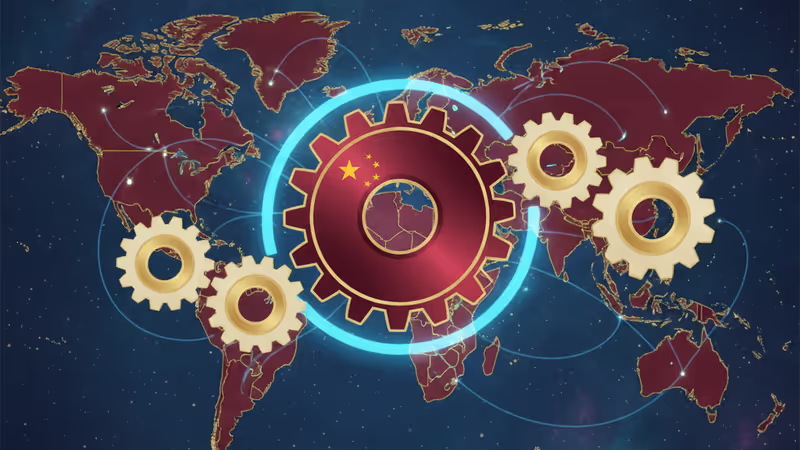
China Taps the Brakes on Steel Exports, Signaling Move to Ease Trade Friction
China is set to impose an export licensing system on steel products from January 1, a strategic move seen as an attempt to cool rising trade tensions with its new, vital export partners in the developing world.
China has announced it will implement an export licensing system for around 300 steel products starting January 1. While technical on its face, the move is being interpreted as a clear signal that Beijing is proactively trying to manage a significant source of trade friction with its crucial emerging market partners.
The policy's intent becomes clearer in the broader context of China's shifting trade landscape this year. Amid rising global protectionism, China’s export sector has shown remarkable resilience. Even as shipments to its largest market, the United States, dropped by 18.3% year-on-year in the first 11 months, China’s overall exports still managed to grow by 6.2%.
This resilience is partly due to strong performance in high-tech exports like EVs, batteries, and solar equipment. But just as critical, according to analysis from the South China Morning Post, has been a deliberate pivot to emerging markets—especially in Southeast Asia, Africa, and Latin America—where trade barriers are lower and demand is growing. These markets are increasingly vital for keeping China's export engine running.
Yet these new relationships are becoming delicate. While most developing economies haven't adopted an openly adversarial stance, trade frictions are accumulating, with steel emerging as the most visible flashpoint.
From early last year through September this year, China faced 54 trade remedy cases targeting its steel exports—more than in the previous five years combined. Last year alone saw countries like Brazil, South Africa, and Turkey impose new anti-dumping duties. This year, Vietnam and Malaysia, China's largest and third-largest trading partners among developing countries, followed suit. Mexico also recently introduced tariffs of up to 50% on steel imports from several Asian countries, including China.
本コンテンツはAIが原文記事を基に要約・分析したものです。正確性に努めていますが、誤りがある可能性があります。原文の確認をお勧めします。
関連記事
トランプ前大統領が「史上最強」の軍艦建造計画を宣言。しかし米海軍は1カ月前、コスト超過を理由に別の新型艦計画を中止しており、野心的な公約と厳しい現実のギャップが浮き彫りになっています。
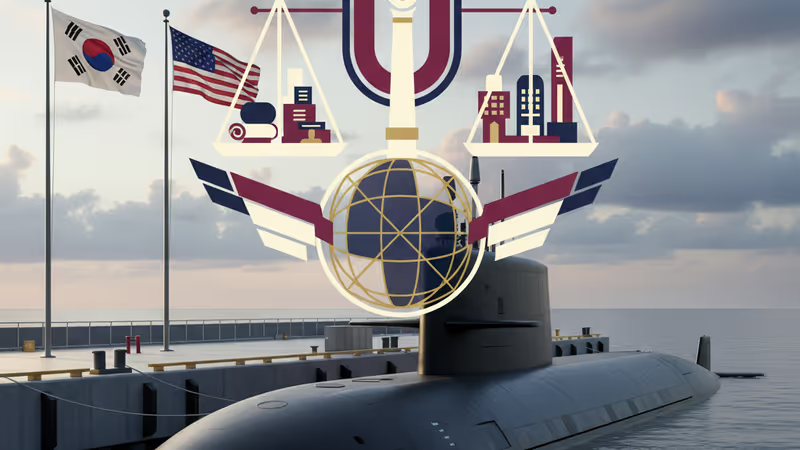
米国海軍のロサンゼルス級攻撃型原子力潜水艦「USSグリーンビル」が23日、韓国の釜山港に入港。韓国海軍は、今回の寄港が韓米の連携強化と連合防衛態勢の強化に繋がるとの声明を発表しました。
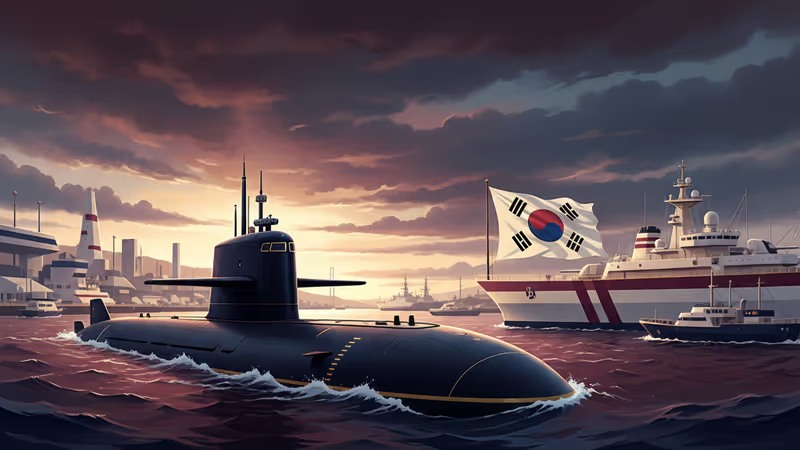
米海軍の原子力潜水艦USSグリーンビルが韓国・釜山に寄港しました。李在明政権発足後初の寄港で、米韓の連携強化が図られる一方、北朝鮮はこうした動きに警戒を強めています。

ロイター通信の報道によると、トランプ前政権の発足後5ヶ月で米国農務省(USDA)の職員が約2万人減少。政権の採用凍結や予算削減方針が背景にあると見られています。