
Lawful Seizure or Modern Piracy? The US-Venezuela Oil Tanker Standoff
Are U.S. seizures of Venezuelan oil tankers lawful sanctions enforcement or a form of modern piracy? An analysis of the geopolitical and legal battle shaping the rules of global trade.
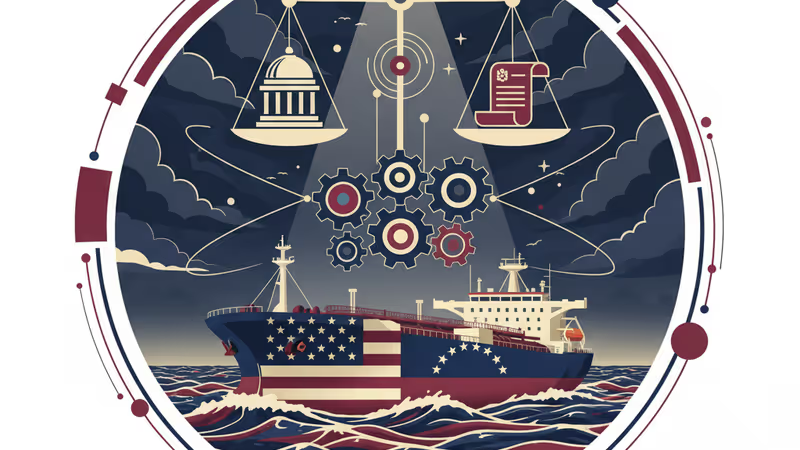
When the United States seizes an oil tanker carrying Venezuelan crude on the high seas, is it lawfully enforcing international sanctions or committing an act of state-sponsored piracy? This question lies at the heart of a contentious geopolitical battle, pushing the boundaries of international law and setting a potentially dangerous precedent for global trade.
Washington's Rationale: Sanctions Enforcement
The U.S. Department of Justice (DOJ) argues its actions are a legitimate part of its sanctions regime against the government of Nicolás Maduro. Washington's position is that proceeds from oil sales by the state-owned oil company, PDVSA, are a primary source of funding for a corrupt regime implicated in human rights abuses. Citing its own domestic laws, the U.S. uses civil forfeiture proceedings to claim ownership of the crude, arguing the oil represents the proceeds of illicit activity.
**Context:** Since 2017, the U.S. has imposed sweeping sanctions on Venezuela, targeting the Maduro government and PDVSA for what it calls the undermining of democracy. These sanctions prohibit U.S. persons and entities from engaging in most transactions with them and can be extended to foreign entities through 'secondary sanctions'.
Caracas's Condemnation: 'An Act of Piracy'
Conversely, the Venezuelan government decries the seizures as 'theft' and 'modern piracy.' Officials in Caracas maintain that America's unilateral sanctions lack a basis in international law and that forcefully taking sovereign assets in international waters is a flagrant violation of its national sovereignty. They frame the seizures as a key component of an economic war waged by the U.S. to cripple their nation's economy.
A Venezuelan official has previously stated that Washington's "illegal and coercive measures threaten free trade and maritime navigation."
A Gray Area in International Law
The dispute highlights a deep-seated ambiguity in maritime law. While the United Nations Convention on the Law of the Sea (UNCLOS) enshrines the principle of freedom of navigation on the high seas, it provides exceptions for universal crimes like piracy. The U.S. attempts to justify the seizures by framing sanctions violations under its domestic law as illicit activity. However, many international legal experts question the legality of extraterritorially applying one nation's domestic laws to another nation's flag-bearing vessel in international waters. It's a move, critics argue, that could empower powerful states to arbitrarily disrupt the commerce of their rivals.
本コンテンツはAIが原文記事を基に要約・分析したものです。正確性に努めていますが、誤りがある可能性があります。原文の確認をお勧めします。
関連記事

ガザ、シリアからジャーナリストへの攻撃まで。一連のドキュメンタリー映像が、現代の「終わらない戦争」と情報戦の現実を暴く。紛争の連鎖がもたらす地球規模の脅威とは。
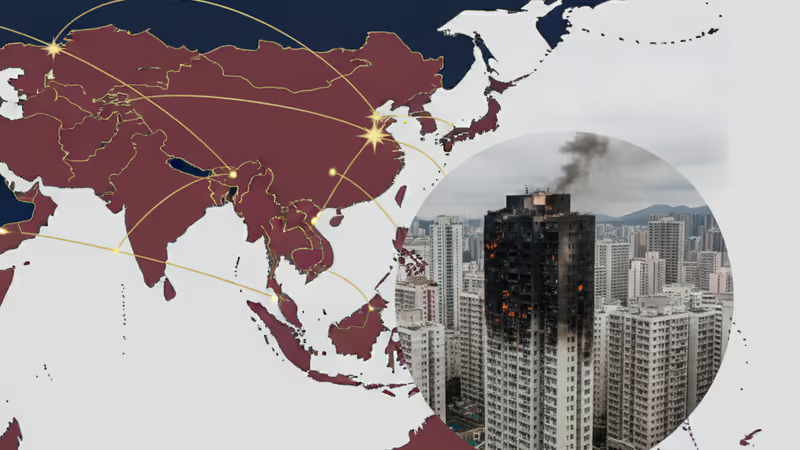
香港・大埔区の公共住宅で発生し159人が犠牲となった大火災。この悲劇は、平均5年の待機期間を要する香港の深刻な住宅危機を浮き彫りにし、政治・経済・社会に広範な影響を及ぼしている。災害対応を超えた、都市の根本的な課題を分析する。
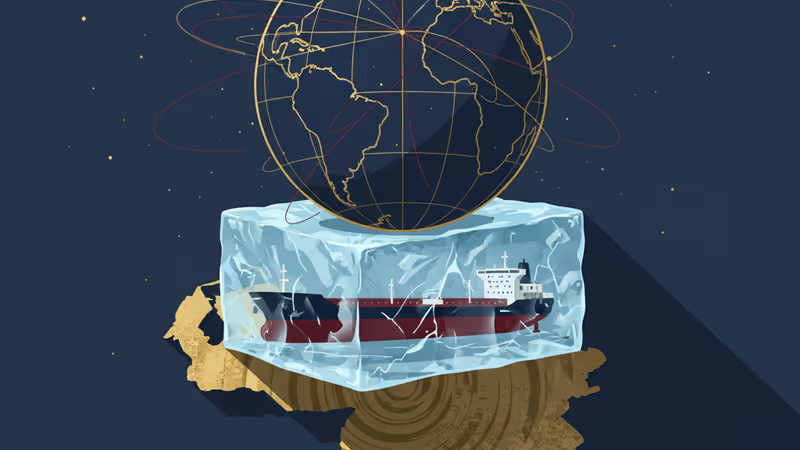
米下院軍事委員会の民主党トップ、アダム・スミス議員が、トランプ政権によるベネズエラ石油封鎖の真の目的はマドゥロ大統領の政権転覆にあると指摘。米国の対外強硬策の狙いを巡り、議論が広がっています。
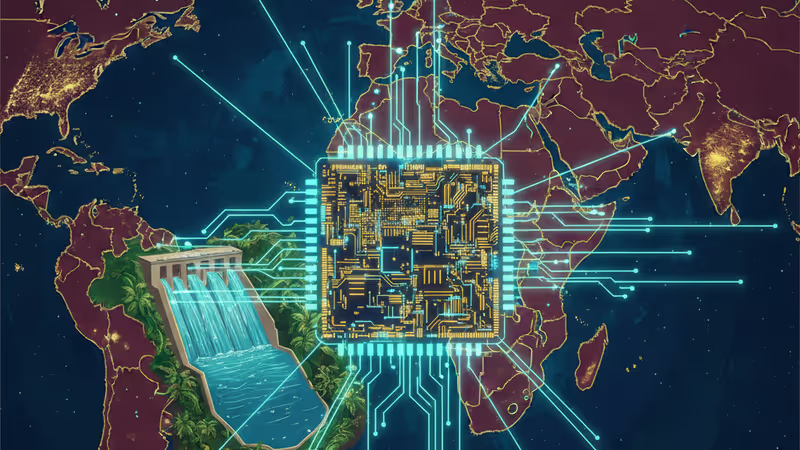
マレーシアの辺境と見なされてきたサラワク州が、なぜ今「グリーン経済大国」として急浮上しているのか。半島部の政治的混乱を好機に変え、独自のリーダーシップでエネルギーとハイテク産業の未来を切り拓くサラワクの戦略を解説します。