
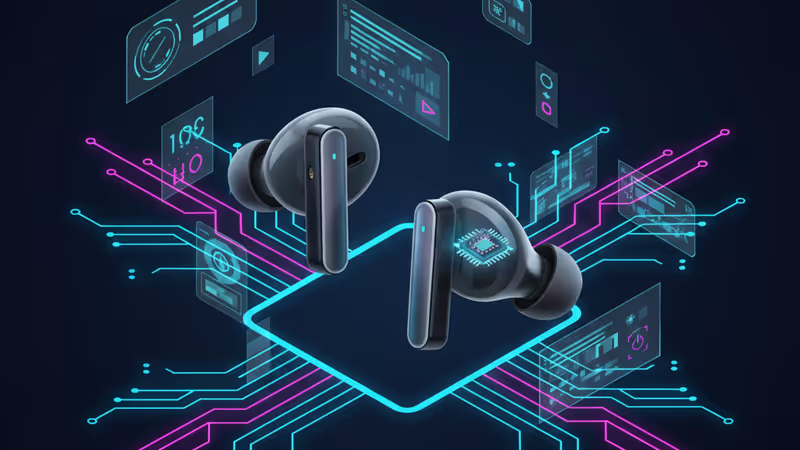
Beyond Audio: Apple's AirPods Are Quietly Becoming Your Next Computer
Apple's new AirPods are more than just earbuds. Discover our expert analysis on how they're becoming a platform for health, AI, and ambient computing.
The Lede: The Ear as the New Interface
While consumers compare noise cancellation and battery life on Apple's latest AirPods, they're missing the bigger picture. The introduction of the AirPods Pro 3, with its integrated heart rate sensor and live translation capabilities, isn't merely an incremental product update. It's a strategic masterstroke that signals Apple's true ambition: to transform the earbud from a simple audio accessory into a powerful, ambient computing platform. This isn't about selling better headphones; it's about colonizing the next major human-computer interface—your ear.
Why It Matters: The Second-Order Effects
This strategic pivot has profound implications beyond the personal audio market. By embedding advanced sensors and AI-driven features directly into a device millions wear for hours daily, Apple is creating a persistent, intimate connection to its ecosystem. The second-order effects are significant:
- Data Capture: It positions AirPods as a key data-gathering node for the Apple Health ecosystem, potentially rivaling the Apple Watch for biometric tracking fidelity and consistency.
- Industry Disruption: It directly challenges specialized markets, from fitness trackers like Oura and Whoop to dedicated translation device manufacturers.
- Behavioral Shift: It accelerates the move towards a voice-first, screen-less interaction model, further reducing reliance on the iPhone for quick tasks and information retrieval.
The Analysis: Deconstructing Apple's 'Hearables' Strategy
From Accessory to Platform
The original AirPods, launched in 2016, were a solution to a problem Apple created: removing the headphone jack. Today, the AirPods Pro 3 is a platform in itself. The inclusion of a heart rate sensor, as detailed in recent reviews, is the most overt sign of this shift. It transforms a listening device into a wellness tool, collecting high-value health data from the ear—a location anatomists will tell you is excellent for measuring vital signs. This isn't a gimmick; it's a deliberate expansion of Apple's Health moat, making the ecosystem stickier and more integrated into the user's life.
The Geopolitics of a Live Translator
The live translation feature is another Trojan horse. On the surface, it's a convenient travel tool. Strategically, it's an AI-powered service that positions Apple as an indispensable tool for global business and communication. This puts direct pressure on Google's Pixel Buds and a host of translation apps, leveraging Apple's hardware-software integration to offer a seamless experience that third-party solutions struggle to match. It's another brick in the wall of the Apple ecosystem, built with the mortar of artificial intelligence.
Segmentation as a Strategic Weapon
Apple's lineup—from the entry-level AirPods 4 to the sensor-packed Pro 3 and the high-fidelity AirPods Max—is a masterclass in strategic segmentation. The choice is no longer just about sound quality or noise cancellation. It's about access to a new tier of functionality. By reserving features like health tracking and advanced ANC for the premium Pro model, Apple isn't just upselling consumers; it's segmenting them into different levels of ecosystem integration. The $249 price point for the Pro 3 isn't just for hardware; it's the entry fee to Apple's ambient computing future.
PRISM Insight: The Ambient Computing Race
Technology & Future Outlook: We are witnessing the maturation of the 'hearables' market, where the device in your ear becomes a constant, intelligent companion. Unlike smart glasses, which have faced social and aesthetic hurdles, earbuds are socially accepted and can be worn for extended periods. The AirPods are Apple's beachhead in the war for ambient computing—a future where intelligence is layered over our reality, mediated not by a screen we look at, but by an assistant we listen to. The next logical steps are deeper integration with Apple Intelligence for proactive assistance and a seamless audio link to the Vision Pro, creating a sensory computing suite that is unmatched.
Business & Industry Implications: Businesses built around single-purpose wearable devices should be on high alert. When a platform giant like Apple integrates your core feature into a device that already has mass adoption, your value proposition is immediately threatened. Conversely, this creates opportunities for software developers. Imagine fitness apps that leverage real-time heart rate data from AirPods, or travel apps that integrate with the live translation API. The ear is becoming a new frontier for app development, and companies that recognize this shift will gain a significant first-mover advantage.
PRISM's Take
Apple is no longer in the headphone business; it's in the personal augmentation business. The latest AirPods lineup is the clearest evidence yet that the company views the ear canal as real estate for its next major platform. By seamlessly blending audio entertainment with health monitoring and AI-driven utilities, Apple is making a powerful argument that its ecosystem is not something you merely use, but something you inhabit. The long-term strategy is to make its devices so integrated into the fabric of our daily sensory experience that leaving the ecosystem becomes not just an inconvenience, but a genuine downgrade to one's capabilities. The AirPods are the quiet, unassuming vanguard of this ambient future.
関連記事

InstacartがAIで顧客ごとに価格を最大23%も変動させていたことが発覚。これは単なる値上げではない。アルゴリズムによる価格差別の実態と、消費者が取るべき対策を専門家が解説。

Uber Oneが同意なき課金と『解約地獄』で米23州から提訴。急成長するサブスク経済に潜む『ダークパターン』の問題点と消費者が知るべき自衛策を専門家が解説。

AIの急成長を支えるデータセンターが、地域住民の電気料金を急騰させている問題が浮上。米上院が調査を開始し、巨大テック企業の社会的責任が問われています。

GrindrはAIとヘルスケアを軸に「ゲイ版スーパーアプリ」への進化を目指す。CEOが語る壮大なビジョンと、プライバシー問題という根深い課題を専門家が徹底分析。