

LG, the king of OLED, is launching a flagship Micro RGB (Mini-LED) TV. Our analysis breaks down why this strategic pivot is a bombshell for Samsung and the entire TV industry.

Renowned pianist Lim Dong Hyek's recent crisis opened a crucial dialogue on the immense pressures artists face. We analyze the public response and cultural context.

A critical React vulnerability, React2Shell, is being actively exploited. Our analysis reveals why it's a systemic risk to crypto platforms and the modern web.
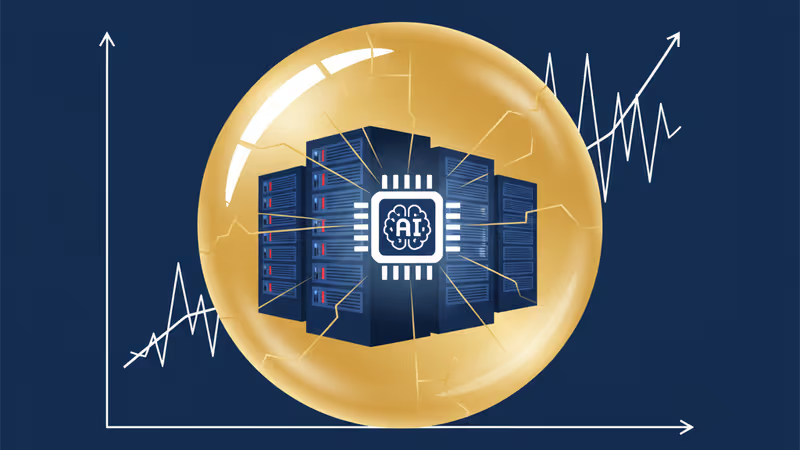
AI infrastructure stocks like Oracle and Broadcom are falling on debt concerns. PRISM analyzes if this is a temporary dip or the start of a sector-wide bubble.

OpenAI's comms chief Hannah Wong is leaving. Her exit signals a major strategic shift from crisis management to corporate maturity. Here's what it means for the AI industry.

BNY is enabling 20,000 employees to build AI agents with OpenAI. Our analysis reveals why this is a radical shift in enterprise AI strategy, not just another tech rollout.

BBVA's deal to give 120,000 employees ChatGPT isn't a pilot—it's a radical bet on an AI-native future. Our analysis on why it changes everything for banking.

Top VCs warn consumer AI startups are building 'flashlight apps' destined to be crushed by platform players. Discover why we're in a 2009-era stall and what it takes to survive.

Nvidia's Nemotron AI models are not just a new product. It's a strategic masterstroke to dominate the full AI stack and counter rivals. Here's what it really means.
OpenAI's quiet GPT-5.2 release isn't a minor update; it's a strategic signal that the AI hype cycle is over. Discover what this shift means for investors.

Beyond chatbots: OpenAI's GPT-5.2 excels at math and science, signaling a shift from creative AI to verifiable, industrial-grade reasoning. What this means for R&D and investment.

OpenAI's 28-day development of Sora for Android using AI isn't just about speed. It signals a fundamental shift in software creation that will impact investors, CTOs, and developers.