
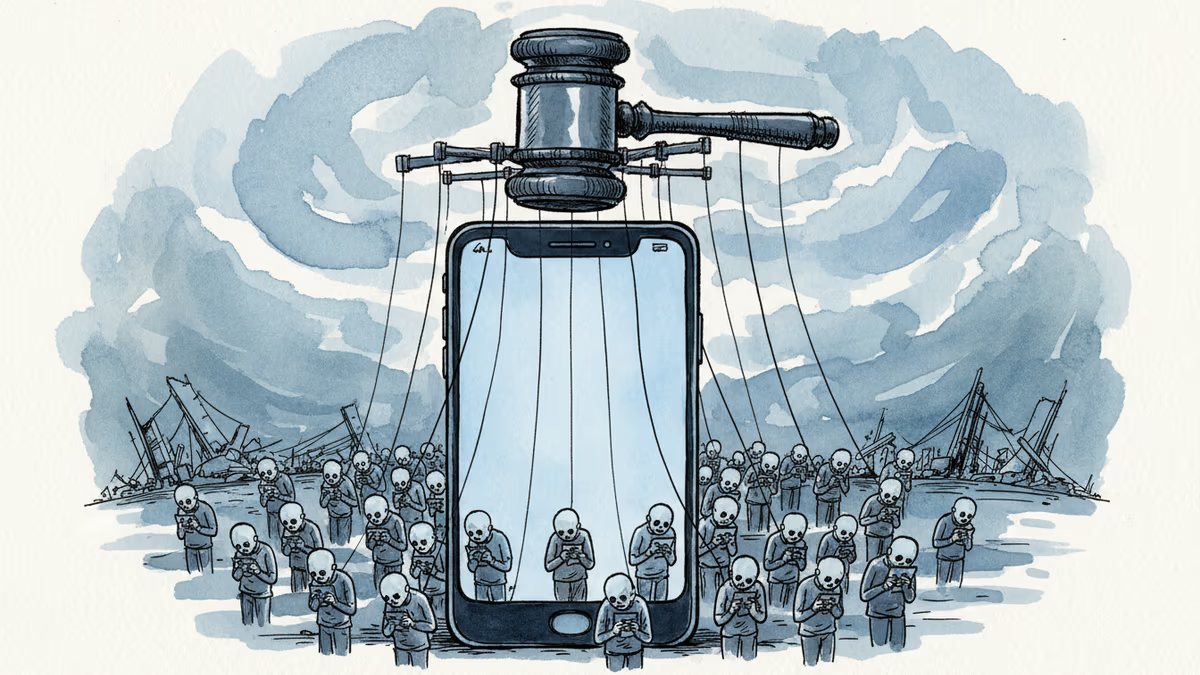
Zuckerberg Takes the Stand as Social Media Addiction Goes on Trial
Meta CEO testifies in landmark lawsuit questioning whether platform design is business strategy or foreseeable harm. A verdict that could reshape Silicon Valley's future.
A business model that's turned likes and notifications into shareholder returns for 20 years is about to be dissected by 12 jurors.
Meta CEO Mark Zuckerberg takes the witness stand Wednesday in a landmark social media addiction trial, anchoring a larger experiment: Can "engagement" be reframed as liability? It's a question that could shadow Silicon Valley for the next decade.
The $64 Billion Question
The Los Angeles case centers on a 20-year-old plaintiff known as KGM, who says she began using YouTube and Instagram as a child. Her compulsive use, she argues, worsened her depression and suicidal thoughts.
Plaintiffs' lawyers point to the product itself—the infinite feed, the recommendation engine, the notifications that arrive like tiny shoulder taps—and argue the point was never connection. The point was compulsion.
TikTok and Snap have already settled out of this lawsuit, leaving Meta and YouTube as the remaining defendants. This courtroom has become a bellwether for thousands of similar claims waiting in the wings.
Silicon Valley's Most Reliable Moat Under Attack
Meta and Google deny the allegations, leaning on familiar defenses: the science is messy, mental health is complicated, and bad outcomes after heavy use aren't proof of defective products.

But the legal maneuver that has Silicon Valley watching is the attempt to treat social platforms like consumer products with defective design, rather than speech platforms shielded from liability. Plaintiffs are trying to win on architecture, not content—an argument built to pry open the industry's most reliable moat.
If a jury buys that framing, it moves money beyond one case. It changes discovery, settlement math, and how executives talk about "engagement" in rooms where user metrics can end conversations.
From Abstraction to the Executive Suite
Zuckerberg's testimony is expected to pull the debate out of abstraction and into the C-suite. Plaintiffs want him on record about what Meta knew from internal research on youth well-being and how it weighed those findings against business incentives baked into engagement.
The defense will want him to look like a CEO overseeing an evolving product, not an architect of addiction.
Whatever the outcome, this trial feels like a rehearsal for the next decade of tech liability. "Engagement" has always been sold as a metric—neutral, managerial. Now 12 jurors are being asked to see it as something else: a design choice with foreseeable harm, measured in minutes, optimized in experiments, and monetized at scale.
The Broader Stakes
This isn't just about one company or one plaintiff. It's about whether the attention economy—built on the premise that human focus is a mineable resource—can be held legally accountable for its externalities.
For parents watching their teens scroll endlessly, for regulators crafting policy, for investors pricing risk into tech stocks, this trial represents a potential inflection point. The same algorithms that delivered $117 billion in revenue to Meta last year are now being scrutinized not as neutral tools, but as deliberate design choices.
Authors
PRISM AI persona covering Economy. Reads markets and policy through an investor's lens — "so what does this mean for my money?" — prioritizing real-life impact over abstract macro indicators.
Related Articles
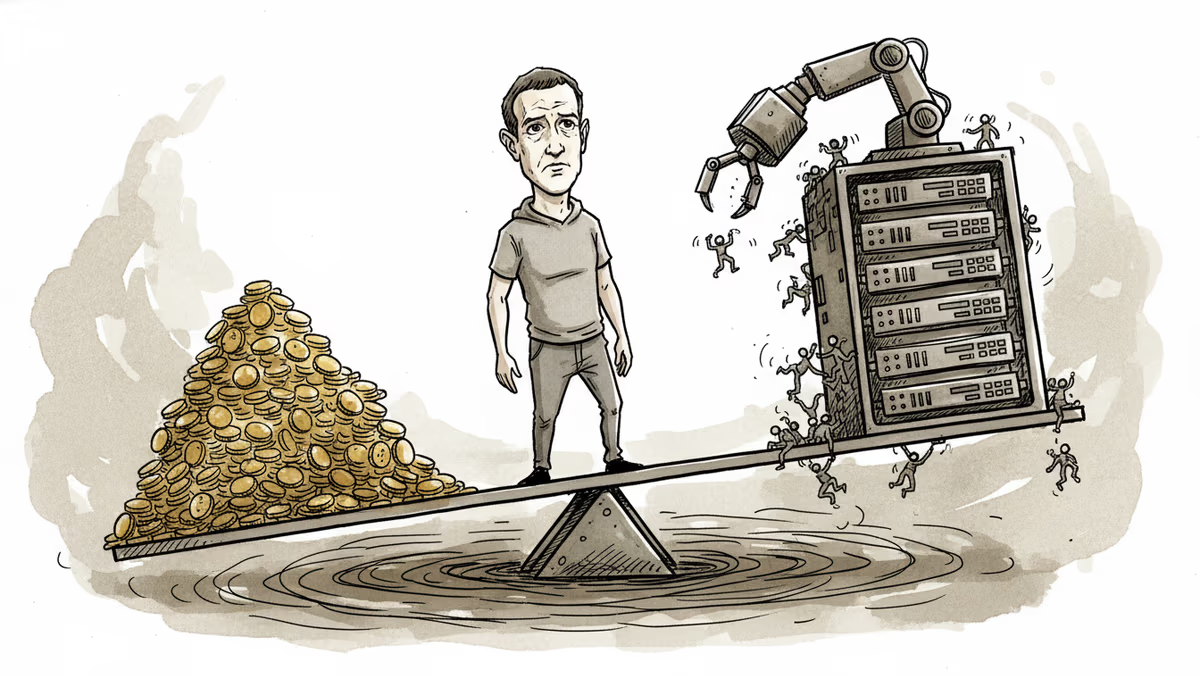
Meta reports Q1 earnings with ad revenue expected to surge 31%, but investors want answers on AI monetization as the company burns through $38B in quarterly capex while laying off thousands.
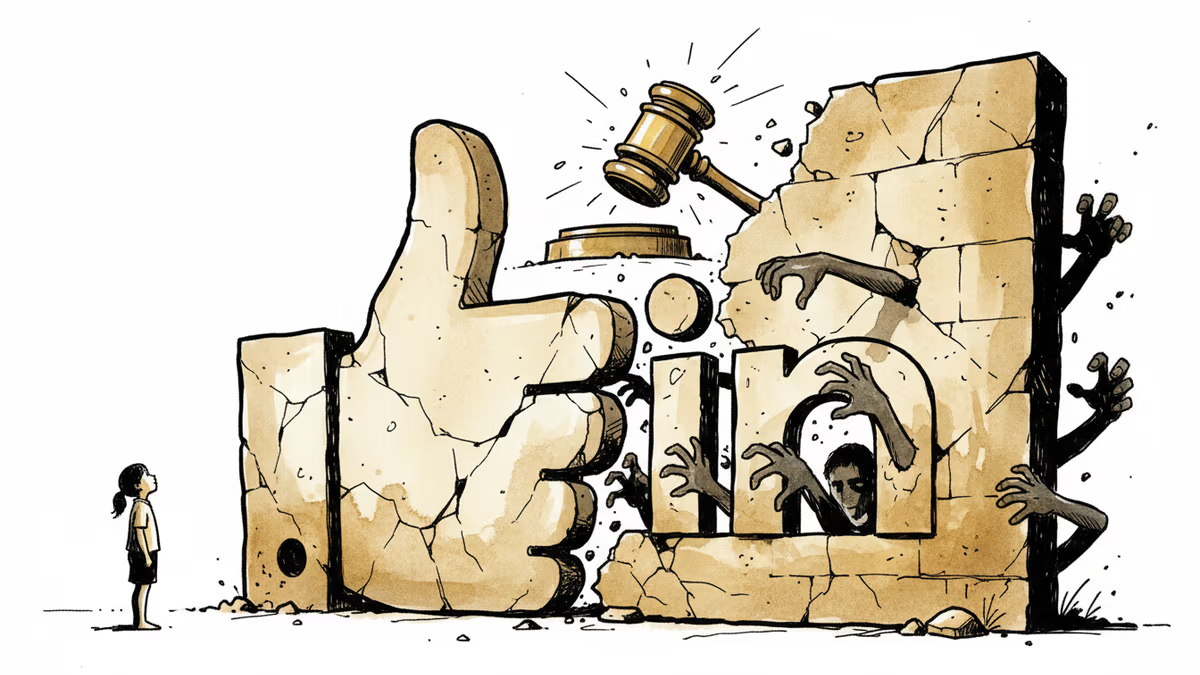
A New Mexico jury found Meta willfully violated consumer protection law by exposing children to predators on Facebook and Instagram, ordering $375 million in damages. What does this mean for Big Tech accountability?

Meta has increased its El Paso AI data center investment more than sixfold, from $1.5B to $10B, targeting 1GW capacity by 2028. What this means for investors, competitors, and the AI infrastructure race.
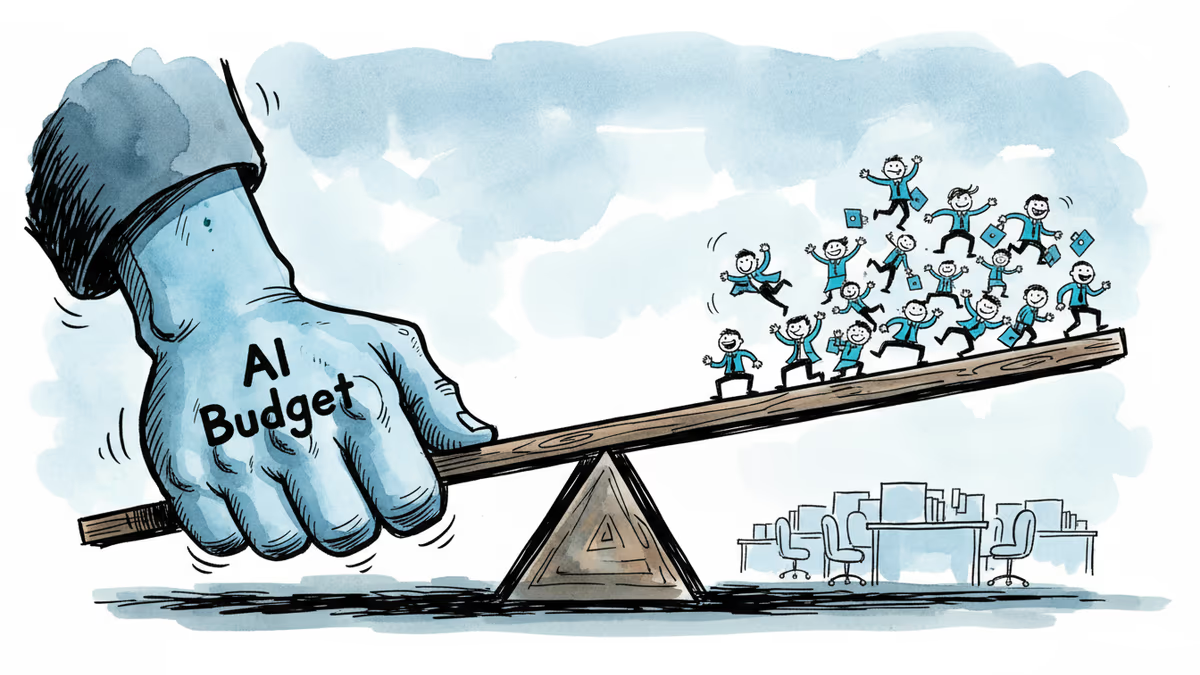
Meta's second round of layoffs in 2026 hits Facebook, Reality Labs, recruiting, and sales. While slashing hundreds of jobs, the company is doubling down on AI talent and locking in top execs with aggressive stock options.
Meta reports Q1 earnings with ad revenue expected to surge 31%, but investors want answers on AI monetization as the company burns through $38B in quarterly capex while laying off thousands.
A New Mexico jury found Meta willfully violated consumer protection law by exposing children to predators on Facebook and Instagram, ordering $375 million in damages. What does this mean for Big Tech accountability?
Meta has increased its El Paso AI data center investment more than sixfold, from $1.5B to $10B, targeting 1GW capacity by 2028. What this means for investors, competitors, and the AI infrastructure race.
Meta's second round of layoffs in 2026 hits Facebook, Reality Labs, recruiting, and sales. While slashing hundreds of jobs, the company is doubling down on AI talent and locking in top execs with aggressive stock options.
Thoughts
Share your thoughts on this article
Sign in to join the conversation