
Inside Zillow's 20-Year War Over America's Housing Data
Zillow CEO Jeremy Wacksman reveals the complex politics behind real estate databases and how AI threatens to reshape the entire industry. A deep dive into platform power and data control.
The Most Complex Database War You've Never Heard Of
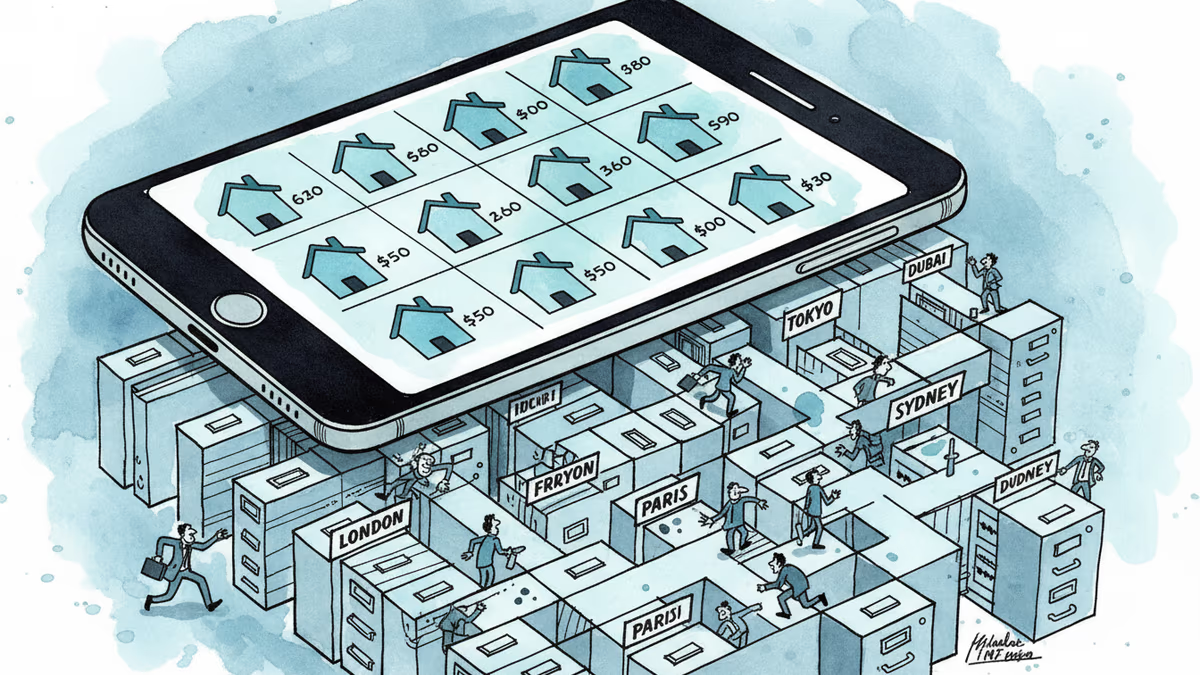
When you casually browse house prices on Zillow during your lunch break, you're participating in what might be the most politically charged database aggregation in America. Behind that simple "What's this house worth?" lies a 20-year battle over who controls real estate information—and CEO Jeremy Wacksman just revealed how messy it really gets.
Zillow didn't start as a platform. It began as a simple premise: why should home buyers be locked out of pricing data that real estate professionals hoarded? "We're the only country in the world that works this way," Wacksman explains, referring to America's unique system where listing data gets shared across over 500 different regional databases maintained by local realtor groups.
But here's the twist—this "public good" isn't actually that public.
The 24-Hour Rule That Sparked a Lawsuit
Zillow's most controversial policy sounds simple: if a property goes on sale, it must appear on Zillow within 24 hours, or it can't appear there at all. This rule has sparked a major lawsuit with Compass, a high-end real estate firm that wants to control when and where its listings appear.
Wacksman's defense cuts to the heart of platform power: "When you're selling a good, you want to advertise to as much demand as possible, as quickly as possible." But some brokerages see an opportunity in the post-settlement world where realtor fees are now negotiable. They're trying to create closed ecosystems where they can pre-negotiate those fees among themselves.
It's classic aggregation theory in action. Zillow built massive consumer demand, and now they're using that leverage to set terms for suppliers—in this case, real estate agents who need access to Zillow's audience.
From App to Everything: The Vertical Integration Play

What's fascinating about Zillow's evolution is how it moved from "great mobile app for browsing houses" to "we'll handle your entire transaction." The company now originates mortgages, builds software for agents, and measures success not by page views but by transaction volume.
This shift reveals something crucial about platform economics in mature markets. When your core database becomes commoditized—remember, all real estate sites show the same listings—you have to climb the value chain. Zillow went from showcasing public data to creating proprietary workflows that agents actually depend on.
The numbers tell the story: despite 80% of Zillow's traffic coming directly to the site, the company still captures only single-digit market share of actual transactions. There's enormous room to grow, even in a frozen housing market where transaction volume has dropped from 6 million homes annually to just 4 million.
The AI Threat That's Different This Time
Every platform CEO gets asked about AI disruption, but Wacksman's answer reveals why real estate might be different. "You're buying a house once every 14 years," he points out. "This isn't ordering shoes on Amazon."
But the threat is real. If your AI assistant can directly query multiple listing services, why open the Zillow app? Wacksman's bet is that the transaction complexity creates a moat. You might ask Siri for a house price, but you'll still need Zillow's integrated software when it's time to actually buy.
The company is already preparing: AI-generated virtual tours, drone flyovers, and what they call "Showcase" technology that creates more realistic property views. But this creates new problems—the platform is now flooded with over-processed photos and AI-generated staging that bears little resemblance to reality.
The Agency Problem Nobody Talks About
Perhaps the most interesting tension Wacksman revealed is around user agency. Real estate agents increasingly feel constrained by platform rules, yet they depend on Zillow for leads. Buyers have access to more information than ever, yet feel overwhelmed by limited housing supply and high prices.
Zillow's solution? Give agents better software tools while maintaining strict transparency rules. It's a delicate balance between platform control and participant empowerment—one that will likely define the next phase of real estate technology.
Authors
Related Articles

Zillow climate risk data removal leaves home buyers without critical flood and fire info. Learn why accuracy concerns led to this major transparency shift.

Amazon's Alexa+ is adding integrations with Expedia, Yelp, Angi, and Square, launching in 2026. Discover how the AI assistant is evolving into a powerful app platform for booking and services.

Threads now has 150M daily users. Our analysis reveals why this isn't just growth, but Meta's strategic weaponization of its ecosystem against competitors like X.

OpenAI's ChatGPT app store is a strategic Trojan horse to own the next computing platform, igniting the AI platform wars against Google and Apple. Analysis.
Zillow climate risk data removal leaves home buyers without critical flood and fire info. Learn why accuracy concerns led to this major transparency shift.
Amazon's Alexa+ is adding integrations with Expedia, Yelp, Angi, and Square, launching in 2026. Discover how the AI assistant is evolving into a powerful app platform for booking and services.
Threads now has 150M daily users. Our analysis reveals why this isn't just growth, but Meta's strategic weaponization of its ecosystem against competitors like X.
OpenAI's ChatGPT app store is a strategic Trojan horse to own the next computing platform, igniting the AI platform wars against Google and Apple. Analysis.
Thoughts
Share your thoughts on this article
Sign in to join the conversation