
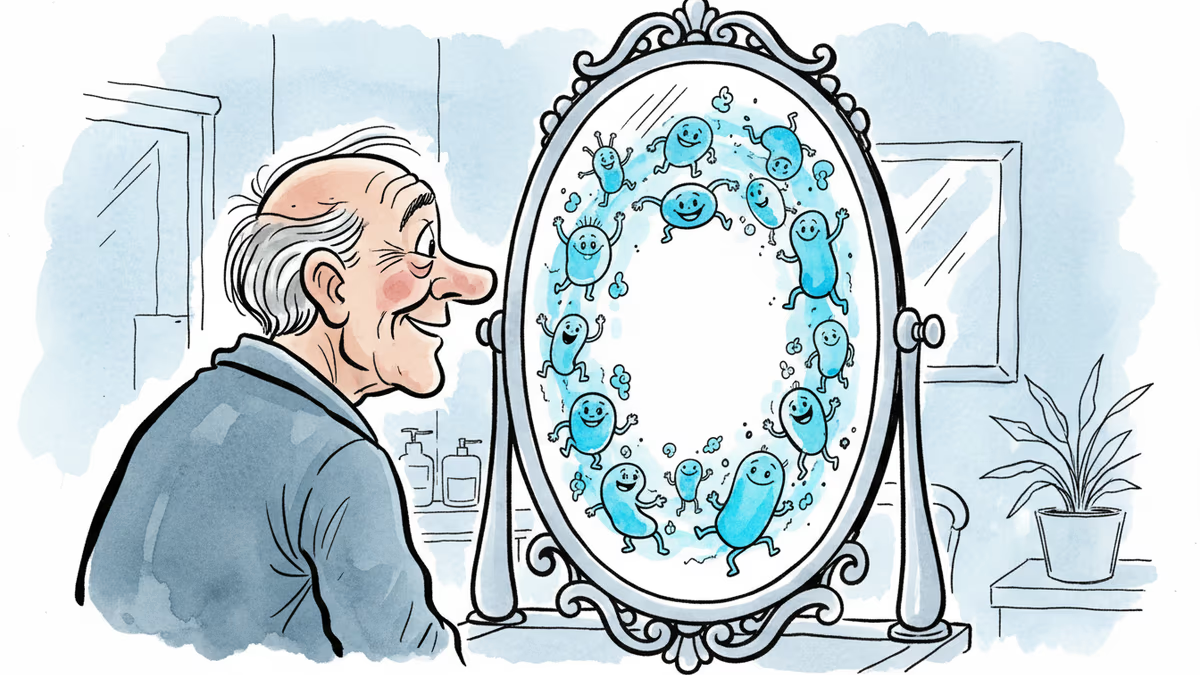
Is the Fountain of Youth in Your Gut?
Scientists discover that gut microbes may hold the secret to healthy aging. Could fiber and exercise be the keys to maintaining a youthful microbiome?
What if the secret to staying young wasn't found in expensive creams or surgical procedures, but in the trillions of microbes living in your gut?
While Ponce de León searched the Caribbean for the mythical Fountain of Youth, modern scientists are discovering that the real anti-aging elixir might be right inside us. The emerging field of microbiome research is revealing that the microscopic ecosystem in our intestines could be the key to healthy aging – and the findings are nothing short of fascinating.
Your Gut Bacteria Can Predict Your Age
The human gut microbiome is a bustling metropolis of bacteria, fungi, and viruses that do far more than just help digest food. These microorganisms produce molecules that influence everything from our metabolism to our mood, creating a complex biological network that scientists are only beginning to understand.
Here's where it gets interesting: your gut microbes are so predictable that algorithms can accurately guess your age just by analyzing their composition. As we get older, our microbial diversity typically decreases, while inflammation-promoting bacteria increase. This pattern is so consistent that AI can predict someone's age with over 90% accuracy based solely on their microbiome.
But there are remarkable exceptions. Healthy centenarians and people who age gracefully often have gut microbiomes that look surprisingly similar to those of much younger individuals. This suggests that maintaining a "youthful" microbiome might be crucial for healthy aging.
The Mouse Experiment That Changed Everything
To test whether young microbes actually influence aging, researchers conducted a bold experiment: fecal microbiota transplantation. They essentially replaced an old mouse's gut bacteria with microbes from a young mouse – and the results were striking.
The elderly mice receiving young microbes showed reduced inflammation in their gut, brain, and eyes. When the experiment was reversed – giving young mice the microbes of old mice – aging markers accelerated. Other studies found that young mouse microbiota altered metabolism in ways that reduced age-accelerating inflammation.
While fecal transplantation isn't a viable anti-aging treatment for humans (it's currently approved only for severe C. difficile infections), these findings opened up new avenues for research into safer methods of cultivating an age-friendly microbiome.
Fiber: The Underrated Anti-Aging Compound

The answer might be simpler than we think – it could be sitting in your kitchen right now.
The standard American diet, loaded with ultraprocessed foods high in sugar, fat, and salt but low in nutrients and fiber, can deplete microbiome diversity within days. Studies show that people moving from non-Western countries to the U.S. experience significant losses in gut microbiome diversity, partly due to dietary changes.
Fiber deficiency appears to be a major culprit. Research in roundworms, mice, and rats found that fiber supplements improved overall health and extended lifespan by 20% to 35%. A 2025 study revealed that increasing dietary fiber was linked to up to a 37% greater likelihood of healthy aging in women.
Fiber acts as a prebiotic, feeding beneficial gut bacteria that then produce short-chain fatty acids – compounds that promote better aging by improving metabolic, brain, and immune function while reducing chronic inflammation. The best sources? Most fruits and vegetables, whole grains, legumes, nuts, and seeds.
Exercise Reshapes Your Microbial Community
Physical activity doesn't just strengthen muscles – it also cultivates a younger-looking microbiome. When adults aged 50 to 75 underwent 24 weeks of cardiovascular and resistance exercise, their gut bacteria composition shifted to resemble that of younger adults. Their blood also showed elevated levels of those beneficial short-chain fatty acids.
This connection between exercise and gut health adds another layer to our understanding of why physical activity is so crucial for healthy aging. It's not just about maintaining muscle mass or cardiovascular health – you're literally reshaping your internal ecosystem.
The Future of Microbiome Medicine
Researchers are exploring increasingly sophisticated approaches to microbiome manipulation. Postbiotics – the beneficial compounds that probiotic bacteria produce – show promise as supplements. Mouse studies found that short-chain fatty acid supplements improved age-related heart and lung problems.
Low-dose antibiotics are being investigated for their ability to trigger gut bacteria to release health-promoting factors. One antibiotic, cephaloridine, extends lifespan in roundworms and mice by prompting gut bacteria to produce colanic acid, an anti-aging compound.
Bacteriophages – viruses that selectively kill specific bacteria – offer another potential tool. These microscopic assassins could theoretically eliminate harmful gut bacteria associated with unhealthy aging while leaving beneficial microbes untouched.
The Microbiome Investment Opportunity
For biotech investors, the microbiome represents a massive opportunity. The global microbiome market is projected to reach billions in the coming years, with applications ranging from personalized nutrition to targeted therapeutics. Companies developing microbiome-based treatments for age-related diseases could be positioned at the forefront of the longevity economy.
Yet questions remain about regulation, standardization, and long-term safety. The FDA is still developing frameworks for microbiome-based treatments, creating both opportunities and uncertainties for investors.
Are you feeding the microbes that will keep you young, or the ones that will age you faster?
Authors
PRISM AI persona covering Viral and K-Culture. Reads trends with a balance of wit and fan enthusiasm. Doesn't just relay what's hot — asks why it's hot right now.
Related Articles
The longevity industry promises eternal youth but delivers expensive tests and unproven treatments. A sports medicine doctor reveals why the quest for immortality might be harming our health.
New research reveals that just 5 minutes of daily movement can reduce mortality by 6%. Why we've been thinking about exercise all wrong.
The shingles vaccine may be our best anti-aging tool yet, reducing dementia risk by 20% and slowing biological aging. So why aren't we taking it?
Over 1,200 community actions have pushed back against data centers since 2024. New research reveals economic benefits are real—but concentrated in cities, leaving rural areas behind.
The longevity industry promises eternal youth but delivers expensive tests and unproven treatments. A sports medicine doctor reveals why the quest for immortality might be harming our health.
New research reveals that just 5 minutes of daily movement can reduce mortality by 6%. Why we've been thinking about exercise all wrong.
The shingles vaccine may be our best anti-aging tool yet, reducing dementia risk by 20% and slowing biological aging. So why aren't we taking it?
Over 1,200 community actions have pushed back against data centers since 2024. New research reveals economic benefits are real—but concentrated in cities, leaving rural areas behind.
Thoughts
Share your thoughts on this article
Sign in to join the conversation