

Yeri's Leap: What Azure Spring Reveals About K-Drama's Healing Economy
MBN's 6-episode Azure Spring premieres May 11 with Red Velvet's Yeri leading. A look at idol-to-actor transitions, the haenyeo trend, and cable drama's survival strategy against OTT giants.
What does it mean when K-drama's most recurring protagonist in 2026 is someone who failed to make it?
MBN's upcoming 6-episode series Azure Spring premieres May 11, starring Red Velvet's Yeri as a competitive swimmer whose career is cut short by injury. She retreats to her mother's island hometown, where she meets Kang Sang-joon as a cryptic haenam — a male diver, a role traditionally held by women. It's a webtoon adaptation directed by PD Jung Hun-soo (Branding in Seongsu), written by Ha Jin, with a supporting cast including Go Joo-hee and Jung Hyun-min.
On the surface, it reads like a breezy romance. Look a little closer, and it's a precise product of where Korean cable drama is right now.
The Cable Drama Playbook — And Why It Exists
The 2026 K-drama landscape is effectively split in two. At the top, Netflix and Disney+ are running high-budget prestige productions — Ppalgan season sprawls, 16-episode arcs, IP franchises with global rollout strategies. At the bottom, cable networks are surviving on something leaner: short-run, webtoon-adapted, idol-cast comfort dramas.
Azure Spring is a textbook example of the lower tier's survival formula. A 6-episode run minimizes financial exposure. A webtoon source brings a pre-existing fanbase. Casting an idol — here, Yeri in her first solo lead role — activates fandom engagement before a single episode airs. This isn't a new formula; it's been cable's default mode since roughly 2022, when OTT competition made longer, riskier bets increasingly untenable for mid-tier broadcasters.
The strategic logic is also about avoiding the algorithm, not competing with it. A tight, bingeable arc doesn't need to win a recommendation war — it just needs to land cleanly and be done.

The Idol-Actor Transition: Still a Gamble
The path from K-pop idol to drama lead was effectively institutionalized after IU's Hotel del Luna in 2019. Since then, the idol casting model has become a reliable mechanism for generating pre-launch buzz — but the outcomes remain uneven. The gap between successful transitions and forgettable ones almost always comes down to one factor: character density relative to episode count.
Yeri has prior drama experience from Bitch x Rich 2, but Azure Spring is her first top-billed role. The character she's playing — Seo Anna, rebuilding identity after athletic failure — has genuine emotional weight. Whether a 6-episode format gives that arc room to breathe, or compresses it into a series of aesthetic moments, will determine how this is remembered.
For fans, the anticipation is real. For industry watchers, it's a case study in whether short-form idol vehicles can do more than generate a news cycle.
Why a Male Diver, Why Now
The haenyeo — the female free-divers of Jeju Island — became a global cultural symbol after UNESCO added the practice to its Intangible Cultural Heritage list in 2016. Since then, the image has migrated steadily into Korean pop culture. But Azure Spring does something slightly different: it casts a man in that role.
The haenam (male diver) is a deliberate inversion. A space coded as feminine, physical, unhurried — occupied by a male lead who has also stepped outside the performance economy to find himself. It's a small but pointed choice, and it connects Azure Spring to a broader pattern in recent Korean drama: the protagonist who opts out.
My Liberation Notes (2022) gave us the burned-out office worker. Castaway Diva (2023) gave us the industry castoff staging a comeback. Welcome to Samdalri (2023) attempted similar territory — with mixed results, as some viewers found the actual drama didn't match its healing premise. Azure Spring enters this lineage with a more specific hook: the elite athlete whose body, the very instrument of their identity, has stopped cooperating.
Whether the haenam framing becomes a meaningful thread or a visual backdrop is one of the open questions heading into the premiere.
This content is AI-generated based on source articles. While we strive for accuracy, errors may occur. We recommend verifying with the original source.
Related Articles

MBC's action-comedy Fifties Professionals introduces Kwon Yul as an unpredictable new antagonist. Here's why this drama's premise matters beyond the casting news.
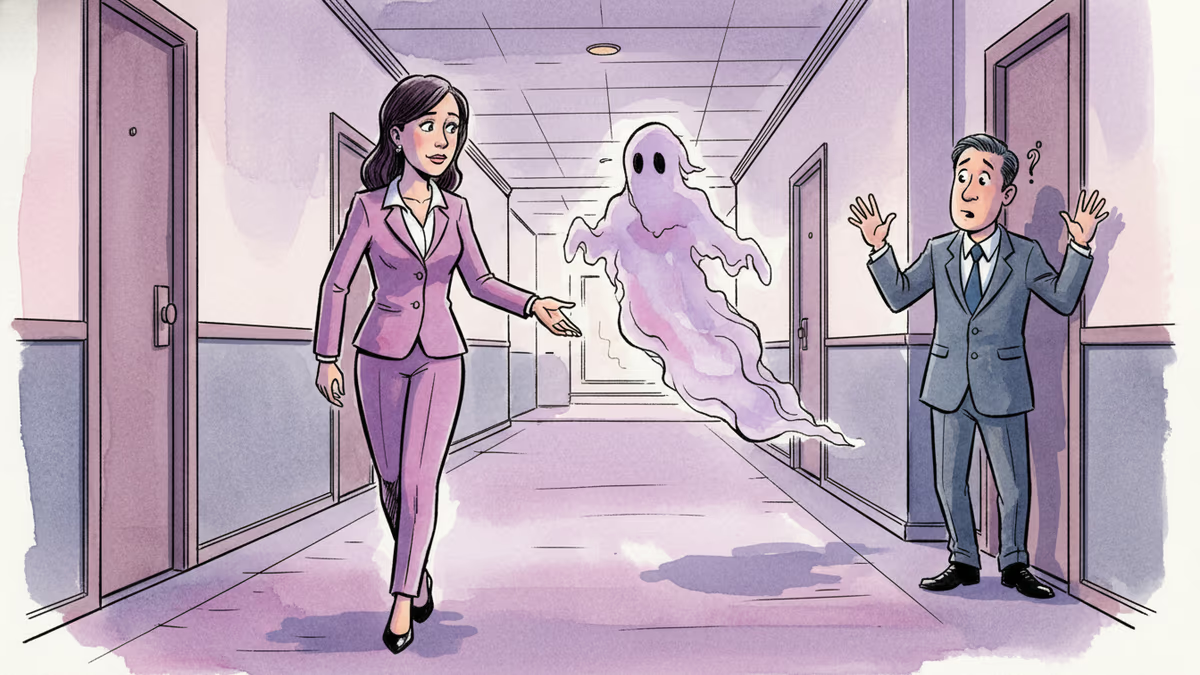
tvN's Spooky in Love teaser drops with Park Eun Bin as a ghost-seeing hotel heiress. Behind the occult romance lies a calculated industry strategy worth unpacking.
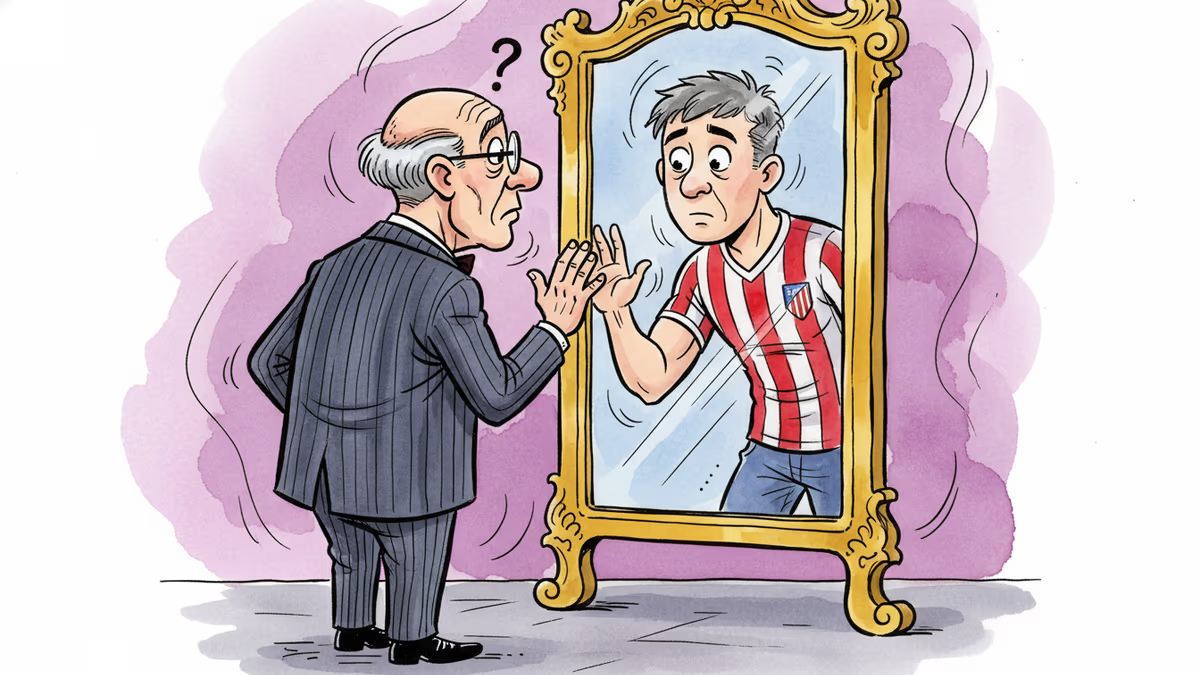
JTBC's Reborn Rookie pairs veteran actor Son Hyun Joo with idol-turned-actor Lee Jun Young in a body-swap drama. A look at the genre's industrial logic and what it signals about Korean TV's audience strategy.

JTBC's upcoming comedy crime drama Apartment casts Ji Sung, Ha Yoon-kyung, Park Byung-eun, and Moon Sori in a story where an ex-gangster enters a residents' committee election. What does the project reveal about JTBC's 2026 strategy?
MBC's action-comedy Fifties Professionals introduces Kwon Yul as an unpredictable new antagonist. Here's why this drama's premise matters beyond the casting news.
tvN's Spooky in Love teaser drops with Park Eun Bin as a ghost-seeing hotel heiress. Behind the occult romance lies a calculated industry strategy worth unpacking.
JTBC's Reborn Rookie pairs veteran actor Son Hyun Joo with idol-turned-actor Lee Jun Young in a body-swap drama. A look at the genre's industrial logic and what it signals about Korean TV's audience strategy.
JTBC's upcoming comedy crime drama Apartment casts Ji Sung, Ha Yoon-kyung, Park Byung-eun, and Moon Sori in a story where an ex-gangster enters a residents' committee election. What does the project reveal about JTBC's 2026 strategy?
Thoughts
Share your thoughts on this article
Sign in to join the conversation