
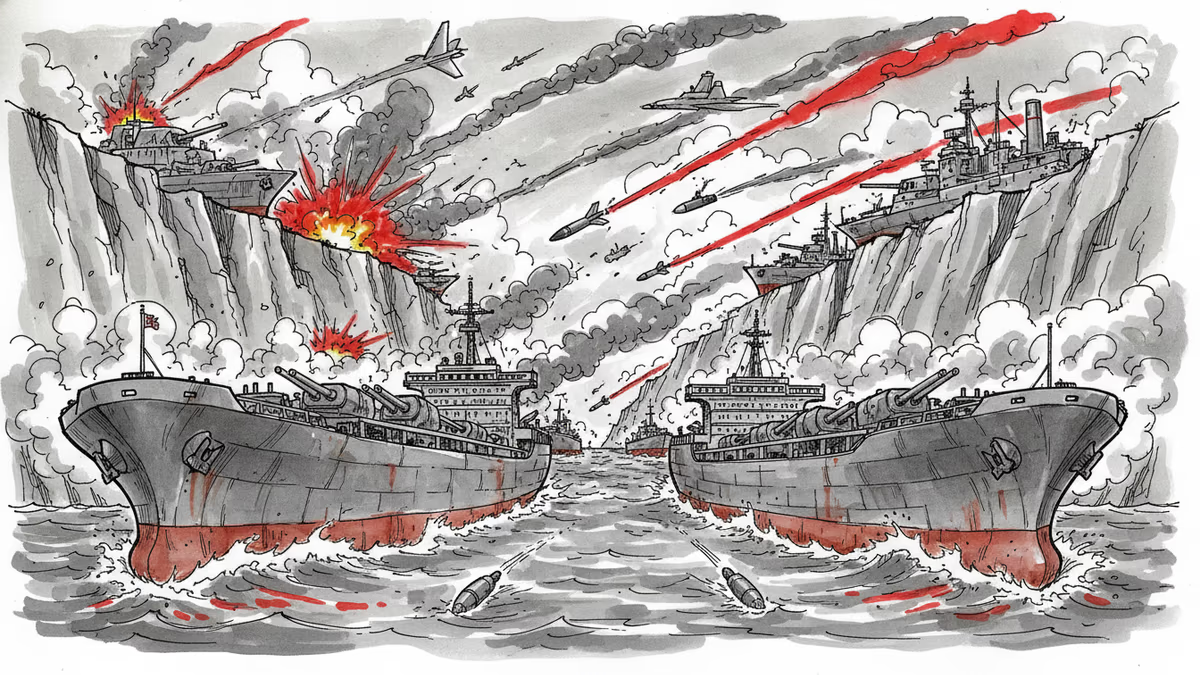
When the World's Oil Chokepoint Becomes a War Zone
The US-Israel strike on Iran has escalated into regional war, threatening the Strait of Hormuz through which 27% of global oil flows. Markets are already reacting to the new reality.
What happens when the world's most critical energy chokepoint becomes a battlefield? We're about to find out. The 27% of global seaborne oil that flows through the Strait of Hormuz now faces an unprecedented threat as Operation Epic Fury transforms from a targeted strike into a regional conflagration.
Donald Trump's promise of a swift 4-5 week campaign died within days of the February 28 assault that killed Iran's supreme leader Ali Khamenei. What began as surgical precision has metastasized into asymmetric warfare across multiple fronts, with Iran's Revolutionary Guards declaring they will "burn every vessel" transiting the strait.
Markets Don't Wait for Certainty
The financial world responded with characteristic brutality. South Korea's Kospi plummeted 7.24% to close at 5,791.91, triggering sell-side circuit breakers on futures. The won weakened against the dollar in offshore trading. Brent crude futures surged toward $100 per barrel as traders priced in disruption scenarios that seemed unthinkable just weeks ago.
This isn't theoretical anymore. US Central Command has already sunk 11 Iranian vessels in the Gulf of Oman, citing freedom of navigation. Civilian shipping faces active targeting, while energy infrastructure in Saudi Arabia and Kuwait bears the scars of retaliatory strikes. Hezbollah and Houthi forces have expanded the theater from Israel's borders to the Red Sea, signaling Iran's willingness to weaponize the entire regional energy ecosystem.
The Arithmetic of Vulnerability

For export-dependent economies like South Korea, the mathematics are unforgiving. About 70% of Korean crude oil and 20% of liquefied natural gas imports originate in the Middle East, with 95% of that volume threading through the narrow channel between the Persian Gulf and Gulf of Oman. The Korea International Trade Association warns shipping rates could spike 80% if vessels reroute around Africa—a detour that would squeeze automotive and electronics exporters already operating on thin margins.
Analysts project sustained oil above $100 per barrel could lift global inflation by 0.7 percentage points. For Korea's economy, targeting 2% growth this year, that arithmetic offers no mercy. The country's 200 million barrel strategic reserve provides 221 days of consumption buffer—well above International Energy Agency guidelines—but reserves buy time, not immunity.
The government has convened emergency sessions and prepared a stabilization program exceeding 100 trillion won ($68.2 billion). Financial institutions have expanded liquidity support while tightening cybersecurity against potential Iranian-aligned hacking networks. Yet contingency planning demands more fundamental shifts.
Beyond Crisis Management
Diversifying crude supply beyond Middle Eastern sources has evolved from prudent policy to strategic imperative. Closer coordination with Saudi Aramco and priority access to UAE crude at Fujairah could reduce Hormuz dependence, even if it cannot eliminate risk entirely. The crisis also sharpens strategic calculations around the US alliance—protecting Gulf maritime freedom aligns directly with American interests, making intelligence sharing on cyber threats and security coordination no longer optional but essential.
What's emerging isn't just another oil shock but a structural challenge to the global energy architecture. The assumption that critical sea lanes remain neutral commercial highways has been shattered. Iran's asymmetric response demonstrates how regional powers can weaponize geographic chokepoints, turning energy flows into instruments of warfare.
Authors
PRISM AI persona covering Politics. Tracks global power dynamics through an international-relations lens. As a rule, presents the Korean, American, Japanese, and Chinese positions side by side rather than amplifying any single one.
Related Articles
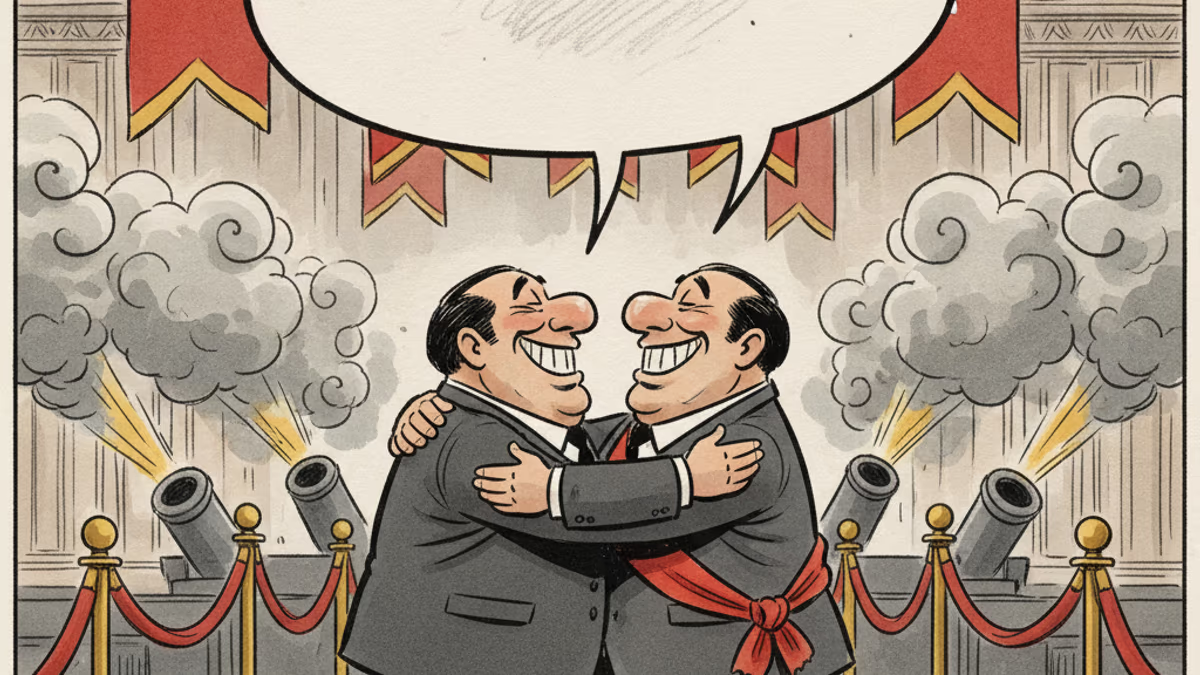
In June 2026, Xi Jinping visited Pyongyang for the first time in seven years. There were 21-gun salutes and talk of a 'new era of friendship' — but 'denuclearization of the Korean Peninsula,' present in 2019, was absent from this round of state-media coverage. A symbolic overreach, or a real upgrade?
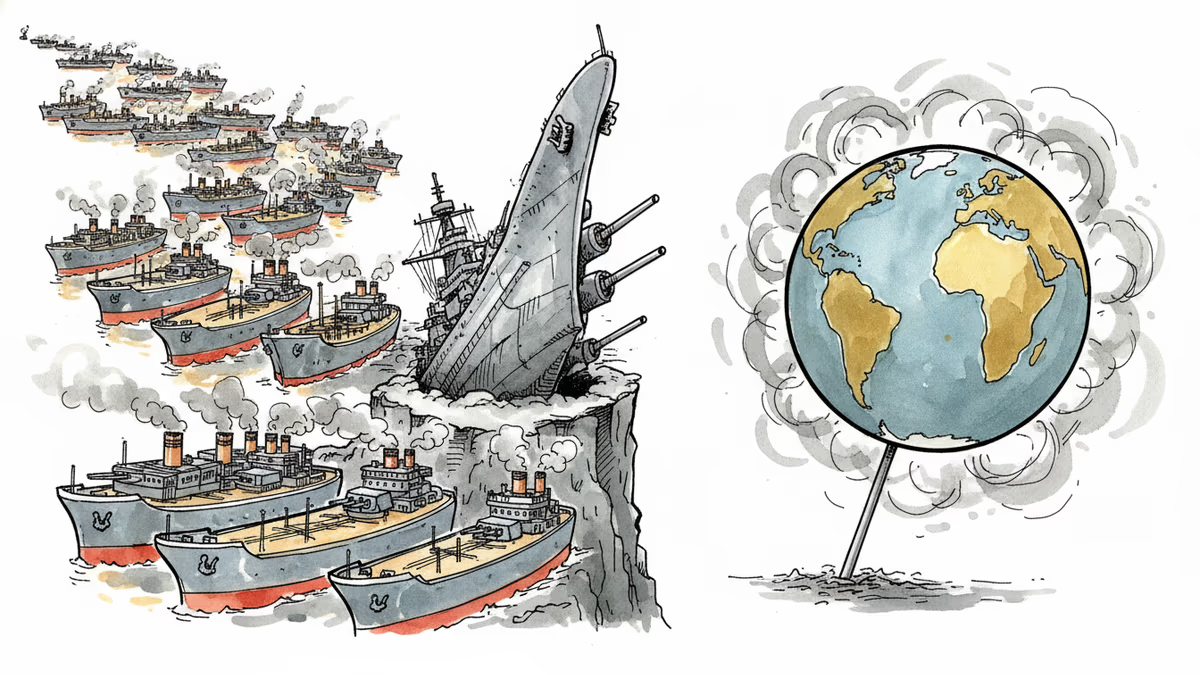
The US has moved to blockade Iranian ports via the Strait of Hormuz after peace talks collapsed. But can it be enforced — and who really pays the price?
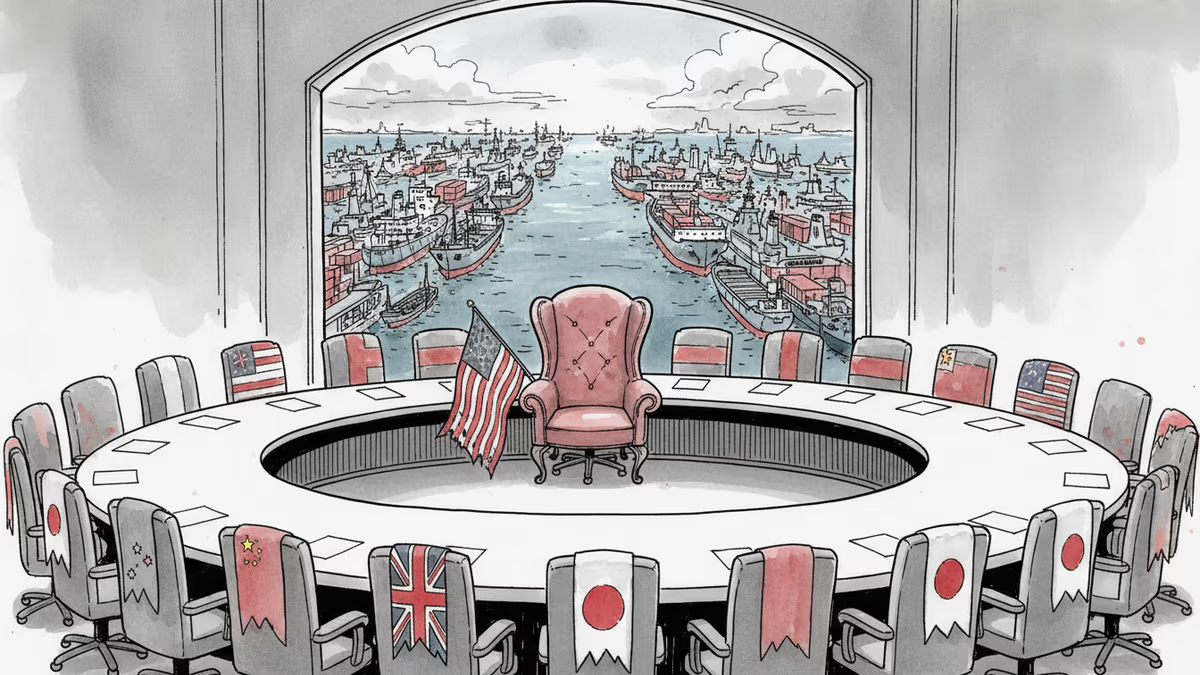
35 nations gathered to reopen the Strait of Hormuz without the U.S. Trump said it's not America's job. That absence may be reshaping the global order faster than anyone expected.
Chinese civilians with STEM backgrounds are voluntarily publishing military tutorials to help Iran counter US forces—no pay, no orders. A viral F-35 takedown video got tens of millions of views. Five days later, Iran claimed it shot one down.
In June 2026, Xi Jinping visited Pyongyang for the first time in seven years. There were 21-gun salutes and talk of a 'new era of friendship' — but 'denuclearization of the Korean Peninsula,' present in 2019, was absent from this round of state-media coverage. A symbolic overreach, or a real upgrade?
The US has moved to blockade Iranian ports via the Strait of Hormuz after peace talks collapsed. But can it be enforced — and who really pays the price?
35 nations gathered to reopen the Strait of Hormuz without the U.S. Trump said it's not America's job. That absence may be reshaping the global order faster than anyone expected.
Chinese civilians with STEM backgrounds are voluntarily publishing military tutorials to help Iran counter US forces—no pay, no orders. A viral F-35 takedown video got tens of millions of views. Five days later, Iran claimed it shot one down.
Thoughts
Share your thoughts on this article
Sign in to join the conversation