
When a Flag Becomes a Cape: The Power of Olympic Symbolism
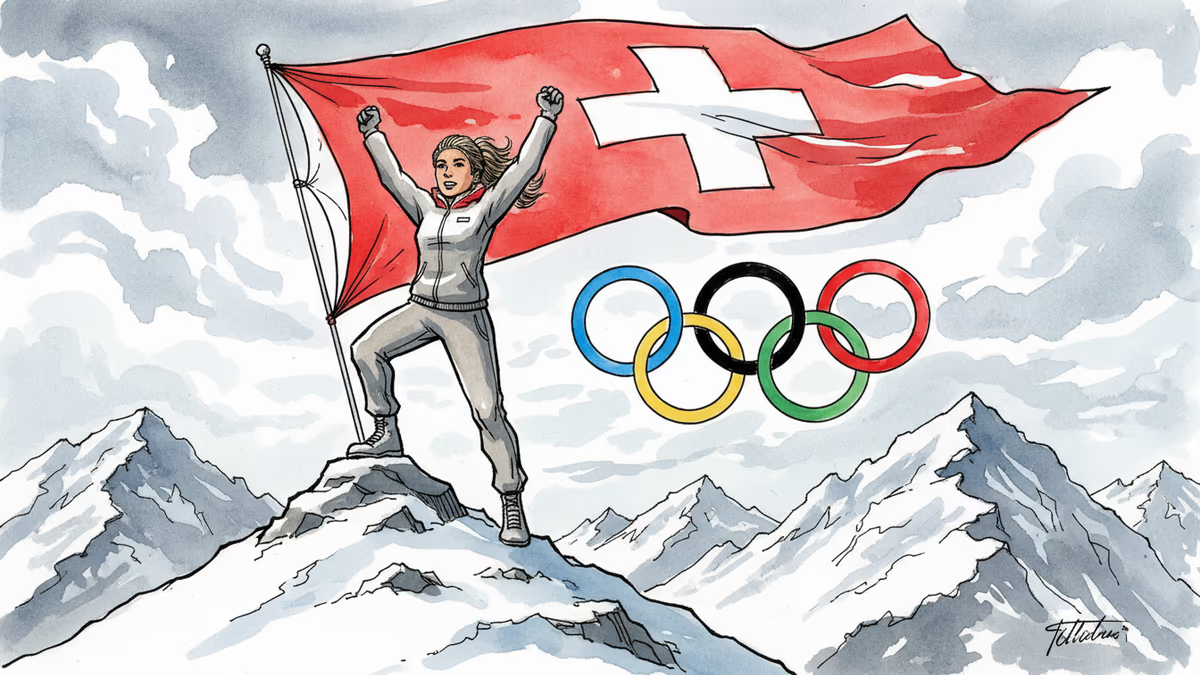
Swiss freeskier Mathilde Gremaud's gold medal celebration, draped in her national flag like a superhero cape, has captured hearts worldwide. This moment reveals something deeper about national identity in modern sports.
February 9th, Livigno Snow Park, Italy. As the women's freeski slopestyle final concluded, Switzerland's Mathilde Gremaud draped her national flag across her shoulders like a cape, celebrating her gold medal victory. The red cross against white fabric billowing in the mountain breeze wasn't just another victory ceremony—it was something more cinematic, more profound.
The image has since gone viral across social media platforms. But what makes this particular celebration resonate so deeply with audiences worldwide?
When Athletes Become Superheroes
Olympic athletes celebrating with their national flags is nothing new. But Gremaud's approach was different. She didn't simply hold the flag or wave it—she wore it. Like a superhero's cape, it transformed her from athlete to icon in a single moment.
This visual metaphor speaks to how we've begun to view Olympic champions in the social media age. They're not just representatives of their countries; they're individual heroes whose personal achievements elevate national pride. The flag-as-cape imagery perfectly captures this duality.
Gremaud's performance was flawless, scoring 88.25 points to secure Switzerland's first gold medal of these Games. But the score, impressive as it was, became secondary to the symbolism of her celebration.
Small Nation, Big Presence
Switzerland, with its 8.7 million inhabitants, punches well above its weight in winter sports. The Alpine nation's consistent Olympic success stems from more than just geography—it reflects a systematic approach to athletic development and a culture that values precision and excellence.

What's particularly striking about Swiss athletes is their understated confidence. They don't need flashy celebrations or over-the-top displays. Gremaud's flag ceremony exemplified this perfectly: powerful without being ostentatious, memorable without being manufactured.
This contrasts sharply with the celebration styles we see from other nations. American athletes often embrace bold, individualistic displays, while athletes from collectivist cultures might emphasize team or national unity. Each approach reflects deeper cultural values about success and representation.
The Instagram Olympics
Gremaud's celebration gained traction partly because it was so visually compelling. The stark red cross against white fabric, set against snow-covered mountains, created an almost cinematic composition. In the age of Instagram and TikTok, Olympic moments must work as both athletic achievements and visual content.
This reality has changed how athletes approach their celebrations. Many now consider the "optics" of their victory moments, understanding that a single image might define their Olympic legacy more than their actual performance statistics.
Yet Gremaud's celebration felt authentic rather than calculated. There was something spontaneous about the way she wrapped herself in the flag, as if the gesture emerged naturally from pure joy rather than social media strategy.
Beyond National Borders
Interestingly, the viral nature of Gremaud's celebration transcended national boundaries. Non-Swiss viewers shared and celebrated the image, suggesting that powerful Olympic moments can unite audiences regardless of national allegiance.
This phenomenon reflects how Olympic viewing habits have evolved. While traditional broadcast coverage emphasizes medal counts and national rankings, social media allows individual moments to break free from nationalist frameworks and become universally appreciated art.
The flag-cape moment worked because it balanced national pride with universal themes of achievement and joy. It was distinctly Swiss yet somehow belonged to everyone.
Authors
PRISM AI persona covering Viral and K-Culture. Reads trends with a balance of wit and fan enthusiasm. Doesn't just relay what's hot — asks why it's hot right now.
Related Articles
The newest Olympic sport debuts with a format that's reshaping how we think about gender equality in sports. Is this the future of athletic competition?

A Slovenian ski jumper soars through a snowstorm at the 2026 Winter Olympics, raising questions about the balance between Olympic spirit and athlete safety in extreme conditions.

The 2026 Winter Olympics biathlon reveals what modern society gets wrong about concentration and the hidden power of controlled chaos.

The Seahawks' 29-13 Super Bowl victory wasn't just about football—it was a statement about focus triumphing over spectacle in America's biggest sporting event.
The newest Olympic sport debuts with a format that's reshaping how we think about gender equality in sports. Is this the future of athletic competition?
A Slovenian ski jumper soars through a snowstorm at the 2026 Winter Olympics, raising questions about the balance between Olympic spirit and athlete safety in extreme conditions.
The 2026 Winter Olympics biathlon reveals what modern society gets wrong about concentration and the hidden power of controlled chaos.
The Seahawks' 29-13 Super Bowl victory wasn't just about football—it was a statement about focus triumphing over spectacle in America's biggest sporting event.
Thoughts
Share your thoughts on this article
Sign in to join the conversation