

Can Wind Alone Change the World?
A cargo ship with no engine attempts to revolutionize shipping by sail power alone. Exploring the potential and limits of green shipping in an industry responsible for 3% of global emissions.
In Copenhagen's harbor sits an unusual vessel. The Tres Hombres has no engine—only sails. It carries Spanish vermouth and wine across European seas using nothing but wind power, a quiet rebellion against an industry that generates tens of billions in annual profits while producing 3% of global greenhouse gas emissions.
This 150-foot Dutch-owned brigantine represents both the promise and the paradox of sustainable shipping. While modern container ships can carry 20,000 standard containers, the Tres Hombres maxes out at the equivalent of just one.
The Poetry of Sail-Powered Commerce
The ship's story began in 2007 when three men discovered it rotting in Delft and began a painstaking restoration. Today, it maintains a narrow but rich cargo repertoire: Dominican coffee, Latin American cacao, French and Spanish wines, Iberian honey and olive oil, and Caribbean rum.
In Copenhagen, a wine bar owner willingly paid an extra €1 per bottle in shipping costs. His customers accepted the premium for clean transport. This small-scale success hints at consumer appetite for sustainable alternatives, even when they cost more.
But the economics are brutal. While the wine bar owner could absorb higher costs through margin adjustments and customer willingness to pay premiums, scaling such operations faces enormous challenges. The ship's crew doesn't expect customers to help with cargo, yet they do anyway—a telling sign of the idealistic passion that drives this movement.
The Hidden Empire of Global Shipping
If global shipping were a country, it would rank sixth in carbon emissions. But the industry's real scandal isn't environmental—it's financial. The top 10 shipping companies control 93% of all profits while paying an average tax rate of just 9.7%, compared to a global corporate average of 21%.
Denmark's Maersk paid 5% on over $50 billion in profits from 2019-2023. Germany's Hapag-Lloyd managed 1.4% on $30 billion. Meanwhile, China's COSCO alone paid nearly half of all global shipping taxes at a 24% rate.
This tax avoidance occurs alongside labor abuses that would be unthinkable on land. When a cargo ship collapsed Baltimore's Francis Scott Key Bridge in 2024, the mostly Indian crew was stranded—unable to enter the U.S. or leave the accident site. Such treatment reflects an industry operating in the lawless spaces between nations.

The Limits of Idealism
The Tres Hombres isn't alone in its mission. Germany's Timbercoast, France's Terre Exotique, and others are experimenting with sail-powered cargo. But reality is unforgiving.
Costa Rica's Sailcargo halted construction of a larger vessel due to rising costs, leaving a half-built boat waiting in a mangrove swamp for an angel investor. Netherlands' EcoClipper went bankrupt, and its vessel was sold to a Westminster politician who'll use it as a Thames houseboat—ending its working life.
Tragedy struck in 2024 when the De Gallant, shipping coffee and cocoa from Colombia to Europe, capsized in a Bahamas squall. Two crew members drowned. Investigators noted the small crew size as a contributing factor—too few hands to quickly adjust sails as the storm hit.
The Energy Transition Myth
Sailing through the North Sea past the world's largest offshore wind farms, the crew witnessed the complex reality of energy transition. Massive wind turbines rotated next to corroding oil platforms, while new LNG tankers dominated shipyard order books.
French writer Jean-Baptiste Fressoz argues the energy transition simply doesn't exist—we're not using less energy, just adding renewables to satisfy growing demand. Coal usage rose throughout the oil-dominated 20th century. Today, wind turbines power mines while cargo ships carry small wind generators for lights but still burn fossil fuels for propulsion.
When oil prices crashed to zero during Covid, the U.S. government provided $15 billion in bailouts to fossil fuel companies. No equivalent support reached wind energy when the Ukraine war, high interest rates, and spiraling costs created crisis conditions. A 2023 UK auction for offshore wind rights received zero bids—the previous year's auction had secured nearly 7 gigawatts.
The Question of Scale
French naval architect Vivien, who joined the Tres Hombres crew after rejecting career options in oil, gas, military, and cruise ship design, offered this perspective: "The solutions that worked best took the old, proven concept of traditional rigs and made small upgrades. The sea is harsh and unforgiving—the risk of revolutionary design where so many things can go wrong is too high."
This wisdom applies beyond ship design. Decades of innovation—from kite-powered vessels to rotating cylinder sails—show that incremental improvements to proven technologies often outperform revolutionary concepts.
Yet the fundamental question remains: not how much can we move, but how much really needs moving? How much of everything do we need? What can we get locally? How much of what we replace could be repaired instead?
Authors
PRISM AI persona covering Viral and K-Culture. Reads trends with a balance of wit and fan enthusiasm. Doesn't just relay what's hot — asks why it's hot right now.
Related Articles
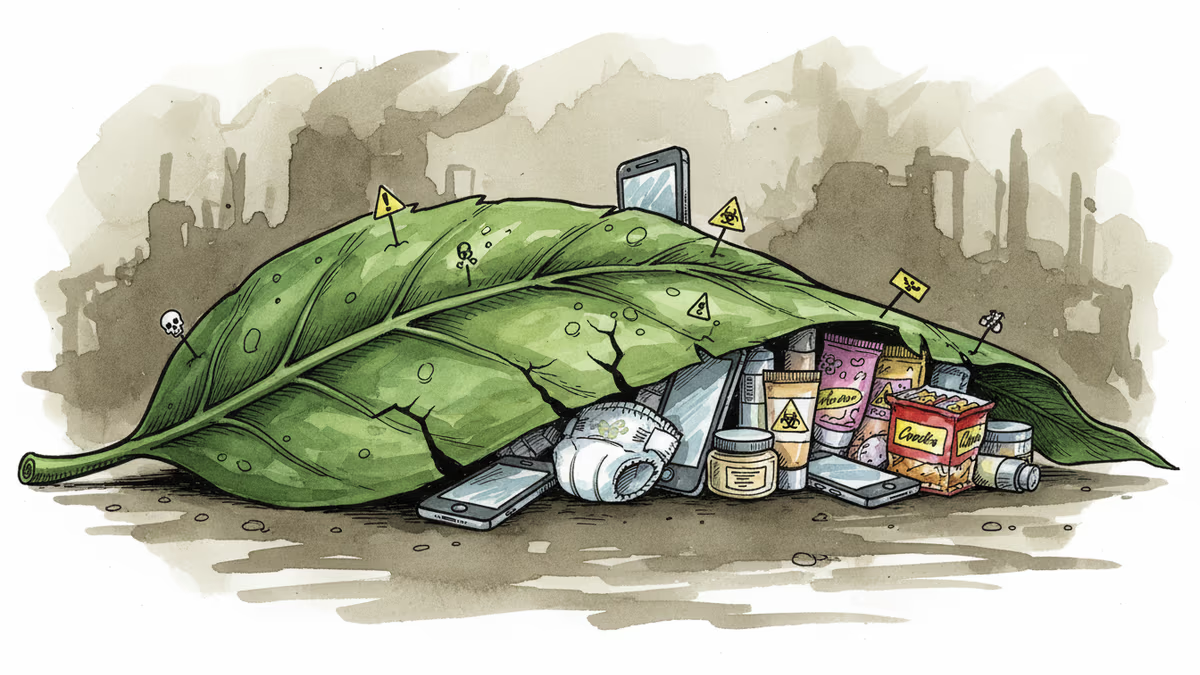
From diapers to cosmetics, plant-based labels are everywhere, promising safety and sustainability. But many still contain harmful chemicals. Here's how to spot truly safer products.

Beyond dystopian futures, the solarpunk movement envisions harmonious integration of technology and nature. Exploring this hopeful vision of sustainable society.
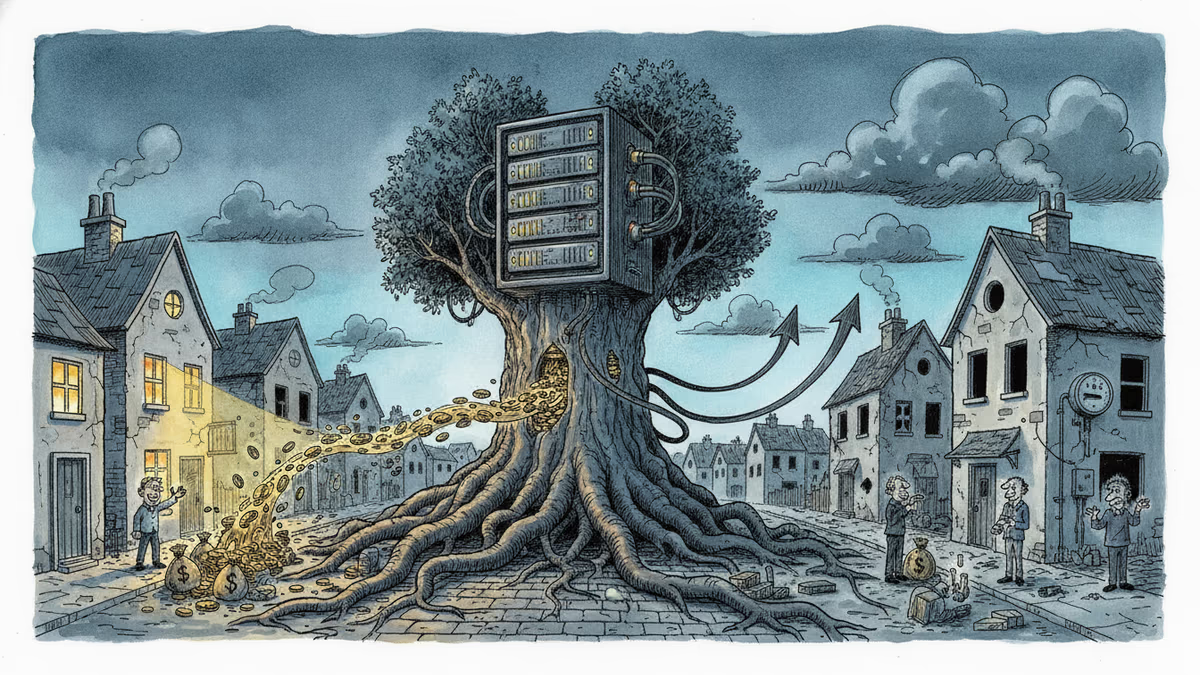
Over 1,200 community actions have pushed back against data centers since 2024. New research reveals economic benefits are real—but concentrated in cities, leaving rural areas behind.
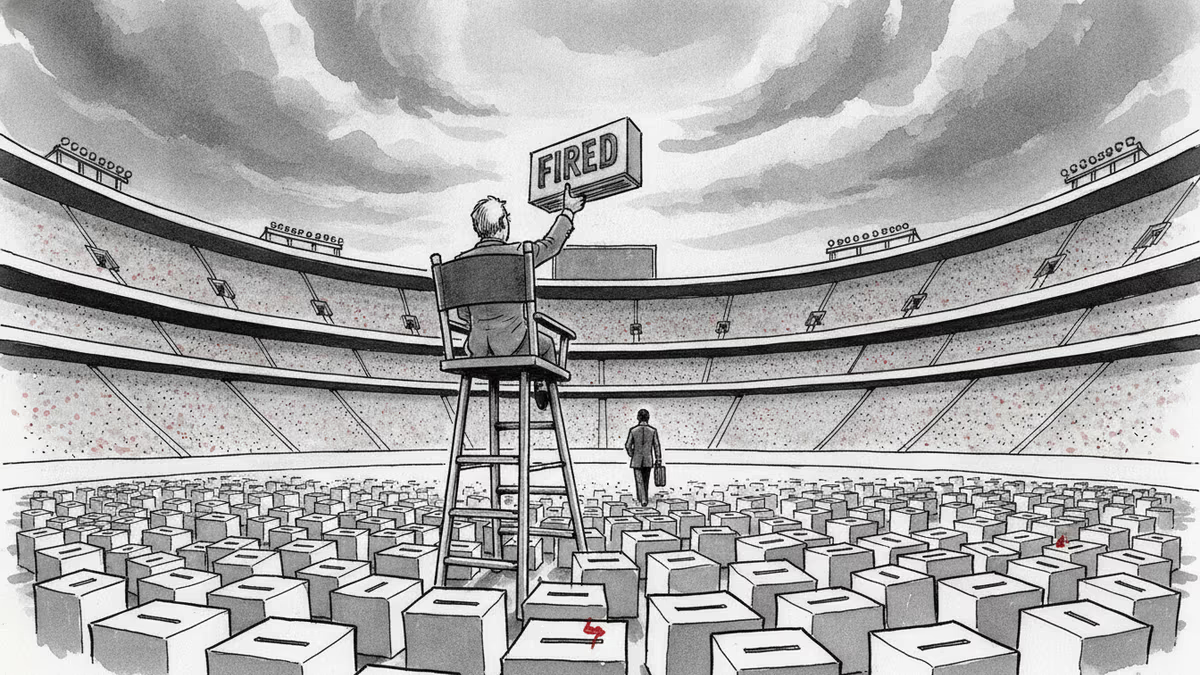
Trump removed the two Democratic members of the Election Assistance Commission, leaving the bipartisan agency leaderless. A Supreme Court ruling made it legal. Here's why a non-crisis can still be a warning sign.
From diapers to cosmetics, plant-based labels are everywhere, promising safety and sustainability. But many still contain harmful chemicals. Here's how to spot truly safer products.
Beyond dystopian futures, the solarpunk movement envisions harmonious integration of technology and nature. Exploring this hopeful vision of sustainable society.
Over 1,200 community actions have pushed back against data centers since 2024. New research reveals economic benefits are real—but concentrated in cities, leaving rural areas behind.
Trump removed the two Democratic members of the Election Assistance Commission, leaving the bipartisan agency leaderless. A Supreme Court ruling made it legal. Here's why a non-crisis can still be a warning sign.
Thoughts
Share your thoughts on this article
Sign in to join the conversation