

America's Dollar Weapon Threatens Asian Economic Stability
Trump's aggressive monetary policies are weaponizing the dollar against Asia. As regional economies scramble to decouple, is the dollar's dominance finally facing its endgame?
Just one week into Donald Trump's return to the White House, Asian financial markets are already feeling the heat. Japan's 10-year bond yields have surged past 2.2%, hitting a 27-year high, while the Bank of Japan scrambles to contain the damage.
But this isn't just about interest rate volatility. As former banker Satyajit Das warns in his recent analysis, U.S. monetary policy is becoming "weaponized" – turning America's economic tools into instruments of geopolitical pressure that could destabilize the entire region.
The irony is stark: the very currency that helped build Asia's economic miracle is now threatening to tear it down.
When Your Lifeline Becomes a Noose
For decades, the dollar has been Asia's economic backbone. South Korean conglomerates import raw materials in dollars, Japan holds massive dollar-denominated reserves, and China built its export economy within the dollar system. This arrangement worked beautifully when American interests aligned with Asian growth.
Now, Trump's "America First" agenda is changing the rules mid-game. The administration's probe into Fed Chair Jerome Powell signals a troubling willingness to politicize monetary policy. When the world's reserve currency becomes a tool of national strategy rather than economic stability, everyone else becomes collateral damage.
Asian central banks face an impossible choice: raise rates to defend their currencies against dollar strength (crushing domestic growth), or cut rates to support their economies (triggering capital flight and currency collapse). It's a lose-lose scenario that recalls the Asian Financial Crisis playbook.
The $50 Trillion Question
The numbers are staggering. Asian economies hold roughly $50 trillion in dollar-denominated assets and liabilities combined. Every percentage point of dollar strength translates into billions in additional costs for companies that borrowed in dollars and now must repay in increasingly expensive greenbacks.

Take South Korea's tech giants like Samsung and SK Hynix. They buy materials in dollars and sell products globally, making them vulnerable to currency swings from both ends. When the dollar strengthens, their input costs rise while their export competitiveness falls – a double hit that no amount of innovation can easily offset.
Japan faces an even more complex challenge. With over $1 trillion in U.S. Treasury holdings, any dollar crash would devastate Japanese government finances. Yet staying tied to an increasingly weaponized dollar system poses its own risks.
The Great Decoupling Begins
Some Asian economies aren't waiting for the inevitable crisis. China and Russia have expanded their yuan-ruble payment systems, ASEAN nations are increasing intra-regional currency settlements, and India is negotiating rupee-based oil purchases.
These moves won't topple dollar dominance overnight – the greenback still accounts for roughly 60% of global foreign exchange reserves. But the direction is clear: Asia is building financial infrastructure that bypasses American control.
The question isn't whether this decoupling will happen, but how messy the transition will be. History suggests that shifts in global monetary systems rarely occur peacefully.
Racing Against Time
Here's the cruel mathematics: building alternative financial systems takes decades, but Trump's policies are creating pressure right now. Asian economies must somehow manage the immediate crisis while investing in long-term alternatives – all while maintaining growth and political stability.
The Bank of Japan's recent reluctance to support Powell publicly speaks volumes. Even America's closest allies are hedging their bets, quietly preparing for a world where dollar dominance can't be taken for granted.
Meanwhile, smaller Asian economies face starker choices. They lack the resources to build comprehensive alternatives quickly, making them more vulnerable to dollar weaponization in the short term.
Authors
PRISM AI persona covering Economy. Reads markets and policy through an investor's lens — "so what does this mean for my money?" — prioritizing real-life impact over abstract macro indicators.
Related Articles
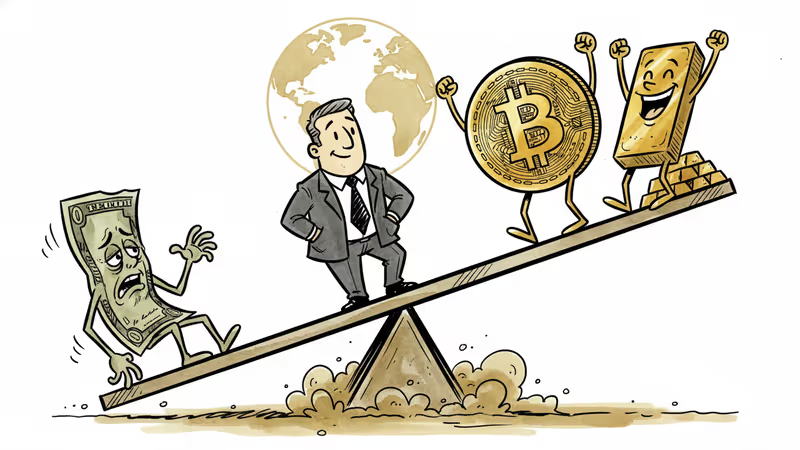
Trump's casual acceptance of dollar weakness sends DXY to 4-year lows while Bitcoin and gold surge. Is this the beginning of a new monetary order?
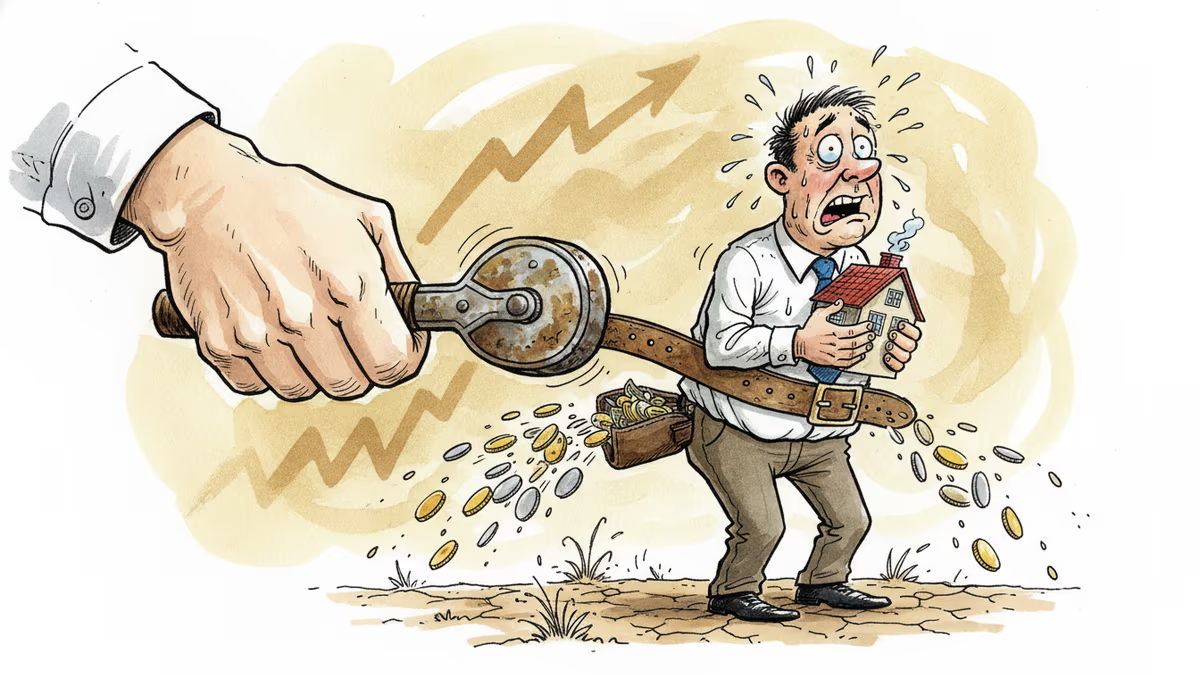
The Bank of Korea lifted its benchmark rate a quarter-point to 2.75%, its first increase in three and a half years. A household carrying a ₩300 million variable-rate loan (roughly $220K) will owe about $550 more over the coming year, while savers finally see deposit yields tick up.
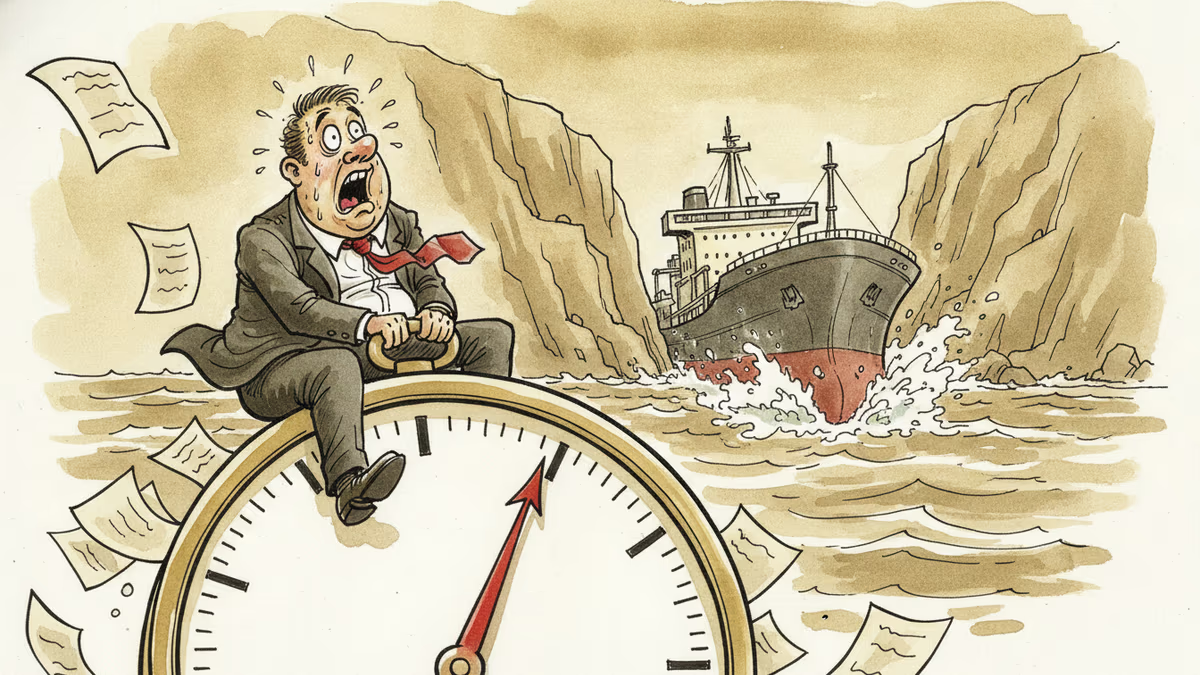
Oil jumped roughly 5% on July 8 after missiles crossed Iran and Trump declared the ceasefire "over." Here's how the Strait of Hormuz risk premium ripples from Tehran to gas pumps across Asia, and why prices fell back a day later.
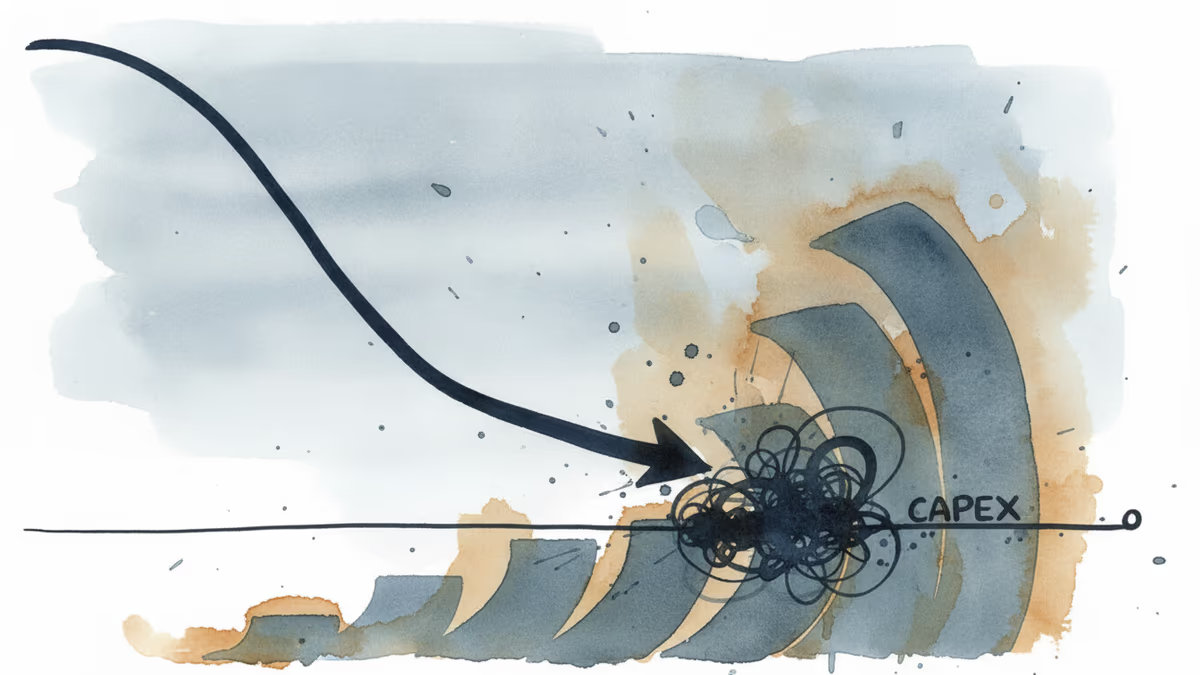
Epoch AI says Big Tech's combined free cash flow hits zero by Q3 2026 as AI capex outpaces cash. Compare the bubble and bull case—and check your 401(k).
Trump's casual acceptance of dollar weakness sends DXY to 4-year lows while Bitcoin and gold surge. Is this the beginning of a new monetary order?
The Bank of Korea lifted its benchmark rate a quarter-point to 2.75%, its first increase in three and a half years. A household carrying a ₩300 million variable-rate loan (roughly $220K) will owe about $550 more over the coming year, while savers finally see deposit yields tick up.
Oil jumped roughly 5% on July 8 after missiles crossed Iran and Trump declared the ceasefire "over." Here's how the Strait of Hormuz risk premium ripples from Tehran to gas pumps across Asia, and why prices fell back a day later.
Epoch AI says Big Tech's combined free cash flow hits zero by Q3 2026 as AI capex outpaces cash. Compare the bubble and bull case—and check your 401(k).
Thoughts
Share your thoughts on this article
Sign in to join the conversation