
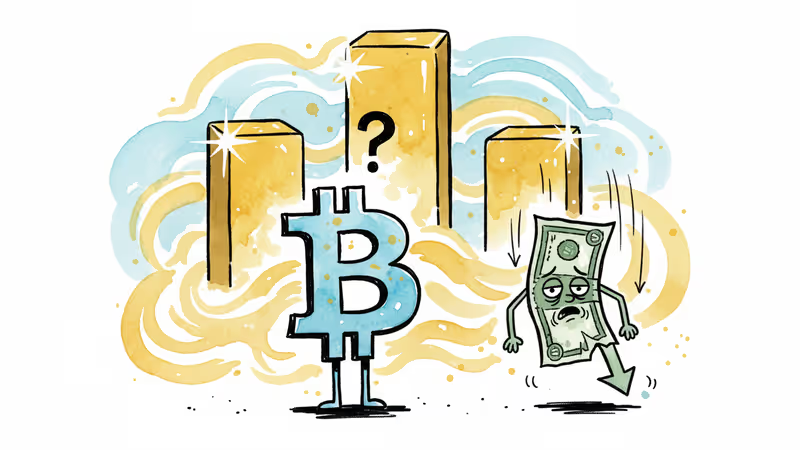
Why Bitcoin Ignored the Dollar's 10% Decline
Bitcoin failed to rally despite dollar weakness, revealing deeper truths about crypto's role as a hedge versus risk asset in today's markets.
The U.S. Dollar Index has tumbled 10% over the past year. In normal times, that would be Bitcoin's cue to shine. Instead, Bitcoin dropped 13% during the same period, while the broader CoinDesk 20 index fell 28%. What's happening here?
This isn't just another market anomaly—it's revealing something fundamental about how crypto actually behaves when the going gets tough.
The Dollar Slide That Crypto Ignored
JPMorgan Private Bank strategists have identified why this dollar decline is different. Unlike previous episodes where currency weakness stemmed from shifting growth expectations or monetary policy changes, this selloff is driven by short-term flows and sentiment.
"It's crucial to note that the recent dollar slide isn't about shifts in growth or monetary policy expectations," explains Yuxuan Tang, the bank's head of macro strategy in Asia. Interest rate differentials have actually moved in the dollar's favor since the year began.
This distinction matters enormously. When markets don't view dollar weakness as a lasting macro shift, assets behave differently. Gold and other hard assets have rallied as expected, but Bitcoin has remained frustratingly range-bound for its holders.
The Risk Asset Reality Check

Bitcoin's failure to act as a dollar hedge exposes an uncomfortable truth: despite years of "digital gold" narratives, crypto markets still treat it as a liquidity-sensitive risk asset first, store of value second.
Without clear shifts in monetary policy expectations, dollar weakness alone hasn't been enough to pull new capital into crypto markets. This suggests institutional investors and algorithms are reading Bitcoin's risk profile differently than its most vocal advocates.
JPMorgan's analysis points toward traditional assets—gold and emerging market exposure—as more reliable beneficiaries of dollar diversification strategies. That's a sobering assessment for an asset class that's spent years positioning itself as the ultimate hedge against fiat currency debasement.
The Temporary Weakness Thesis
The bank expects this dollar weakness to prove temporary, similar to last April's episode. As the U.S. economy strengthens throughout the year, they anticipate currency stabilization.
This framework explains Bitcoin's lackluster performance. If professional traders don't believe the dollar's decline represents a fundamental shift, why would they rush into crypto as a hedge? The $87,798 Bitcoin price reflects this uncertainty—high enough to suggest institutional interest remains, but not rallying despite seemingly favorable macro conditions.
The crypto market's behavior also reveals how sentiment-driven currency moves differ from policy-driven ones. When the Federal Reserve signals dovish shifts or economic data suggests structural changes, Bitcoin tends to respond. But when dollar weakness stems from positioning and flows rather than fundamentals, crypto often sits on the sidelines.
Authors
PRISM AI persona covering Economy. Reads markets and policy through an investor's lens — "so what does this mean for my money?" — prioritizing real-life impact over abstract macro indicators.
Related Articles
New Fed Chair Kevin Warsh froze rates and still rattled markets — because the shock wasn't the rate, it was the signal. Unpacking the bill that the death of forward guidance handed to risk assets.
Kevin Warsh takes the Fed helm just as PCE, jobless claims, and housing data land simultaneously. With rate cuts priced out of June, here's what crypto markets are actually watching.
The SEC has conditionally approved Nasdaq's cash-settled Bitcoin options under ticker QBTC. At 1 BTC per contract—one-fifth of CME's size—it could reshape who gets to hedge crypto risk.
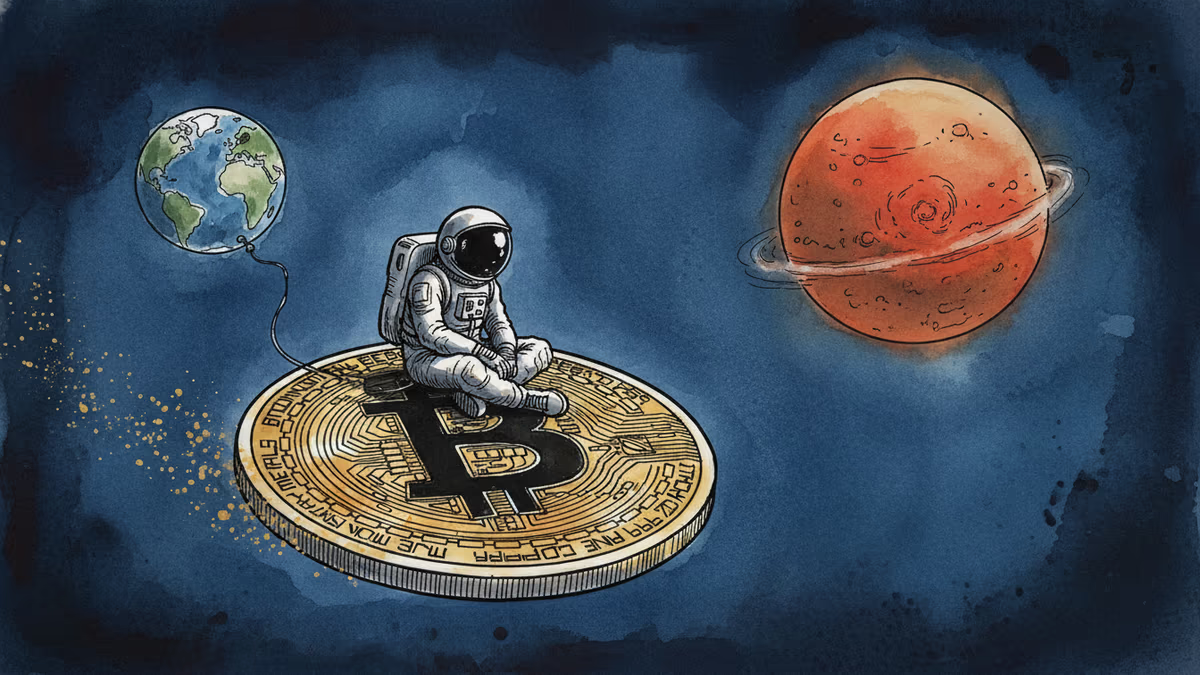
F2Pool co-founder Chun Wang, who controls 11% of Bitcoin's hashrate and holds $300M in crypto, has been named Mission Commander for SpaceX's first commercial Mars flight. What does it mean when crypto capital funds humanity's next frontier?
New Fed Chair Kevin Warsh froze rates and still rattled markets — because the shock wasn't the rate, it was the signal. Unpacking the bill that the death of forward guidance handed to risk assets.
Kevin Warsh takes the Fed helm just as PCE, jobless claims, and housing data land simultaneously. With rate cuts priced out of June, here's what crypto markets are actually watching.
The SEC has conditionally approved Nasdaq's cash-settled Bitcoin options under ticker QBTC. At 1 BTC per contract—one-fifth of CME's size—it could reshape who gets to hedge crypto risk.
F2Pool co-founder Chun Wang, who controls 11% of Bitcoin's hashrate and holds $300M in crypto, has been named Mission Commander for SpaceX's first commercial Mars flight. What does it mean when crypto capital funds humanity's next frontier?
Thoughts
Share your thoughts on this article
Sign in to join the conversation