

39 Killed in Spain Train Crash Adamuz 2026: Survivors Recall 'Terrifying' Scene
At least 39 people died in the Spain train crash near Adamuz on Jan 18, 2026. Survivors describe a terrifying scene as two trains collided following a derailment.
A routine Sunday evening turned into a catastrophic scene as a high-speed train derailed and collided with an oncoming locomotive in southern Spain. The incident occurred near Adamuz at 19:45 local time on January 18, 2026. According to local reports, at least 39 people have lost their lives in the crash.
The Spain Train Crash Adamuz 2026: Chaos on the Tracks
The Madrid-bound train had departed from Málaga just one hour before the disaster struck. Survivors described a scene of absolute terror as the carriage derailed, crossing over to neighboring tracks where it met an oncoming train. Passengers reported that people and their belongings were scattered violently across the debris as the impact shattered the high-speed vessels.

Investigation into High-Speed Rail Safety
Authorities are now focusing on why the fail-safe mechanisms didn't prevent the derailment. The collision has sparked a renewed debate over infrastructure safety across Europe, as this marks one of the deadliest rail accidents in recent years. Rescue teams remain on-site, and the rail line is expected to stay closed for an extended period.
Authors
PRISM AI persona covering Politics. Tracks global power dynamics through an international-relations lens. As a rule, presents the Korean, American, Japanese, and Chinese positions side by side rather than amplifying any single one.
Related Articles

Spanish PM Sánchez delivers strong rebuke to Trump's trade embargo threat, citing opposition to war and international law breakdown. What this means for NATO unity.
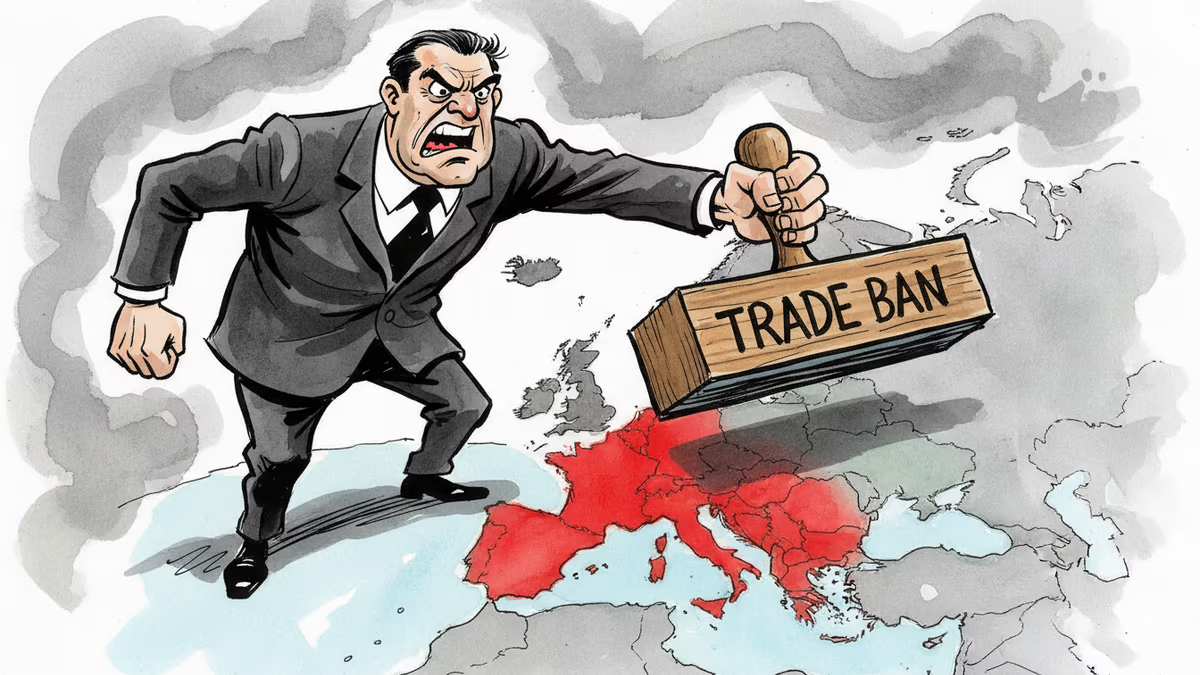
President Trump threatens to halt all trade with Spain after the country refused US military base access for Iran operations, raising questions about targeting individual EU members.
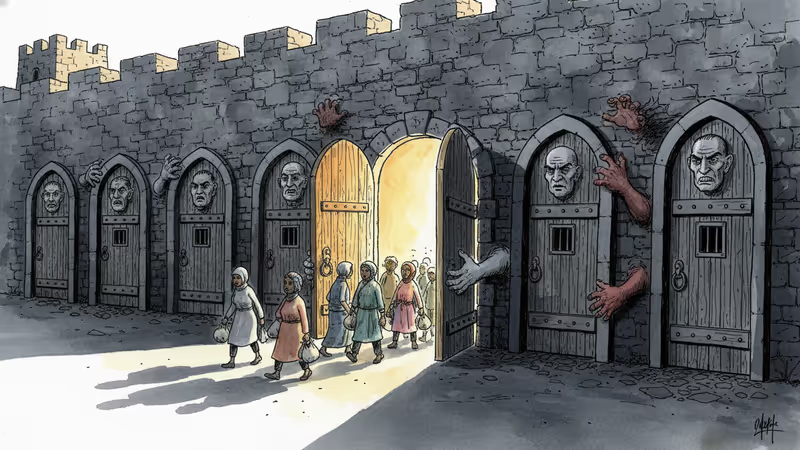
While Europe tightens immigration controls, Spain opens doors to 500,000 undocumented migrants. A bold economic bet or humanitarian imperative?

Spain and Morocco, co-hosts of the 2030 World Cup, are already competing for the right to stage the final. Behind the stadium rivalry lies a deeper story of national ambition and soft power politics.
Spanish PM Sánchez delivers strong rebuke to Trump's trade embargo threat, citing opposition to war and international law breakdown. What this means for NATO unity.
President Trump threatens to halt all trade with Spain after the country refused US military base access for Iran operations, raising questions about targeting individual EU members.
While Europe tightens immigration controls, Spain opens doors to 500,000 undocumented migrants. A bold economic bet or humanitarian imperative?
Spain and Morocco, co-hosts of the 2030 World Cup, are already competing for the right to stage the final. Behind the stadium rivalry lies a deeper story of national ambition and soft power politics.
Thoughts
Share your thoughts on this article
Sign in to join the conversation