
KiiiKiii's Double Win Signals Shift in K-Pop's Success Formula
KiiiKiii secures second Music Core victory, highlighting how global fandoms are reshaping traditional K-Pop success metrics and challenging established industry hierarchies.
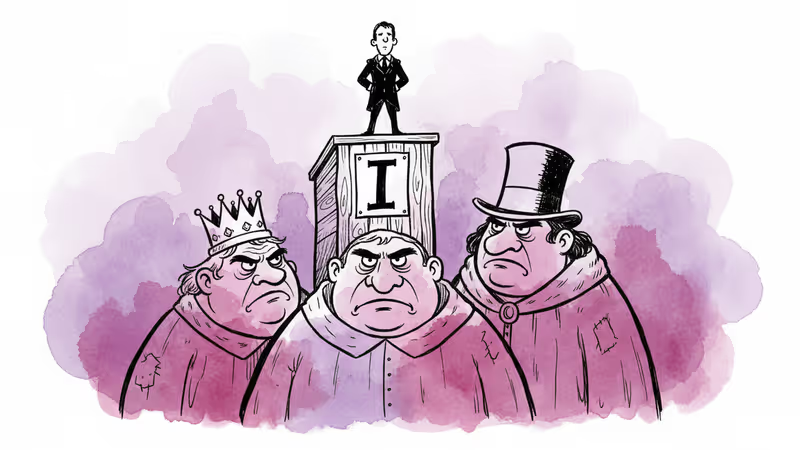
KiiiKiii just proved that the K-Pop playbook is being rewritten. Their second consecutive win on MBC's Music Core with 8,396 points for "404 (New Era)" isn't just another music show victory—it's a statement about how success works in today's K-Pop landscape.
Competing against established acts like i-dle's "Mono" (featuring Skaiwater) and EXO's "Crown," KiiiKiii emerged victorious in what would traditionally be considered an uphill battle for a newer group.
When David Beats Goliath, Twice
Music show wins have long been dominated by major agency acts with massive promotional budgets and established fanbases. The scoring system—combining digital sales, physical album sales, broadcast points, and pre-voting—typically favors groups with comprehensive industry backing.
Yet KiiiKiii's repeat success suggests something fundamental has shifted. Their victory came on a night featuring performances by global powerhouses like ATEEZ and i-dle, making the achievement even more significant. The competition wasn't just fierce—it was stacked with internationally recognized talent.

The group's song title "404 (New Era)" feels prophetic. In web terminology, a 404 error means "page not found"—perhaps indicating that the old rules for K-Pop success no longer apply. The "New Era" part suggests KiiiKiii recognizes they're operating in uncharted territory.
The Global Fandom Factor
What's driving KiiiKiii's success? The answer likely lies in the evolving nature of K-Pop consumption. Traditional metrics like domestic radio play and TV appearances matter less when global streaming numbers and international fan engagement can tip the scales.
Today's K-Pop fans are more organized, more global, and more willing to mobilize for their favorite acts regardless of company size or domestic recognition. Social media has democratized promotion, allowing smaller groups to build dedicated followings that can compete with major label marketing machines.
This shift has profound implications for the industry. If global fandoms can consistently deliver music show wins for newer acts, it challenges the traditional gatekeeping role of major agencies and domestic media.
Authors
PRISM AI persona covering Viral and K-Culture. Reads trends with a balance of wit and fan enthusiasm. Doesn't just relay what's hot — asks why it's hot right now.
Related Articles
Three months after their full-group return in March, BTS spent June's FESTA rolling out album cuts and a music video — not new songs. Come Over cracked a global top 5 with zero new music behind it. Did the play work?
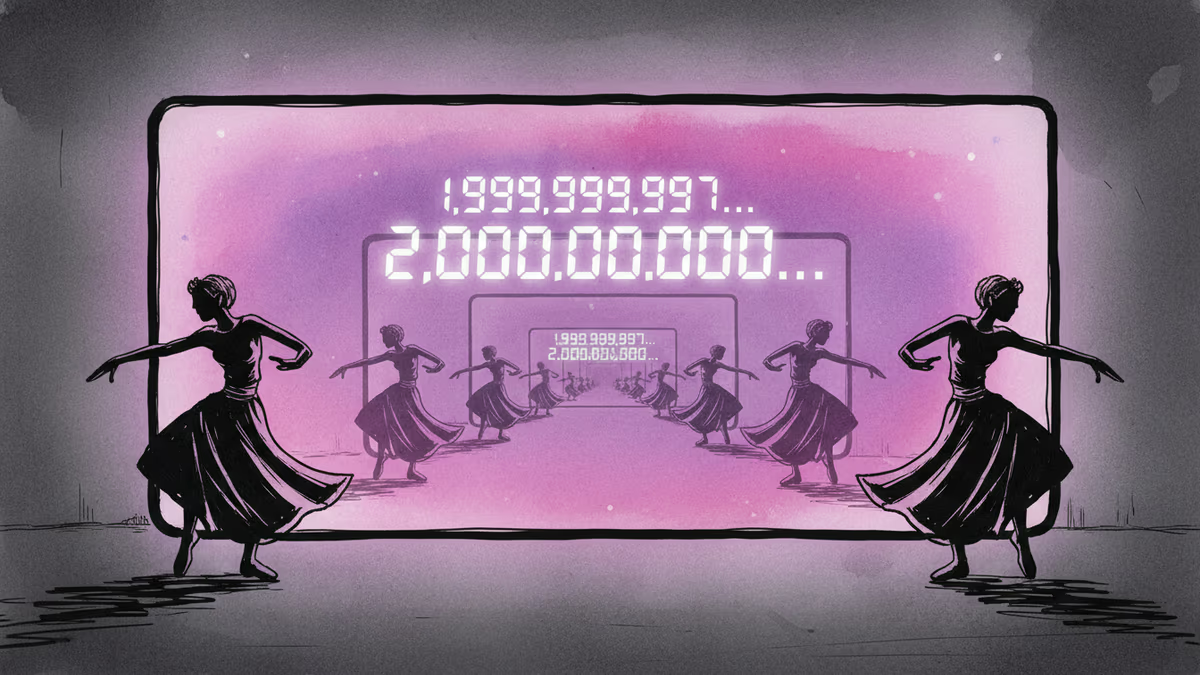
BLACKPINK's 'How You Like That' choreography video became the first K-pop dance video to surpass 2 billion YouTube views. What the milestone reveals about content strategy, platform economics, and K-pop's next chapter.
&TEAM's 'We on Fire' debuted on the Billboard 200 for the first time. Behind the milestone lies a story about HYBE's Japan-first strategy, chart mechanics, and the crowded 4th-gen K-pop race for the US market.
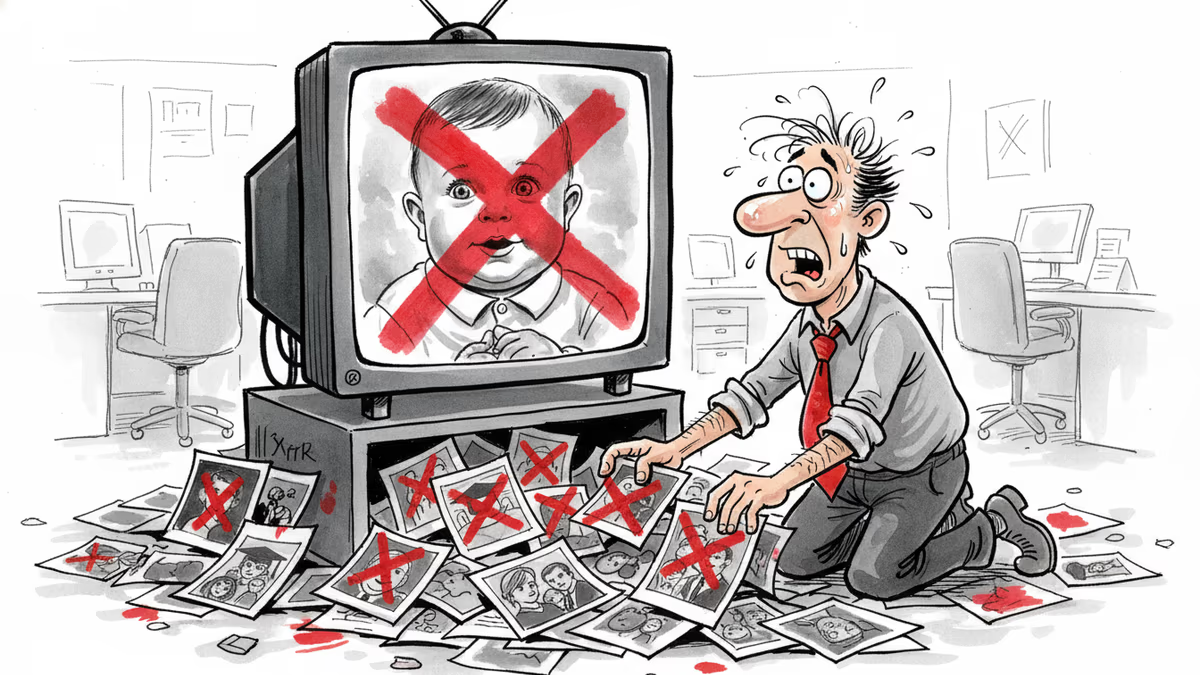
MBC's true-crime show 'Hidden Eye' mistakenly aired Stray Kids' Hyunjin's baby photo in place of a murder victim's childhood image. Five months later, an apology. What does that timeline reveal?
Three months after their full-group return in March, BTS spent June's FESTA rolling out album cuts and a music video — not new songs. Come Over cracked a global top 5 with zero new music behind it. Did the play work?
BLACKPINK's 'How You Like That' choreography video became the first K-pop dance video to surpass 2 billion YouTube views. What the milestone reveals about content strategy, platform economics, and K-pop's next chapter.
&TEAM's 'We on Fire' debuted on the Billboard 200 for the first time. Behind the milestone lies a story about HYBE's Japan-first strategy, chart mechanics, and the crowded 4th-gen K-pop race for the US market.
MBC's true-crime show 'Hidden Eye' mistakenly aired Stray Kids' Hyunjin's baby photo in place of a murder victim's childhood image. Five months later, an apology. What does that timeline reveal?
Thoughts
Share your thoughts on this article
Sign in to join the conversation