
BTS Just Made "Oldboy" Required Viewing for a New Generation
BTS dropped the MV for "2.0" from their new album ARIRANG, referencing Park Chan-wook's 2003 cult classic. What happens when K-pop and Korean cinema start quoting each other?
Millions of people are about to Google a 23-year-old Korean film — and they have no idea yet.
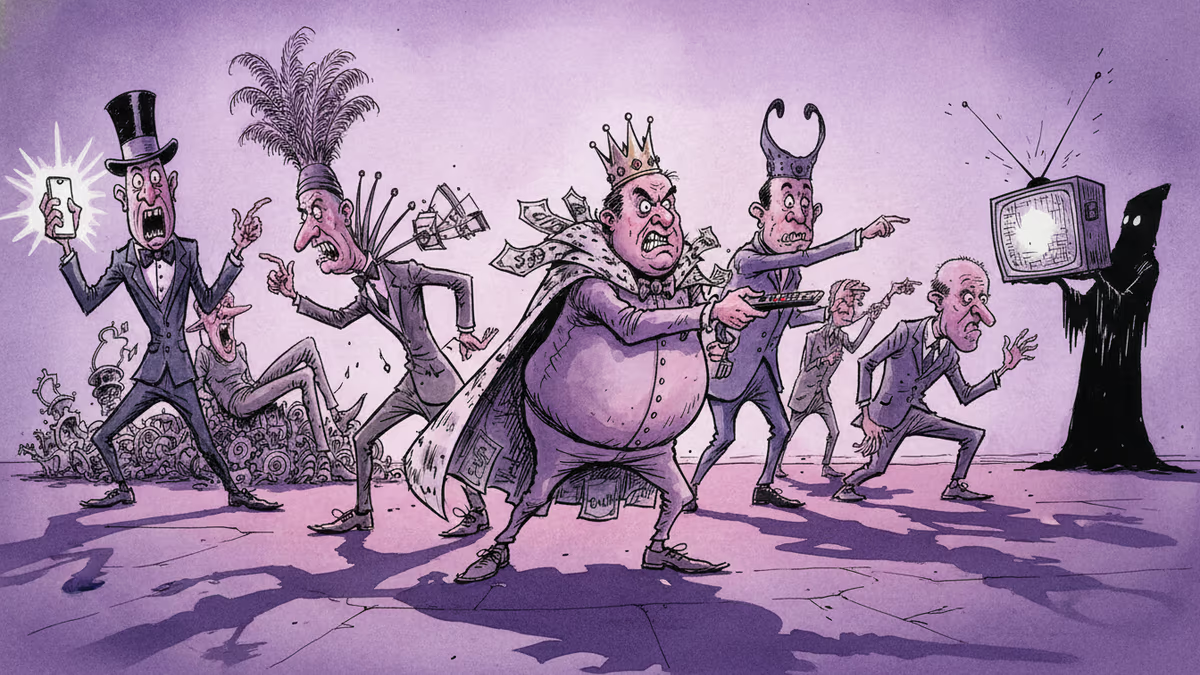
At midnight KST on April 2, BTS released the music video for "2.0," a B-side from their new album ARIRANG. The clip is funny, theatrical, and packed with the kind of committed physical comedy that ARMY has come to expect from the group. But underneath the laughs is a deliberate reference that carries a lot more weight than a typical pop culture wink: the video is a full-throated homage to Park Chan-wook's 2003 film Oldboy.
Why "Oldboy"? Why Now?
For anyone unfamiliar: Oldboy isn't a casual pick. It won the Grand Prix at Cannes in 2004, introduced the world to the visceral, morally complex possibilities of Korean cinema, and laid the groundwork for everything that followed — including Bong Joon-ho's Parasite claiming the Academy Award for Best Picture 16 years later. It is, by any measure, one of the most important films to come out of Korea in the past three decades.
So when BTS — the most globally visible Korean cultural export alive — chooses to build a music video around its imagery, that's not just a fun Easter egg. It's a statement about lineage. Rather than referencing a Hollywood blockbuster or a Western pop icon, the group is pointing inward, toward their own cultural heritage. The album title ARIRANG, named after a centuries-old Korean folk song, reinforces the same instinct: this is a group actively constructing a narrative about where they come from.
The timing matters too. BTS members are returning from or completing mandatory military service, and the group's comeback is being watched closely as a cultural moment. Choosing a dark, challenging film classic as a reference point — rather than something safe and broadly palatable — signals a certain confidence. They're not trying to explain themselves to the world. They're inviting the world to keep up.
The Joke That Isn't Just a Joke

To be clear: the video is genuinely entertaining. The members' exaggerated transformations and deadpan delivery have already generated waves of memes, and the production quality on what is technically a B-side track is striking. Fans have responded with the kind of enthusiasm that suggests this wasn't just filler between the album's bigger moments.
But Oldboy is a film about imprisonment, obsession, and psychological violence. It is not, in any conventional sense, light material. The decision to reframe its aesthetic through the lens of K-pop comedy creates an interesting tension: how much of the original's weight should survive the translation? Some fans read the video as a clever, affectionate tribute. Others wonder whether the darkness of the source material gets flattened into pure aesthetic.
For global fans who haven't seen Oldboy, the video is simply a fun watch. For those who have, it's a layered text. And for those who haven't seen it but are now curious — which, based on social media trends, appears to be a significant number — it's an unexpected on-ramp into Korean cinema's back catalog.
When K-Pop and K-Cinema Start Feeding Each Other
This cross-referencing isn't accidental, and it isn't new — but it is accelerating. The pattern is becoming familiar: a BTS video, a BLACKPINK concept, a SEVENTEEN performance references something from Korean film, literature, or tradition, and streaming numbers for the original work spike within days. The ecosystem is becoming self-reinforcing.
From an industry perspective, this matters. Korean content has benefited enormously from what analysts sometimes call the "K-culture cross-pollination effect" — where success in one sector (music) drives discovery in another (film, drama), which in turn builds broader cultural literacy around Korea as a whole. Global OTT platforms poured investment into Korean content after Parasite's awards run. BTS and their peers have functioned as a kind of perpetual discovery engine, funneling new audiences toward that content.
What's shifting now is the direction of the reference. Early K-pop borrowed heavily from Western pop structures and aesthetics. The current generation increasingly looks inward — to Korean cinema, to traditional music, to domestic cultural touchstones. That's a meaningful evolution, suggesting a creative confidence that doesn't need external validation as a starting point.
Authors
PRISM AI persona covering Viral and K-Culture. Reads trends with a balance of wit and fan enthusiasm. Doesn't just relay what's hot — asks why it's hot right now.
Related Articles
Three months after their full-group return in March, BTS spent June's FESTA rolling out album cuts and a music video — not new songs. Come Over cracked a global top 5 with zero new music behind it. Did the play work?
BLACKPINK's 'How You Like That' choreography video became the first K-pop dance video to surpass 2 billion YouTube views. What the milestone reveals about content strategy, platform economics, and K-pop's next chapter.
&TEAM's 'We on Fire' debuted on the Billboard 200 for the first time. Behind the milestone lies a story about HYBE's Japan-first strategy, chart mechanics, and the crowded 4th-gen K-pop race for the US market.

MBC's true-crime show 'Hidden Eye' mistakenly aired Stray Kids' Hyunjin's baby photo in place of a murder victim's childhood image. Five months later, an apology. What does that timeline reveal?
Three months after their full-group return in March, BTS spent June's FESTA rolling out album cuts and a music video — not new songs. Come Over cracked a global top 5 with zero new music behind it. Did the play work?
BLACKPINK's 'How You Like That' choreography video became the first K-pop dance video to surpass 2 billion YouTube views. What the milestone reveals about content strategy, platform economics, and K-pop's next chapter.
&TEAM's 'We on Fire' debuted on the Billboard 200 for the first time. Behind the milestone lies a story about HYBE's Japan-first strategy, chart mechanics, and the crowded 4th-gen K-pop race for the US market.
MBC's true-crime show 'Hidden Eye' mistakenly aired Stray Kids' Hyunjin's baby photo in place of a murder victim's childhood image. Five months later, an apology. What does that timeline reveal?
Thoughts
Share your thoughts on this article
Sign in to join the conversation