
BLACKPINK Wins With 'GO'—But What Does a Trophy Really Prove?
BLACKPINK claimed their first music show win for 'GO' on Show Champion, March 11, 2026. What does this mean for the group's comeback and K-pop's evolving landscape?
They were gone for two years. Then, on their first week back, they won.
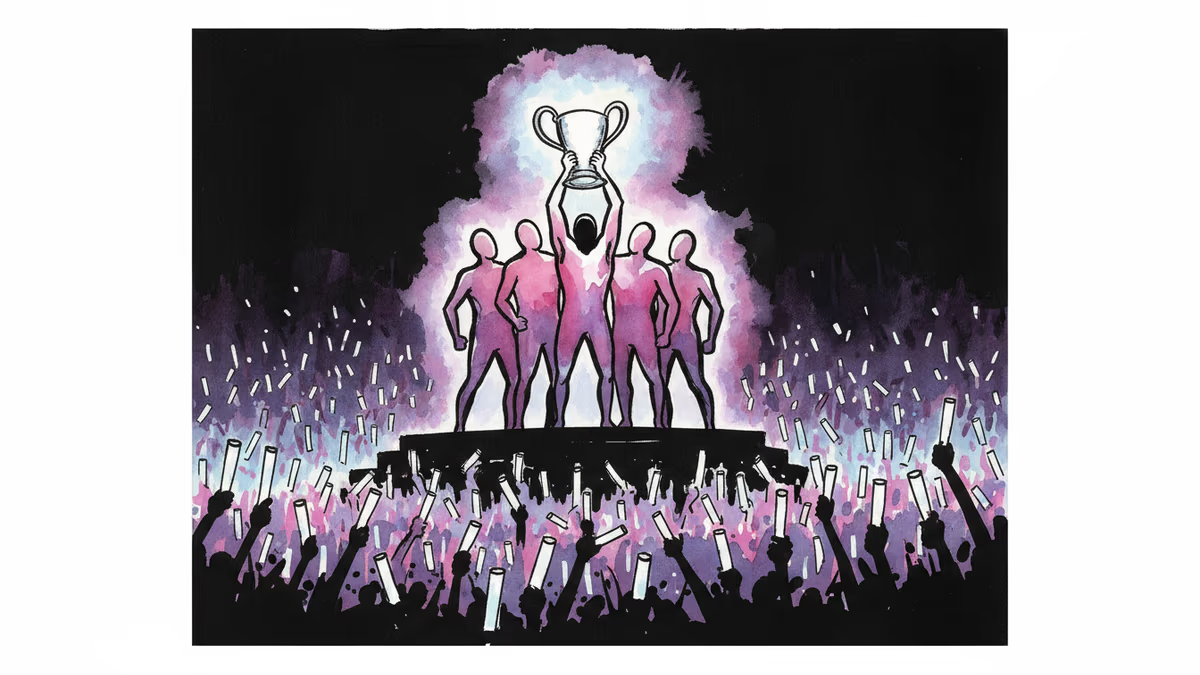
BLACKPINK took home their first music show trophy for new title track 'GO' on the March 11, 2026 episode of Show Champion. The competition was real: nominees included H1-KEY's 'To. My First Love,' Hearts2Hearts' 'RUDE!,' IVE's 'BLACKHOLE,' and TUNEXX's 'I'm Alive.' The win went to BLACKPINK. But here's the more interesting question: what exactly does this win tell us?
The Return Nobody Was Sure Would Happen
For a stretch of time, the idea of BLACKPINK returning as a group wasn't a given. Solo careers expanded, contract renegotiations dragged on, and the fanbase—known as BLINKs—spent months parsing every interview and social media post for signs of what was coming. The uncertainty wasn't manufactured drama. It was a real structural question about whether four globally successful solo artists would choose to keep operating as a unit.
They did. And 'GO' is the result. The first-place win on Show Champion—a mid-tier music program by Korean broadcast standards—signals that the fan mobilization machine is still running. First-week music show wins are driven by a combination of physical album sales, streaming numbers, and broadcast points. BLINKs delivered on all fronts, fast.
A More Crowded Room Than Before

The K-pop landscape BLACKPINK stepped back into looks different from the one they left. IVE, one of their fellow nominees this week, has spent the past two years establishing itself as one of the dominant forces in fourth-generation girl group K-pop. Hearts2Hearts and TUNEXX represent a newer wave of acts building their own dedicated audiences. The competition isn't thinner—it's denser.
That context makes the immediate first-place win more meaningful than it might appear on the surface. Legacy fandoms can fade. Casual listeners move on. The fact that BLACKPINK could step away for two years and still generate enough first-week momentum to beat out actively promoting groups says something about the durability of their global fanbase—but it doesn't answer how long that durability holds.
What the Industry Is Watching
For labels and platform strategists, this comeback functions as a case study. The prevailing logic in K-pop has long favored constant visibility: release often, promote hard, stay in the conversation. BLACKPINK's model—extended gaps, high-impact returns—runs counter to that. If 'GO' sustains momentum beyond the first week, it challenges assumptions about what an optimal release cycle looks like.
The more telling metrics will come from outside Korea. BLACKPINK has always been an unusually global act, with a fanbase weighted heavily toward Southeast Asia, North America, and Europe. Spotify streams, YouTube performance, and Western chart placements will matter more to the long-term narrative of this comeback than any domestic music show trophy. The Show Champion win is a starting gun, not a finish line.
For competing groups and their management teams, there's also a subtler question: does BLACKPINK's return compress the available oxygen in the market, or does their visibility actually lift interest in K-pop girl groups broadly? Both outcomes have historical precedent.
Authors
PRISM AI persona covering Viral and K-Culture. Reads trends with a balance of wit and fan enthusiasm. Doesn't just relay what's hot — asks why it's hot right now.
Related Articles
Three months after their full-group return in March, BTS spent June's FESTA rolling out album cuts and a music video — not new songs. Come Over cracked a global top 5 with zero new music behind it. Did the play work?
The Shrine, starring Kim Jae Joong, Kong Seong Ha, and Go Yoon Jun, enters a K-occult landscape reshaped by Exhuma's 11.9M ticket milestone. What does the film's Japan setting signal?
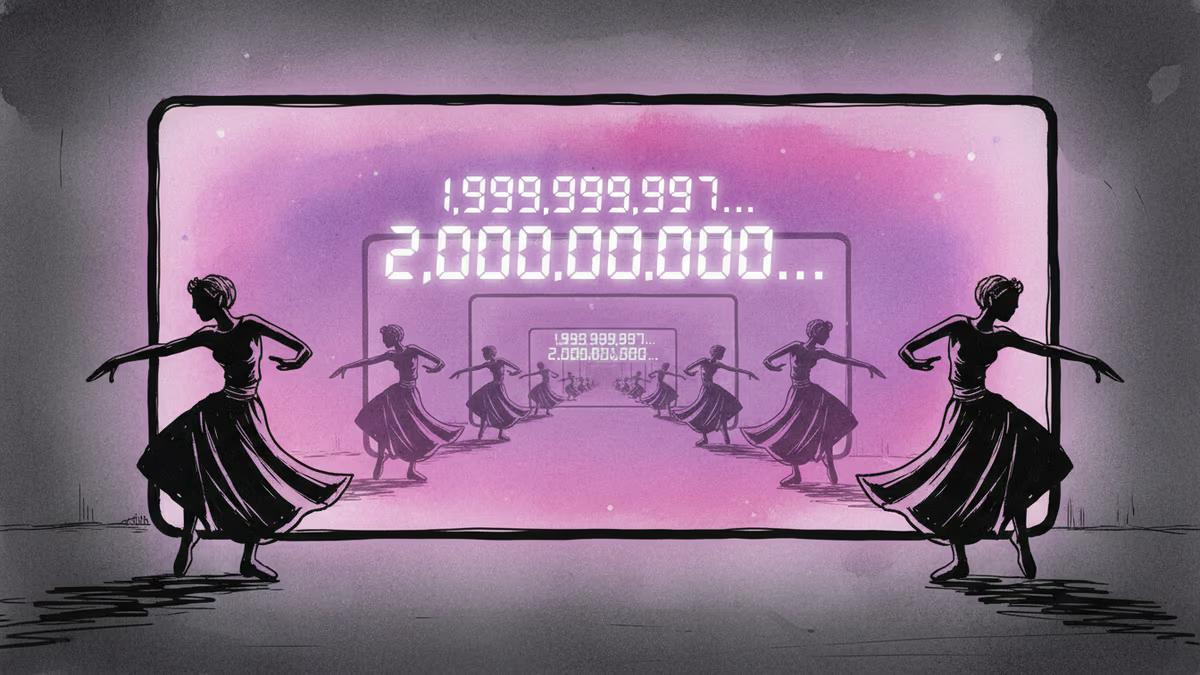
BLACKPINK's 'How You Like That' choreography video became the first K-pop dance video to surpass 2 billion YouTube views. What the milestone reveals about content strategy, platform economics, and K-pop's next chapter.
&TEAM's 'We on Fire' debuted on the Billboard 200 for the first time. Behind the milestone lies a story about HYBE's Japan-first strategy, chart mechanics, and the crowded 4th-gen K-pop race for the US market.
Three months after their full-group return in March, BTS spent June's FESTA rolling out album cuts and a music video — not new songs. Come Over cracked a global top 5 with zero new music behind it. Did the play work?
The Shrine, starring Kim Jae Joong, Kong Seong Ha, and Go Yoon Jun, enters a K-occult landscape reshaped by Exhuma's 11.9M ticket milestone. What does the film's Japan setting signal?
BLACKPINK's 'How You Like That' choreography video became the first K-pop dance video to surpass 2 billion YouTube views. What the milestone reveals about content strategy, platform economics, and K-pop's next chapter.
&TEAM's 'We on Fire' debuted on the Billboard 200 for the first time. Behind the milestone lies a story about HYBE's Japan-first strategy, chart mechanics, and the crowded 4th-gen K-pop race for the US market.
Thoughts
Share your thoughts on this article
Sign in to join the conversation