
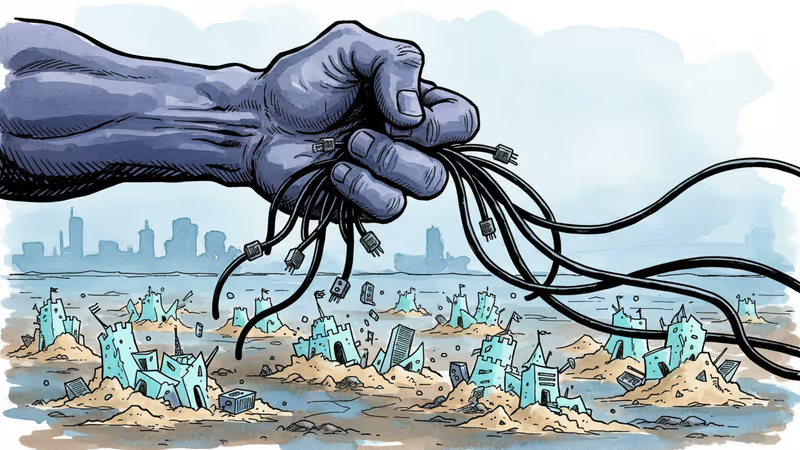
When War Breaks the Internet, Innovation Dies With It
From Iran's internet blackout to Ukraine's cyber warfare, conflicts are dismantling tech ecosystems and triggering mass brain drain across startup hubs worldwide.
The Iranian engineer's workday used to start with updating AI models for Digikala, his country's answer to Amazon. Now, three weeks into Iran's internet blackout, he can't even download basic software updates. The company's AI-powered services remain frozen, and its 750,000 daily visitors have vanished into digital darkness.
This isn't just Iran's problem. From Tehran to Kyiv, wars are systematically dismantling the digital infrastructure that modern startups depend on. The result? Once-thriving tech ecosystems are collapsing, and the brain drain that follows could take decades to reverse.
The New Battlefield: Digital Infrastructure
War has evolved beyond physical destruction. Today's conflicts target the internet itself as a strategic weapon. In 2024, 103 conflict-related internet shutdowns occurred across 11 countries—a 39% increase from the previous year, according to the #KeepitOn coalition.
Ukraine learned this lesson brutally when Russia's invasion began with cyberattacks on satellite broadband networks. In occupied areas like Bucha and Irpin, Russian forces reportedly searched homes for smartphones and laptops, fearing real-time reporting. When digital silencing failed, they targeted 4G towers directly, plunging entire regions into communication blackouts.
The economic toll is staggering. Digikala, once valued at $150 million and serving as the Middle East's largest e-commerce platform, now operates in survival mode. Its same-day delivery promise—a cornerstone of its business model—has become impossible when customers can't even access the website.
The Great Tech Exodus
Wars don't just break servers; they scatter talent. Ukraine has lost 65,000 tech professionals since the invasion began, according to Lviv IT Cluster. These aren't just numbers—they represent the engineers behind successful companies like Grammarly, GitLab, and People.ai that once put Ukraine on the global tech map.

Sudan's civil war has forced its startup ecosystem into what founder Nina Saeed calls "distributed survival mode." Her fintech company Cashi now operates from Dubai with a "light footprint," constantly adjusting to shifting threats. "You're reluctant to invest in growth when there's a risk of cities falling and drones attacking infrastructure," she told reporters.
The Iranian engineer's situation illustrates a cruel paradox: while he desperately wants to leave, international sanctions make him unemployable abroad. "Most companies are not ready to work with someone in Iran due to sanctions," he explained. He's trapped between a government that cuts his internet access and a global system that won't hire him.
Beyond Immediate Damage
The long-term implications extend far beyond temporary outages. Syria, after 14 years of civil war, needs at least $216 billion for reconstruction, according to the World Bank. Its communications minister Abdulsalam Haykal admits the country "ranks very low in both broadband and mobile connectivity—in the bottom 10%."
Haykal has launched Syria's "digital Silk Road" project, planning 4,500 kilometers of fiber-optic networks. But rebuilding takes decades, while innovation moves at internet speed. As he candidly noted: "Syria was disconnected from the world for 15 years. In that time, the world made a leap of 50 years."
The startup ecosystem's response reveals both resilience and fragility. Ahmed Elmurtada from 294startups describes their new reality: "Contingency planning is no longer an annual exercise. It's embedded into weekly operations." Teams spread across borders, cloud infrastructure with parallel backups, and delegated authority to prevent geographic bottlenecks have become standard survival tactics.
The Innovation Opportunity Cost
What we're witnessing isn't just the destruction of existing companies—it's the death of future innovations that will never be born. Every engineer who flees, every startup that closes, every AI model that can't be updated represents lost potential for solving global problems.
The Iranian engineer's company was working on local language models using open-source frameworks like DeepSeek and Qwen. This kind of localized AI development could have addressed region-specific challenges and contributed to global knowledge. Instead, it sits frozen in digital amber.
Meanwhile, established tech hubs continue advancing. Silicon Valley doesn't pause for Iran's internet blackouts or Ukraine's power grid attacks. The innovation gap widens daily, potentially creating a two-tier global economy where some regions permanently lag behind.
Authors
Related Articles
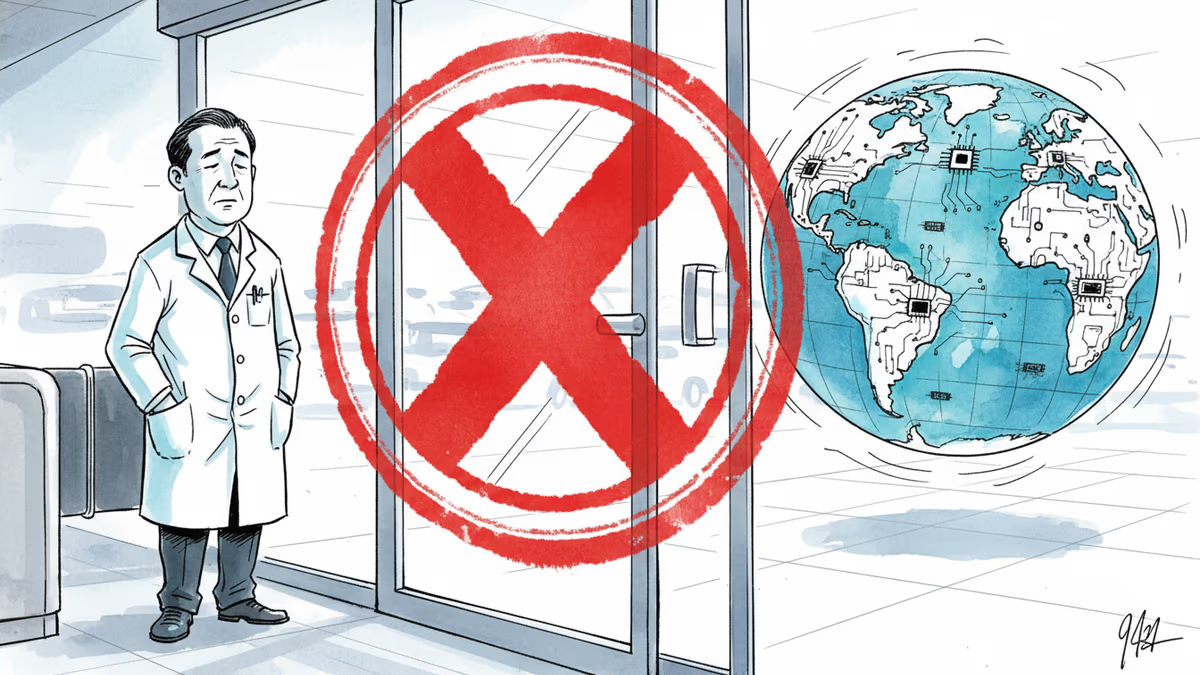
China is restricting AI researchers and startup founders from traveling abroad as the U.S.-China AI performance gap narrows to just 2.7%. What Beijing's talent lockdown means for the global AI race.
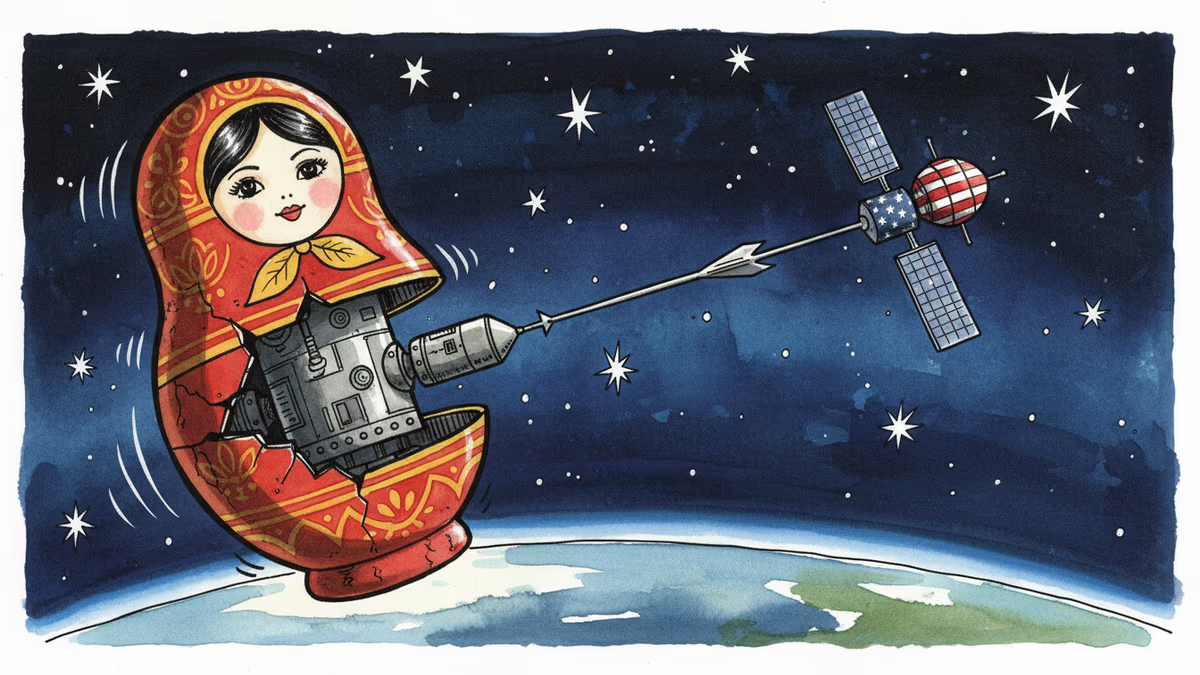
US Space Command confirms Russia has deployed operational anti-satellite weapons tracking American spy satellites in low-Earth orbit. What does this mean for space security?
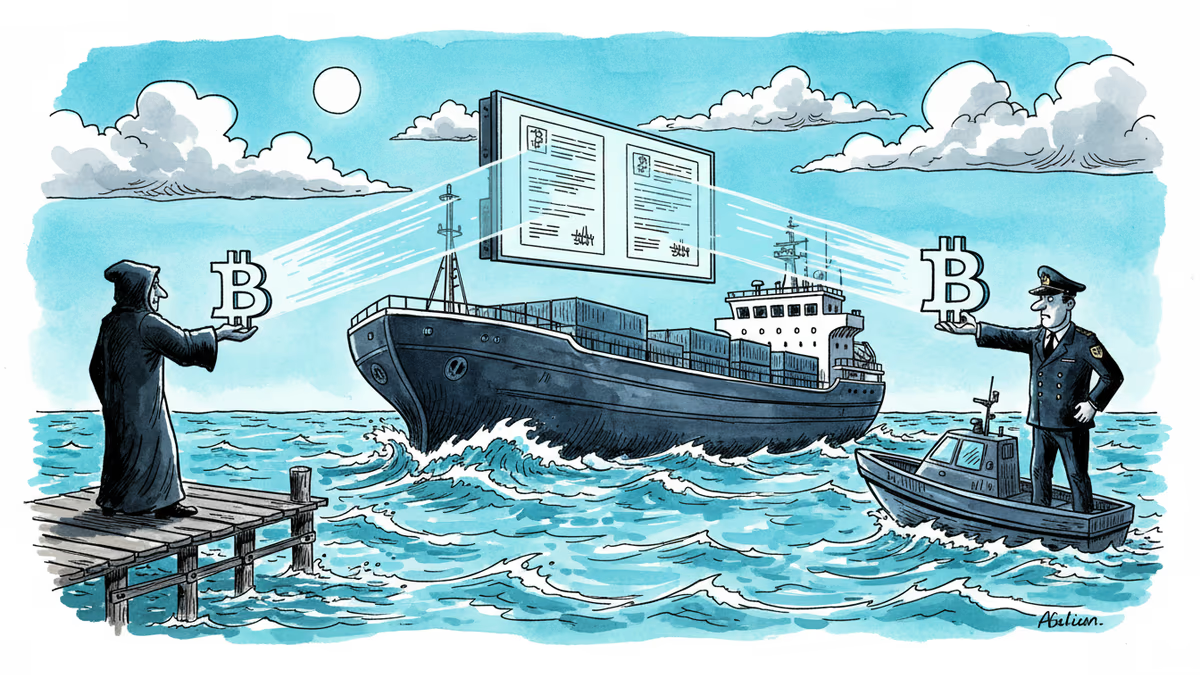
Scammers posing as Iranian authorities are demanding bitcoin and tether from ships near the Strait of Hormuz—exploiting the fact that Iran already does exactly this.
A small pro-Iran team is racking up millions of views with AI-generated Lego videos that mock Trump — and Americans are sharing them. What does that tell us about information warfare?
China is restricting AI researchers and startup founders from traveling abroad as the U.S.-China AI performance gap narrows to just 2.7%. What Beijing's talent lockdown means for the global AI race.
US Space Command confirms Russia has deployed operational anti-satellite weapons tracking American spy satellites in low-Earth orbit. What does this mean for space security?
Scammers posing as Iranian authorities are demanding bitcoin and tether from ships near the Strait of Hormuz—exploiting the fact that Iran already does exactly this.
A small pro-Iran team is racking up millions of views with AI-generated Lego videos that mock Trump — and Americans are sharing them. What does that tell us about information warfare?
Thoughts
Share your thoughts on this article
Sign in to join the conversation