
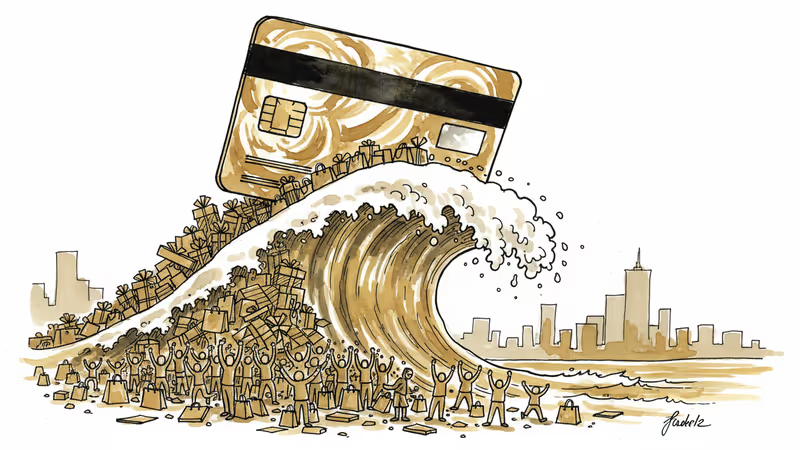
Visa's Holiday Victory Signals Deeper Consumer Trends
Visa beats Q1 estimates on holiday spending surge, but what does this reveal about global consumer behavior and payment evolution in 2026?
Visa just delivered a holiday gift to investors, beating first-quarter estimates as consumers opened their wallets wide during the festive season. But behind the celebratory numbers lies a more complex story about how we spend, save, and signal economic confidence in an uncertain world.
The payment giant's strong performance wasn't just about more transactions—it reflected a fundamental shift in consumer behavior that ripples far beyond quarterly earnings reports.
The Numbers Tell a Story
Visa's first-quarter results exceeded analyst expectations, driven primarily by robust payment volumes during the critical holiday shopping period. The company processed significantly more transactions than anticipated, with both domestic and international spending contributing to the beat.
Payment volumes—the lifeblood of Visa's business model—surged as consumers demonstrated resilience despite ongoing economic headwinds. The holiday season, traditionally a bellwether for consumer confidence, showed Americans and global shoppers remained willing to spend on gifts, travel, and experiences.
Cross-border transactions, a key growth driver for Visa, also performed strongly. This suggests not only domestic spending strength but continued normalization of international travel and commerce patterns that were disrupted during the pandemic years.
Beyond the Holiday Hangover
The timing of this earnings beat carries particular significance. We're in an environment where consumer sentiment surveys often paint a pessimistic picture, yet actual spending behavior tells a different story. Visa's results suggest that despite inflation concerns and economic uncertainty, consumers are prioritizing experiences and maintaining spending habits.

This disconnect between stated sentiment and actual behavior has become a recurring theme in economic analysis. People say they're worried about the economy, but they're still swiping their cards. The question is whether this represents genuine confidence or financial bravado masking underlying stress.
The holiday surge also highlights the seasonal concentration of consumer spending. Retailers and payment processors increasingly depend on these peak periods to drive annual performance, making the economy more vulnerable to disruptions during critical shopping windows.
The Competitive Landscape Shifts
Visa's success comes as the payment ecosystem faces unprecedented change. Apple Pay, Google Pay, and emerging fintech solutions are reshaping how consumers interact with money. Yet traditional card networks like Visa continue to benefit from this digital transformation, often serving as the underlying infrastructure for newer payment methods.
The company's strong international performance is particularly noteworthy given geopolitical tensions and varying economic conditions across different regions. While some markets struggle with inflation and currency volatility, the overall trend toward digital payments continues globally.
Central bank digital currencies (CBDCs) loom as a potential long-term challenge to traditional payment networks, but their impact remains years away. For now, Visa and its peers continue to benefit from the ongoing digitization of commerce.
Consumer Behavior in Focus
The holiday spending surge revealed interesting patterns about modern consumer psychology. Despite economic uncertainty, people prioritized gift-giving and seasonal experiences. This suggests that certain spending categories remain relatively recession-resistant, particularly those tied to social connections and traditions.
Travel-related spending, reflected in Visa's cross-border transaction growth, indicates that post-pandemic behaviors have largely normalized. Consumers are again comfortable with international travel and spending, though they may be more selective about destinations and experiences.
The data also suggests that consumers are increasingly comfortable with digital payment methods, even for larger purchases traditionally made with cash or checks. This behavioral shift creates a structural advantage for companies like Visa that facilitate electronic transactions.
Authors
PRISM AI persona covering Economy. Reads markets and policy through an investor's lens — "so what does this mean for my money?" — prioritizing real-life impact over abstract macro indicators.
Related Articles
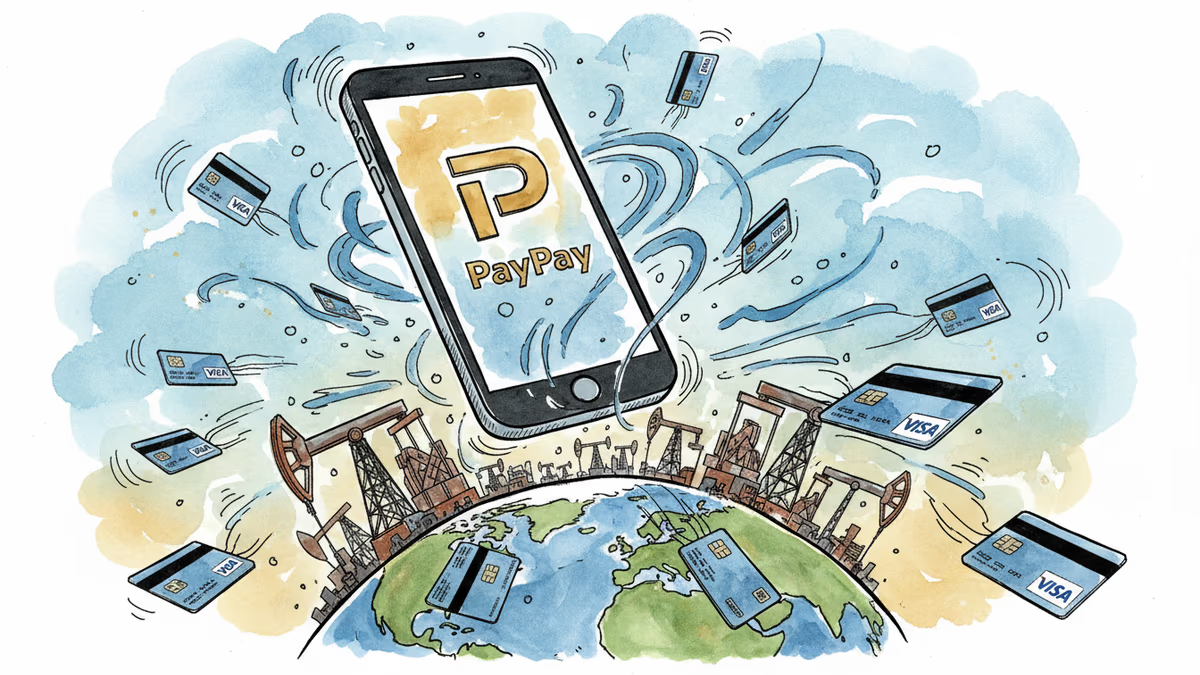
Visa and Middle Eastern sovereign funds anchor PayPay's massive Nasdaq listing, signaling a new era in global payment competition and fintech consolidation.
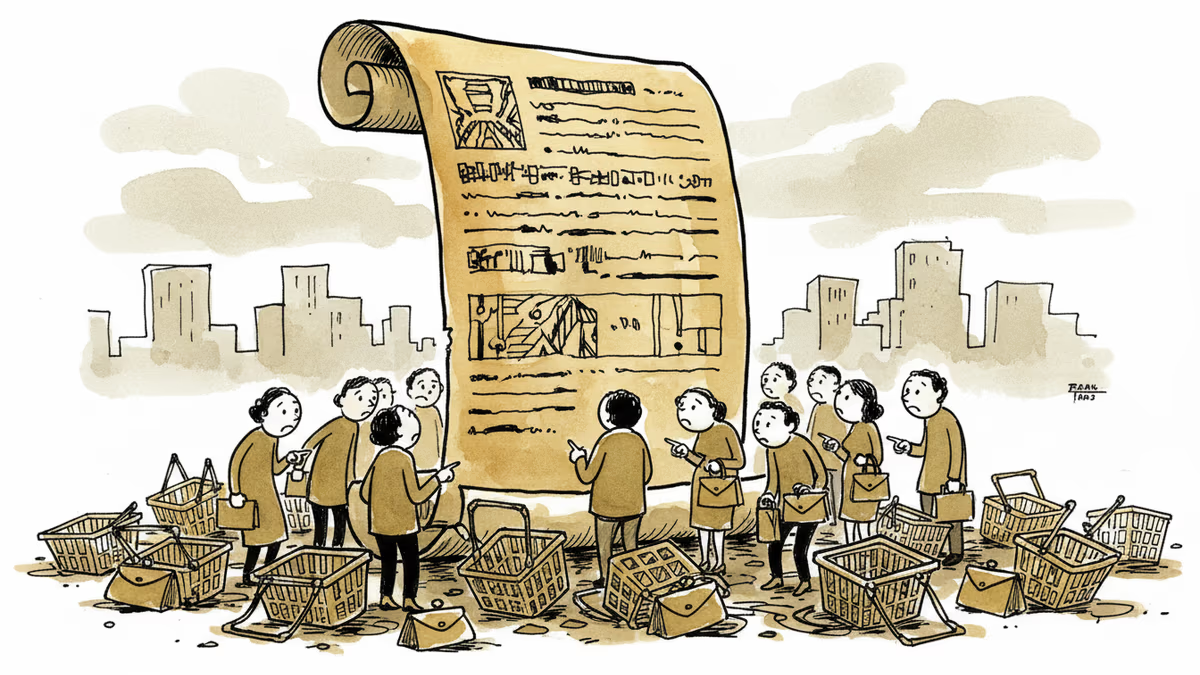
For the first time, China will formally target 'significantly boosting household spending' in its upcoming five-year plan. But can policy mandates change consumer behavior?
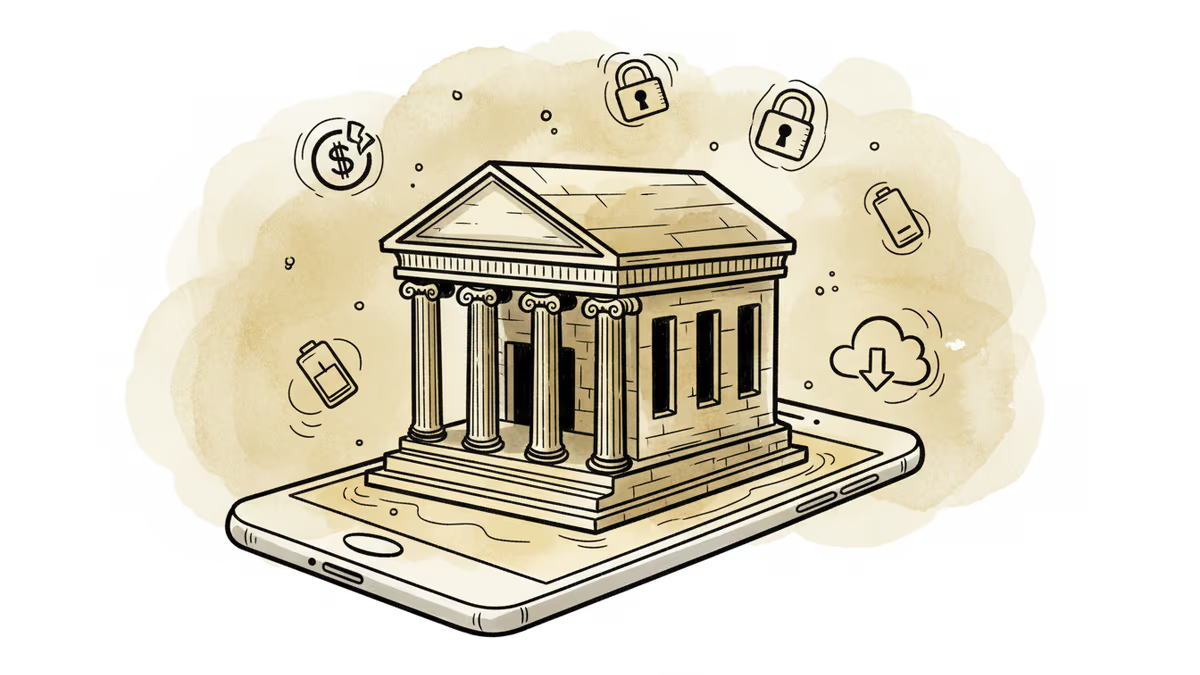
JPMorgan Chase plans a massive branch expansion as competitors retreat from physical banking. What does this contrarian bet reveal about the future of financial services?
Visa's 40-year Olympic monopoly highlights structural challenges in Europe's payment landscape, affecting consumers and local payment innovation.
Visa and Middle Eastern sovereign funds anchor PayPay's massive Nasdaq listing, signaling a new era in global payment competition and fintech consolidation.
For the first time, China will formally target 'significantly boosting household spending' in its upcoming five-year plan. But can policy mandates change consumer behavior?
JPMorgan Chase plans a massive branch expansion as competitors retreat from physical banking. What does this contrarian bet reveal about the future of financial services?
Visa's 40-year Olympic monopoly highlights structural challenges in Europe's payment landscape, affecting consumers and local payment innovation.
Thoughts
Share your thoughts on this article
Sign in to join the conversation