

Vietnam Unveils 2030 Vision for Dual-City International Financial Hub to Capture Foreign Capital
Vietnam officially launches its dual-city International Financial Center (IFC) project, targeting full operation by 2030 to attract foreign capital and compete with regional hubs like Singapore.
Vietnam's government officially launched its ambitious dual-city International Financial Center (IFC) project on Tuesday, aiming for full functionality by 2030. The initiative, announced by the Prime Minister, is designed to attract significant foreign capital and accelerate the nation's economic growth.
The project will be centered in two key economic zones, with Ho Chi Minh City serving as a primary base. The main hub in the southern metropolis will be the 55-story Saigon Marina skyscraper. According to the announcement, the IFC will be led by two Vietnamese officials from state entities with backgrounds in policy and finance.
The Race for Regional Dominance
This move positions Vietnam to compete more directly with established financial centers in the region, such as Singapore and Hong Kong. By creating a dedicated financial hub, the government hopes to build a more sophisticated capital market, streamline foreign direct investment (FDI), and provide a launchpad for Vietnamese companies to expand globally. The project aligns with broader government efforts to improve the business climate, including a recent pledge to cut administrative paperwork by 30%.
Hurdles on the Horizon
While the ambition is clear, the path to 2030 is fraught with challenges. Analysts point out that establishing a successful IFC requires more than just physical infrastructure. It demands a robust legal framework, transparent regulations, a convertible currency, and deep pools of local talent—areas where Vietnam still has significant work to do. The success of the project will largely depend on the specific policies and incentives the government rolls out to convince global financial institutions to set up shop.
Investor Outlook: The IFC project is in its early stages. Critical details regarding tax incentives, foreign ownership limits, and the specific regulatory environment have not yet been disclosed. Investors should monitor policy developments closely.
Vietnam's IFC isn't just a construction project; it's a strategic bid to climb the global value chain. As multinational firms diversify supply chains away from China, Vietnam is trying to capture not just manufacturing but also the high-value financial and professional services that follow. Its success will be a key indicator of whether a fast-growing emerging economy can truly leapfrog into a developed market.
This content is AI-generated based on source articles. While we strive for accuracy, errors may occur. We recommend verifying with the original source.
Related Articles
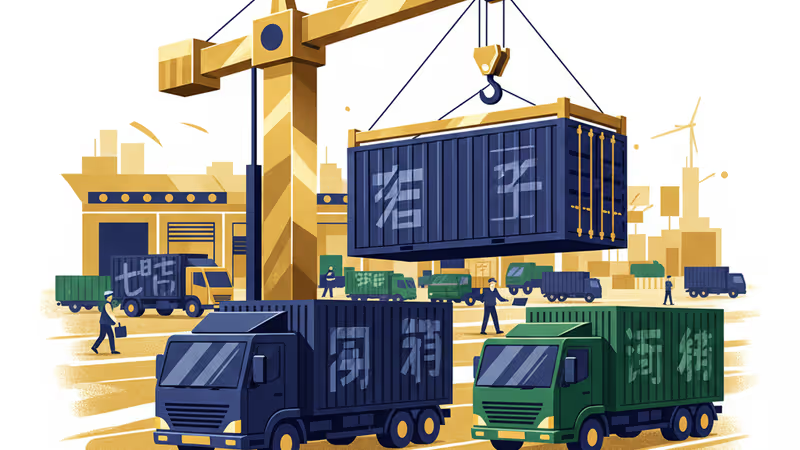
Donald Trump's tariffs on China have turned Vietnam's Mong Cai into a major hub for rerouting goods to the U.S. An analysis of the supply chain shifts reshaping global trade.

Bank Syariah Indonesia (BSI), the country's top Islamic lender, is leveraging gold bullion services to accelerate growth and attract customers from conventional banks. The CEO calls the strategy a 'game changer' for the sector.
Pakistan's economy shows signs of IMF-induced stability, but this is a fragile truce, not a recovery. Here's what investors and policymakers need to know.

South Korea's self-employed over 60 now hold $263 billion in loans, largely tied to real estate. A Bank of Korea report warns this poses a growing risk to financial stability and non-bank lenders.