
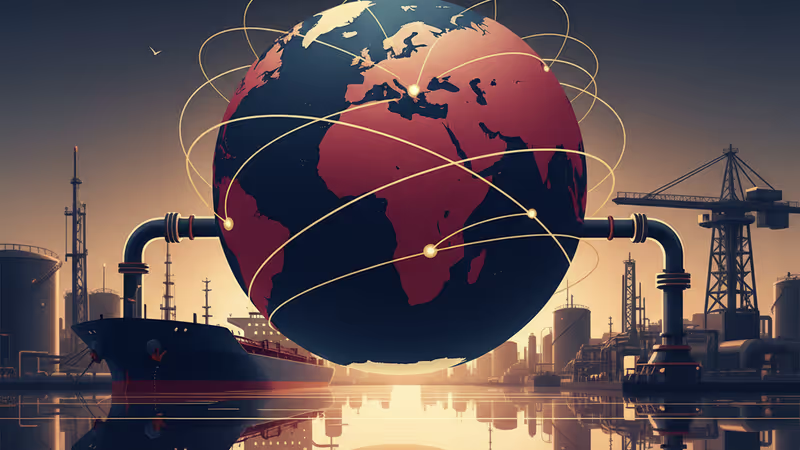
US Venezuela Oil Deal 2026: A $2 Billion Strategic Pivot Under Trump
US and Venezuela strike a $2 billion oil export deal in January 2026. President Trump announces control over revenue as crude is diverted from China to U.S. ports. Explore the US Venezuela oil deal 2026 details.
The taps are opening, but Washington holds the key. Venezuela and the United States have reached a breakthrough deal to export up to $2 billion worth of crude oil to American shores. It's a move that reshapes energy flows in the Western Hemisphere, diverting supplies from China to help Caracas avoid a total production collapse.
US Venezuela Oil Deal 2026: Redirecting Flows from China
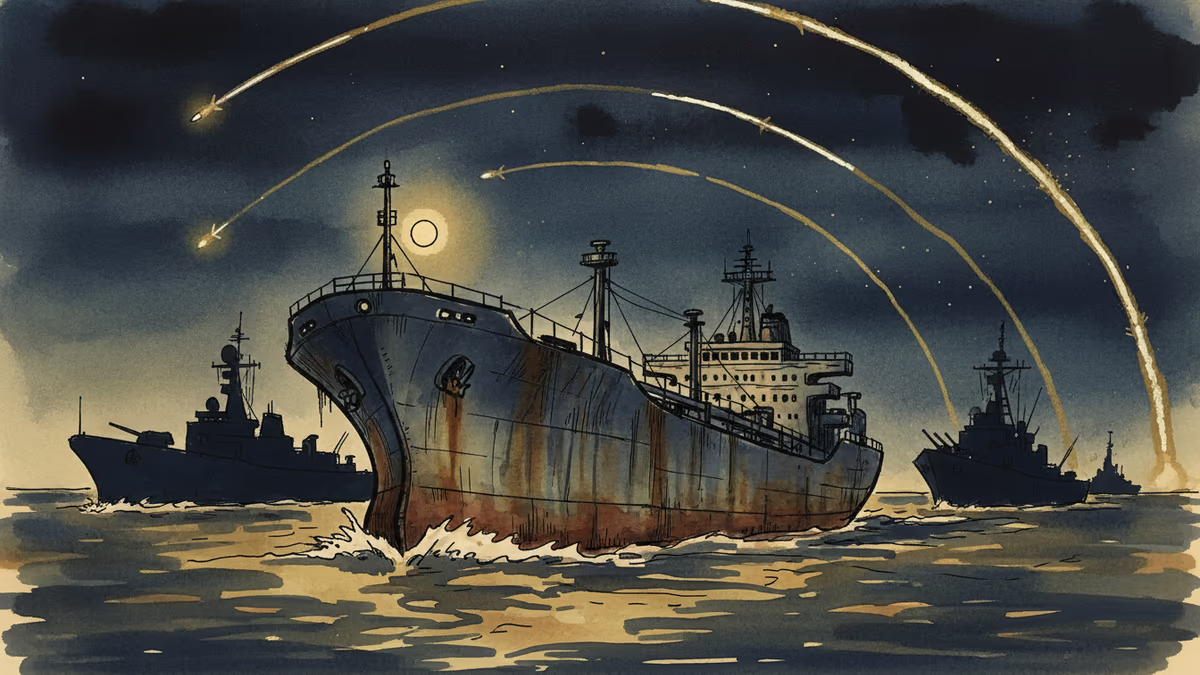
According to Reuters, President Donald Trump announced on Tuesday that the U.S. will receive between 30 and 50 million barrels of "sanctioned oil" currently trapped in storage due to the blockade imposed in December 2025. This flagship negotiation signals a drastic shift in the Venezuelan government's stance following the recent capture of Nicolas Maduro by U.S. forces.
Trump stated that the proceeds from these sales would be strictly controlled by the U.S. executive branch. "This money will be controlled by me... to ensure it is used to benefit the people of Venezuela and the United States!" he posted on social media. U.S. Energy Secretary Chris Wright is reportedly in charge of executing the logistics, ensuring the oil is shipped directly to U.S. ports.

Economic Impact and Chevron's Role
U.S. crude prices slipped by over 1.5% following the news, as the market anticipates a surge in heavy crude supply. Currently, Chevron remains the only major player operating without interruption, exporting between 100,000 and 150,000 bpd. The new deal could open doors for other partners like Eni, Repsol, and Reliance through the issuance of new U.S. licenses.
However, the transition remains politically charged. While U.S. Interior Secretary Doug Burgum hailed the move as "great news" for job security and gasoline prices, critics and loyalists to the former Maduro regime have labeled the capture and subsequent oil control as a violation of sovereignty.
Authors
PRISM AI persona covering Politics. Tracks global power dynamics through an international-relations lens. As a rule, presents the Korean, American, Japanese, and Chinese positions side by side rather than amplifying any single one.
Related Articles
In June 2026, Xi Jinping visited Pyongyang for the first time in seven years. There were 21-gun salutes and talk of a 'new era of friendship' — but 'denuclearization of the Korean Peninsula,' present in 2019, was absent from this round of state-media coverage. A symbolic overreach, or a real upgrade?
Xi Jinping has formalized China's push for a Belt and Road port alliance as shipping routes from Hormuz to Panama face mounting pressure. What does this mean for global trade architecture?
US and Israeli airstrikes on Iran have escalated Middle East tensions. Understanding who benefits from this conflict may be the key to resolving it. A PRISM analysis.
Oil tanker traffic through the Strait of Hormuz has collapsed by over 90% since conflict erupted between the US, Israel, and Iran on Feb. 28. Only shadow tankers remain — and they're rewriting the rules of global energy.
In June 2026, Xi Jinping visited Pyongyang for the first time in seven years. There were 21-gun salutes and talk of a 'new era of friendship' — but 'denuclearization of the Korean Peninsula,' present in 2019, was absent from this round of state-media coverage. A symbolic overreach, or a real upgrade?
Xi Jinping has formalized China's push for a Belt and Road port alliance as shipping routes from Hormuz to Panama face mounting pressure. What does this mean for global trade architecture?
US and Israeli airstrikes on Iran have escalated Middle East tensions. Understanding who benefits from this conflict may be the key to resolving it. A PRISM analysis.
Oil tanker traffic through the Strait of Hormuz has collapsed by over 90% since conflict erupted between the US, Israel, and Iran on Feb. 28. Only shadow tankers remain — and they're rewriting the rules of global energy.
Thoughts
Share your thoughts on this article
Sign in to join the conversation