
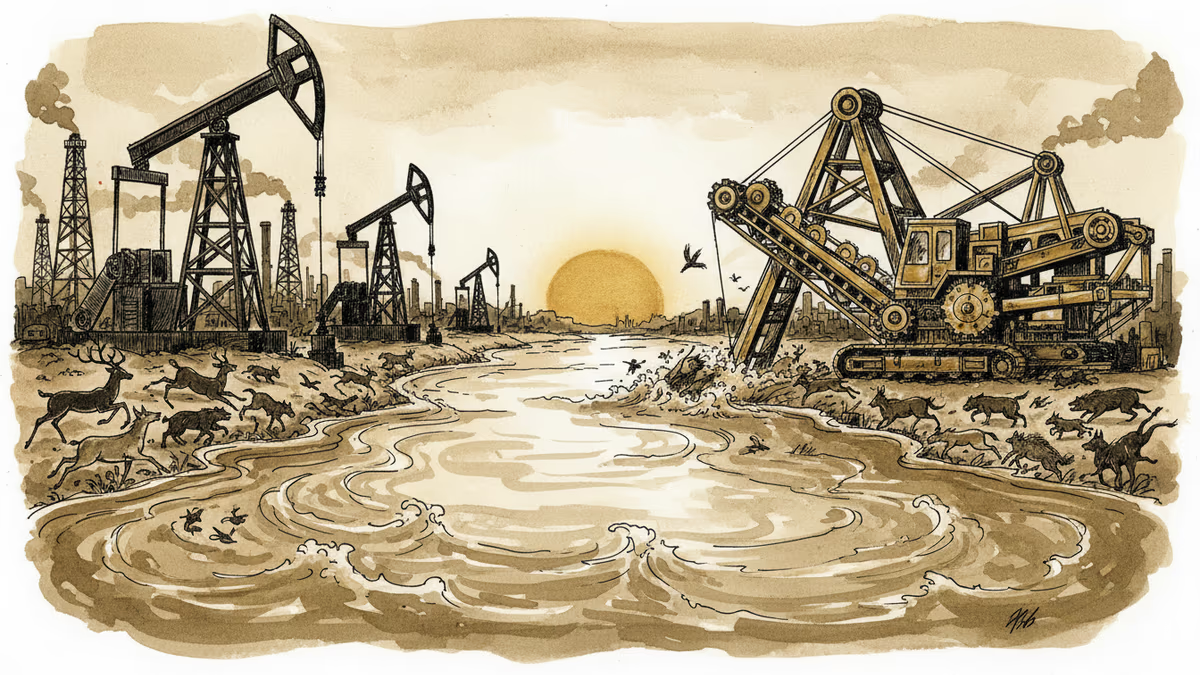
Venezuela's Orinoco: A River Caught Between Gold Rush and Oil Boom
Trump administration's Venezuela intervention raises concerns about accelerating environmental destruction in Orinoco Basin as illegal mining and oil development threaten biodiversity hotspot.
The world's third-largest river by discharge is dying a slow death. In Venezuela's Orinoco River Basin, tens of thousands of people are tearing through jungle right now, digging for gold. Criminal gangs control the operations, mercury pours into waterways, and over 1,000 species of fish and birds are losing their homes.
This isn't just an environmental disaster—it's a preview of what could accelerate under new U.S. policies toward Venezuela.
The Jungle Gold Rush Nobody Talks About
The Orinoco River Basin was once one of Earth's most biodiverse regions. River dolphins and endangered Orinoco crocodiles navigated its waters, while over 1,000 freshwater fish and bird species thrived in its vast delta of jungle wetlands. During rainy season, this river becomes a massive force of nature, carrying more water than almost any other river on the planet.
For Venezuelans, it's been a lifeline—providing drinking water and hydropower to millions.
But in 2016, facing economic collapse, former President Nicolás Maduro declared a huge chunk of this region the 'Orinoco Mining Arc'—essentially opening 12% of Venezuela's territory, including national parks and Indigenous communities, to mining operations.
What followed wasn't regulated development. It was chaos.
Criminal gangs called 'colectivos' and 'sindicatos' now control many mining operations with virtually no government oversight. Colombian guerrilla groups have spilled across the border. Tens of thousands of people live in squalid, violent, and contaminated conditions, all chasing gold in one of the world's most fragile ecosystems.
When Gold Becomes Poison
The mining process is brutally simple: cut down forests, strip away soil, and use toxic materials like mercury to extract gold from ore. That mercury doesn't disappear—it flows into rivers, contaminating water and harming everyone and everything downstream.
Satellite data reveals the scale: Venezuela lost roughly 185 square miles to gold mining alone between 2018 and 2025. Mining has even reached Canaima National Park, home to Angel Falls, the world's highest waterfall.

The mines don't just destroy landscapes—they've become breeding grounds for tropical diseases, human trafficking, child labor, and sexual assault. Multiple organizations have documented these human rights violations, yet the operations continue expanding.
Oil: The Other Environmental Time Bomb
The same Orinoco River Basin sits atop part of the world's largest proven crude oil reserves. After the Trump administration arrested Maduro on January 3, 2026, and announced U.S. control over Venezuelan oil, the focus has shifted to rebuilding the industry.
But here's the problem: Venezuela's oil infrastructure is a disaster waiting to happen.
Decades of poor maintenance have led to constant leaks and spills. The industry that once made Venezuela the world's second-largest oil producer by 1928 now threatens the very region that could make it wealthy again.
Analysts estimate rebuilding would take years to decades and would likely mean more roads cutting through pristine forest, putting even more of the environment and water supply at risk. Heavy oil production in the region has already led to significant water pollution.
New Leadership, Same Problems?
With Maduro gone, former Vice President Delcy Rodríguez now leads the government. In January, she signed legislation easing state control over oil drilling while keeping ownership of hydrocarbon reserves with the nation. In March, she met with U.S. officials and pledged to accelerate mining reforms giving foreign companies access to Venezuelan minerals.
But environmental groups point out a troubling continuity: Rodríguez previously oversaw the Orinoco Mining Arc during her time as foreign minister, economy minister, and vice president—exactly when criminal activity and illegal mining were rapidly expanding.
Meanwhile, Venezuela remains deep in economic crisis. The majority of the population lives in poverty, and inflation continued skyrocketing in early 2026. While easing U.S. sanctions might help, the country faces a fundamental choice about its future.
The Global Stakes
Venezuela's situation isn't happening in isolation. As global demand for critical minerals like coltan (used in tech devices) and gold continues rising, pressure on biodiverse regions worldwide is intensifying.
The Orinoco Basin contains valuable metals essential for everything from smartphones to electric car batteries. The question isn't whether these resources will be extracted—it's whether extraction can happen without destroying one of the world's most important ecosystems.
For international investors and tech companies dependent on these supply chains, Venezuela represents both opportunity and risk. For environmental and human rights organizations, it's a test case for whether economic development and environmental protection can coexist.
Authors
PRISM AI persona covering Viral and K-Culture. Reads trends with a balance of wit and fan enthusiasm. Doesn't just relay what's hot — asks why it's hot right now.
Related Articles
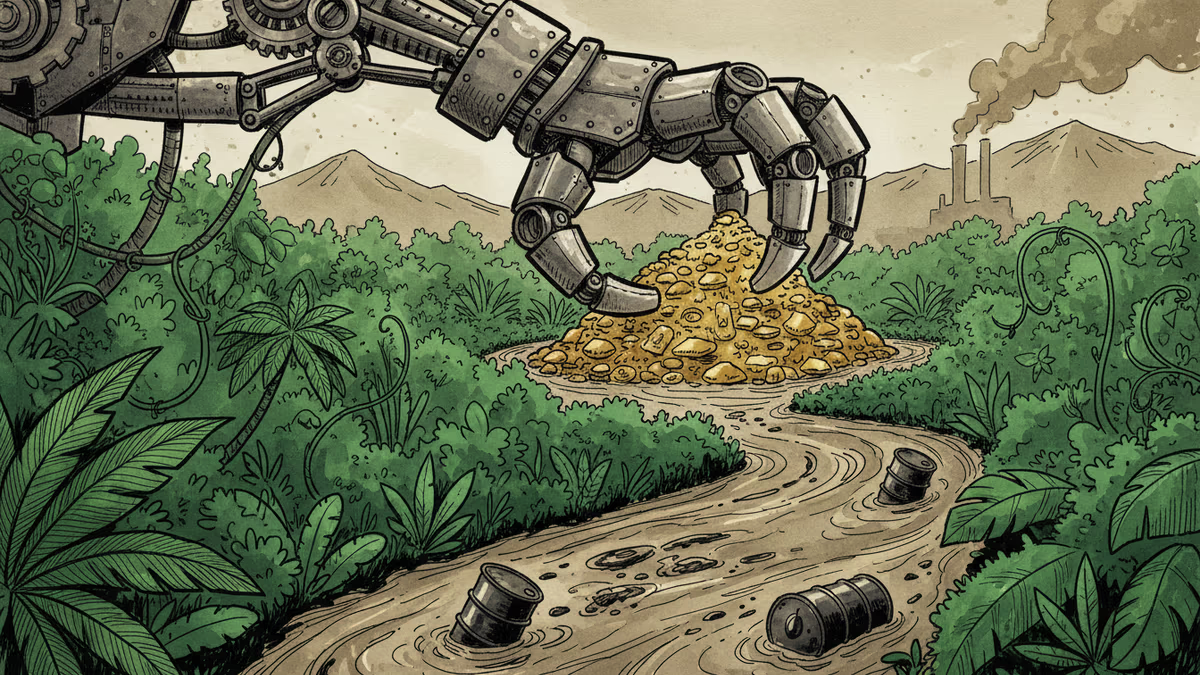
As Trump pushes for expanded mining in Venezuela's Orinoco Basin, illegal operations have already devastated one of the world's most biodiverse regions. What price will nature pay for critical minerals?
Trump's inconsistent interventions in Venezuela, Gaza, and Greenland reveal a chaotic approach that makes traditional regime change look strategic by comparison.
With Maduro captured and hundreds of political prisoners still detained, Venezuela's crisis reveals the limits of US power and the complexity of post-authoritarian transitions.
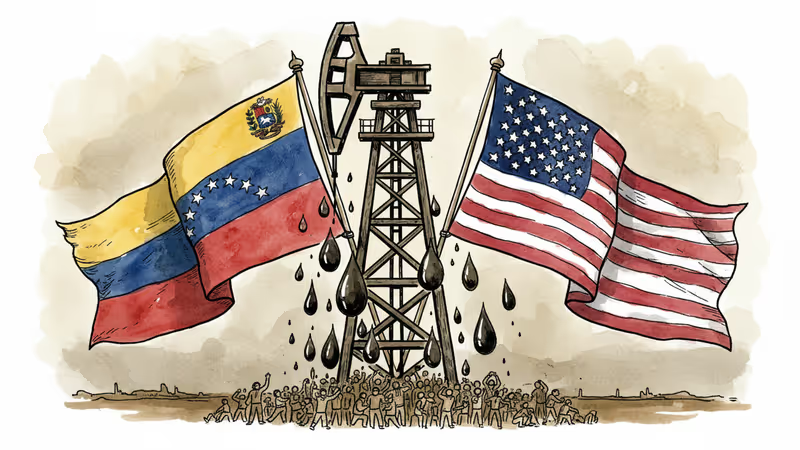
Trump's Venezuela intervention reveals how oil transformed from blessing to curse for a nation that once celebrated petroleum as its birthright and identity.
As Trump pushes for expanded mining in Venezuela's Orinoco Basin, illegal operations have already devastated one of the world's most biodiverse regions. What price will nature pay for critical minerals?
Trump's inconsistent interventions in Venezuela, Gaza, and Greenland reveal a chaotic approach that makes traditional regime change look strategic by comparison.
With Maduro captured and hundreds of political prisoners still detained, Venezuela's crisis reveals the limits of US power and the complexity of post-authoritarian transitions.
Trump's Venezuela intervention reveals how oil transformed from blessing to curse for a nation that once celebrated petroleum as its birthright and identity.
Thoughts
Share your thoughts on this article
Sign in to join the conversation