
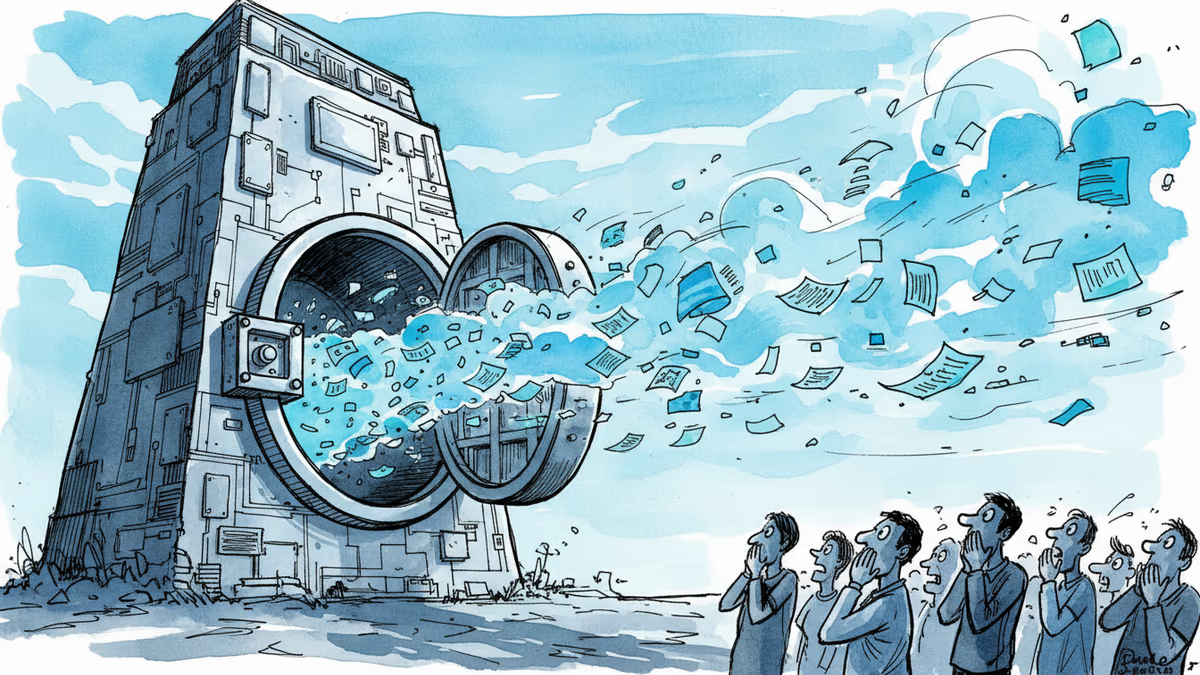
3 Billion Emails Were Just Floating Around
Massive data breach discovered on German server containing 3 billion email addresses and 2.7 billion Social Security numbers, freely accessible to anyone online.
3 Billion Emails Were Just Floating Around
Even cybersecurity veterans get surprised sometimes. Greg Pollock, who's spent years tracking data breaches, thought he'd seen it all—until January, when he stumbled across a database on a German cloud server containing 3 billion email addresses and passwords, plus 2.7 billion records with Social Security numbers. All of it sitting there, completely exposed, accessible to anyone who knew where to look.
"Every week, there's another finding that looks big on paper," says Pollock, director of research at UpGuard. "But I was surprised when I started digging into this one. Some of these identities are at risk because they've been exposed, but they haven't been exploited yet."
That last part—the "not yet exploited"—is what made this discovery particularly chilling.
Your 2015 Nostalgia Is Showing
When UpGuard analyzed a 2.8 million record sample from the massive trove, they found something telling: the passwords were stuck in 2015. One Direction, Fall Out Boy, and Taylor Swift dominated the password choices, while Blackpink, Katseye, and BTS Army references were virtually nonexistent.
This dating helped researchers conclude the data likely originated from US breaches around 2015. But don't let the age fool you—old data remains dangerous for two key reasons.

First, people recycle. The same email and password (or slight variations) get used across multiple sites for years. Second, Social Security numbers never change. They're the crown jewels of identity theft, and in this sample, one in four SSNs appeared to be legitimate. Applied to the full dataset, that could mean 675 million valid Social Security numbers were exposed.
The Victims Who Don't Know They're Victims
Here's where it gets really unsettling. When UpGuard contacted people whose data appeared in the breach, many had no idea their information was out there. They hadn't been victims of identity theft. Their accounts hadn't been compromised.
This suggests cybercriminals haven't found or exploited this particular database yet. It's like discovering an unexploded bomb in your backyard—dangerous not because of what's happened, but because of what could happen.
Pollock notified German cloud provider Hetzner on January 16, and the company says it contacted its customer, who removed the data by January 21. But the incident raises uncomfortable questions about how long sensitive data can sit exposed before someone with malicious intent discovers it.
The Long Shadow of Old Breaches
This discovery illustrates something security experts have long warned about: data breaches have incredibly long tails. The 2015 Office of Personnel Management hack, the 2017 Equifax breach—they don't just disappear. That stolen data gets combined, recombined, and traded among data brokers and criminals for years.
"These are land mines that have been put down and then are dangerous forever," Pollock explains. It's a reminder that in our interconnected world, a security failure from nearly a decade ago can still threaten your financial life today.
The scale of this exposure—potentially containing fragments from multiple historic breaches including last year's National Public Data incident—shows how personal information gets weaponized over time.
Authors
Related Articles
UK Visa Portal, a private immigration service mistaken for an official government site, has been exposing passport scans and selfies of over 100,000 applicants. The breach remains unpatched.
Okta CEO Todd McKinnon on why AI agents need identity management, the SaaSpocalypse threat, and why the kill switch might be the most important button in enterprise tech.
Iran and Israel are hacking civilian security cameras for military reconnaissance. How consumer surveillance devices became weapons of war.
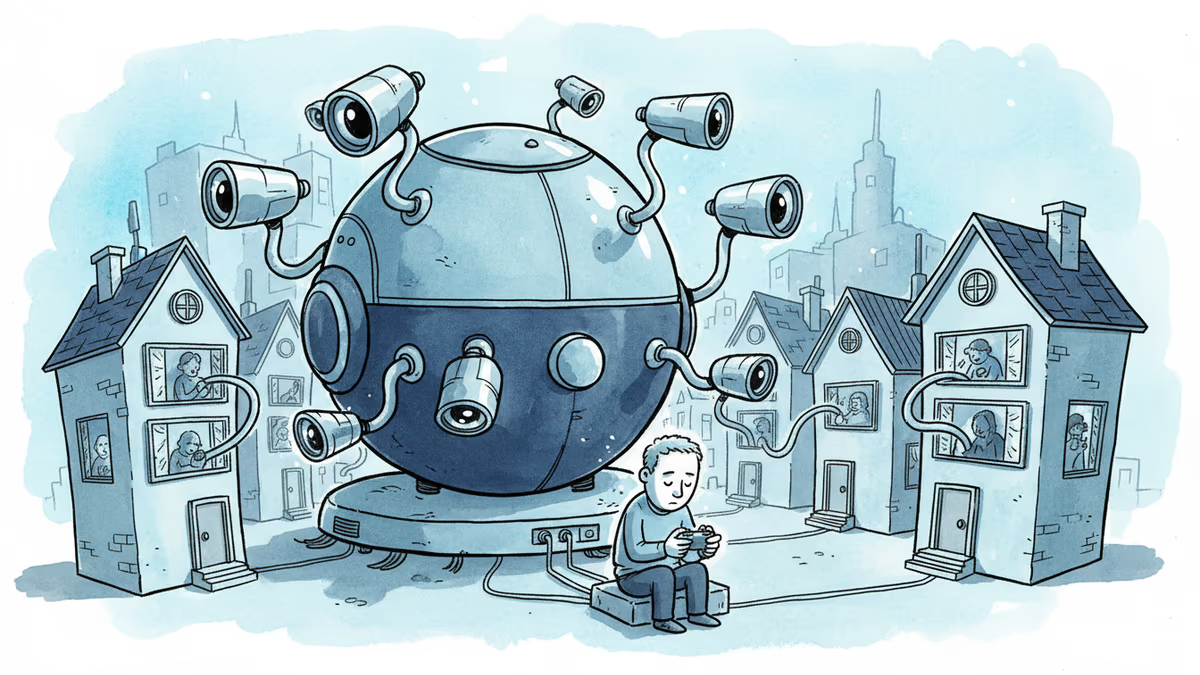
A security researcher discovered he could access 7,000 DJI robot vacuums and peek into strangers' homes. This Valentine's Day revelation exposes the hidden privacy risks of our smart home obsession.
UK Visa Portal, a private immigration service mistaken for an official government site, has been exposing passport scans and selfies of over 100,000 applicants. The breach remains unpatched.
Okta CEO Todd McKinnon on why AI agents need identity management, the SaaSpocalypse threat, and why the kill switch might be the most important button in enterprise tech.
Iran and Israel are hacking civilian security cameras for military reconnaissance. How consumer surveillance devices became weapons of war.
A security researcher discovered he could access 7,000 DJI robot vacuums and peek into strangers' homes. This Valentine's Day revelation exposes the hidden privacy risks of our smart home obsession.
Thoughts
Share your thoughts on this article
Sign in to join the conversation