
US Seizes Unsanctioned Tanker off Venezuela: A Dangerous Escalation of Maritime Geopolitics
US seizure of an unsanctioned oil tanker off Venezuela marks a dangerous escalation, testing international law and regional stability in the Caribbean.
The Lede: Navigating Uncharted Waters in Geopolitical Risk
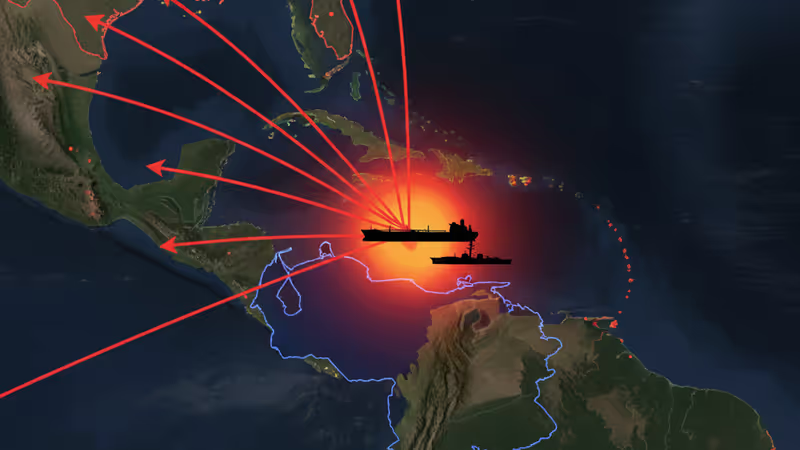
The United States' recent seizure of the Panama-flagged oil tanker 'Centuries' in the Caribbean Sea, east of Barbados, marks a significant and potentially perilous escalation in its pressure campaign against Venezuela. This incident, occurring on December 20, 2025, is not just another enforcement action; it directly challenges long-standing principles of international maritime law and freedom of navigation, raising the stakes for global shipping, energy markets, and regional stability. For executives tracking global supply chains and geopolitical risk, this move signals a dangerous new phase where the lines between sanctions enforcement and acts of international piracy become increasingly blurred.
Why It Matters: Testing the Boundaries of International Law and Commerce
This incident transcends a typical sanctions enforcement action due to one critical detail: the seized vessel, the 'Centuries', was reportedly
not sanctioned by the US government.
This distinction is paramount, moving the situation from targeted economic pressure to a potential breach of international maritime norms. Its implications are far-reaching:- Legal Precedent and Maritime Security: Seizing an unsanctioned vessel in international waters, even under the broad justification of combating 'narco-terrorism', sets a dangerous precedent. It undermines the UN Convention on the Law of the Sea (UNCLOS) and could embolden other nations to undertake similar actions, creating a more unpredictable and hazardous environment for commercial shipping worldwide.
- Escalation of US-Venezuela Tensions: Caracas has vehemently denounced the seizure as 'theft and hijacking' and 'a serious act of international piracy,' vowing to appeal to the United Nations Security Council. This rhetoric indicates a potential for further militarization of the conflict, increasing the risk of miscalculation in a volatile region.
- Impact on Global Energy & Shipping: The Caribbean is a vital maritime corridor for energy transport. Increased US naval presence and aggressive interdiction tactics will inevitably lead to higher insurance premiums, rerouting decisions, and increased operational costs for tankers, impacting global oil prices and supply chain resilience.
- Sovereignty and International Relations: The Panama-flagged status of the 'Centuries' raises questions about the violation of sovereign jurisdiction. Panama, a key player in global shipping, may be compelled to react, further complicating diplomatic efforts and potentially isolating the US on this issue.
The Analysis: From Sanctions to Blockade – A Shift in Strategy
The US pressure campaign against Venezuelan President Nicolas Maduro's government has steadily intensified since the Trump administration took office. Initially characterized by economic sanctions targeting individuals, state-owned entities like PDVSA, and restricting Venezuela's access to global financial systems, the strategy has now visibly shifted. President Trump's recent order for a 'total and complete blockade' of all sanctioned oil tankers entering and leaving Venezuela signaled a move towards more overt naval enforcement.
However, the seizure of an unsanctioned vessel represents a significant departure from even this hardened stance. While the US invokes the fight against 'narco-terrorism' – a broad justification often used to expand security operations – the move risks being perceived internationally as an economic blockade, an act typically associated with warfare and subject to stringent international legal frameworks. This action could alienate US allies who rely on stable maritime trade and adhere strictly to international law, potentially weakening the international coalition against Maduro.
Venezuela, already reeling from severe economic hardship exacerbated by US sanctions, views this as an existential threat. The move fuels narratives of US aggression and intervention, potentially solidifying Maduro's domestic support among those who view him as a defender against foreign encroachment. While the US aims to choke off revenue streams to the Maduro regime, this escalation could inadvertently strengthen its resolve and garner sympathy from non-aligned nations critical of unilateral military actions.
PRISM Insight: The Technology of Geopolitical Risk
This incident underscores the urgent need for advanced technological solutions in geopolitical risk assessment and maritime domain awareness. Companies in the shipping, insurance, and energy sectors are increasingly reliant on:
- Real-time Maritime Surveillance: AI-driven platforms that track vessel movements, detect anomalies, and predict potential interdiction zones become critical for route planning and risk mitigation.
- Predictive Geopolitical Analytics: AI models capable of processing vast amounts of open-source intelligence, diplomatic communiqués, and social media data to forecast shifts in policy, identify emerging flashpoints, and quantify operational risk.
- Blockchain for Supply Chain Transparency: Increased calls for immutable digital records of cargo origins, ownership, and sanction compliance could emerge to protect vessels from arbitrary seizures.
PRISM's Take: A Dangerous Precedent for Global Commerce
The US seizure of an unsanctioned oil tanker marks a perilous inflection point in international relations. While the stated goal is to combat illicit funding and pressure the Maduro regime, the method employed risks unraveling the very fabric of international maritime law and global commerce. It establishes a dangerous precedent where a nation-state, citing its own domestic legal framework or security interests, unilaterally interdicts international shipping in international waters without clear UN mandate or universally accepted legal grounds for the specific vessel in question.
For the global economy, this action introduces a new layer of uncertainty and risk to an already fragile supply chain. Executives must now factor in the possibility of interdiction even for seemingly compliant vessels, leading to higher operational costs, increased insurance premiums, and a potential chilling effect on trade in contested regions. The international community, including global trading powers and shipping nations, must carefully consider the implications of such unilateral actions and work towards de-escalation, re-establishing clear adherence to international law to safeguard freedom of navigation and the stability of global commerce.
Related Articles
Ukraine conflict escalates with strategic strikes on energy & military assets, intensified fighting, and cautious diplomatic overtures. Analyzes geopolitical impact, economic shifts, and the future of financial warfare and drone tech.
Prolonged visa delays are compelling tech companies to restrict international travel for skilled workers, raising concerns about global talent mobility and US economic competitiveness.

Analysis of the deep divisions within NATO and EU on Ukraine aid, exploring escalation risks, geopolitical implications, and impacts on defense, energy, and tech sectors.

Analyze global instability: from localized violence and geopolitical stalemates to humanitarian crises. Understand systemic risks, business impact, and adaptive strategies.