
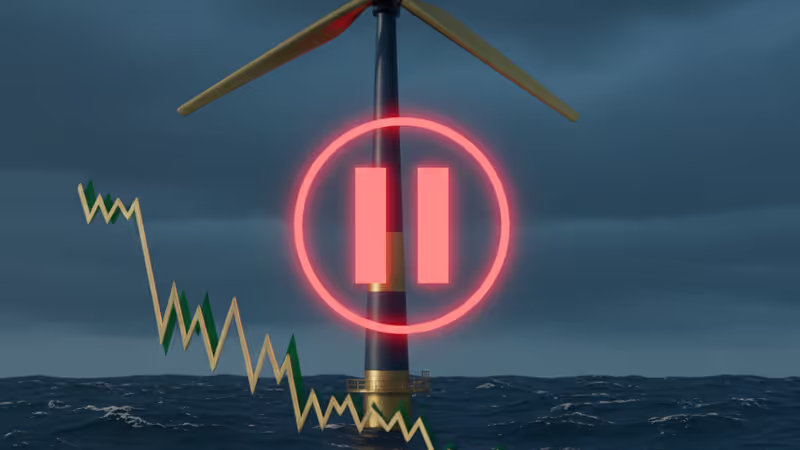
U.S. Freezes Five Major Offshore Wind Farms, Wiping Billions From Valuations
The U.S. government has frozen five major offshore wind projects, causing shares of Ørsted, Equinor, and BP to dive. An analysis of the market impact and what this means for investors.
The U.S. government has abruptly halted the permitting process for five major offshore wind projects, sending shockwaves through the global renewables sector and causing shares of top energy developers to plummet.
According to a Reuters report on Monday, the Department of the Interior cited a need for a “comprehensive review of cumulative environmental impacts” on marine ecosystems for the sudden freeze. The move effectively stalls gigawatts of planned clean energy capacity off the U.S. East Coast, jeopardizing the nation’s ambitious climate targets.
Market reaction was swift and brutal. Shares of Denmark's Ørsted A/S, the world's largest offshore wind developer, tumbled <span style='color: #E53935; font-weight: bold;'>as much as 18%</span> in Copenhagen. Other key players like Equinor ASA and BP Plc, partners on several of the affected projects, saw their stocks slide <span style='color: #E53935; font-weight: bold;'>over 10%</span>, wiping a combined total estimated at over $15 billion in market value.
While the official reason is environmental review, the industry has been buckling under a perfect storm of economic pressures. Soaring inflation has driven up the cost of steel and other raw materials, while high interest rates have made financing these capital-intensive projects exponentially more expensive. It's a harsh reality check for an industry that has struggled to make its economics work without heavy subsidies and favorable power contracts, many of which are now underwater.
This isn't just a temporary setback; it's a critical stress test for the entire U.S. renewable energy strategy. The Biden administration’s goal of deploying 30 gigawatts of offshore wind by 2030 now looks increasingly out of reach. For investors, this signals that political and regulatory risk in the U.S. renewables market is far higher than previously priced in. The financial viability of green projects can no longer be assumed, and future investments will demand a much higher premium for these policy uncertainties.
This content is AI-generated based on source articles. While we strive for accuracy, errors may occur. We recommend verifying with the original source.
Related Articles

Custodia Bank's legal battle with the Fed is a critical test for US crypto banking. Our analysis reveals the investment risks and opportunities at stake.

IHG is building a huge 800+ room hotel in Osaka, opening in 2029 to target the new casino. We analyze the investment thesis and its impact on Japan's real estate and tourism sectors.

The Japanese yen rallied to the 156-per-dollar level after Finance Minister Satsuki Katayama said Japan has a "free hand" to counter its depreciation, signaling a heightened risk of currency market intervention.
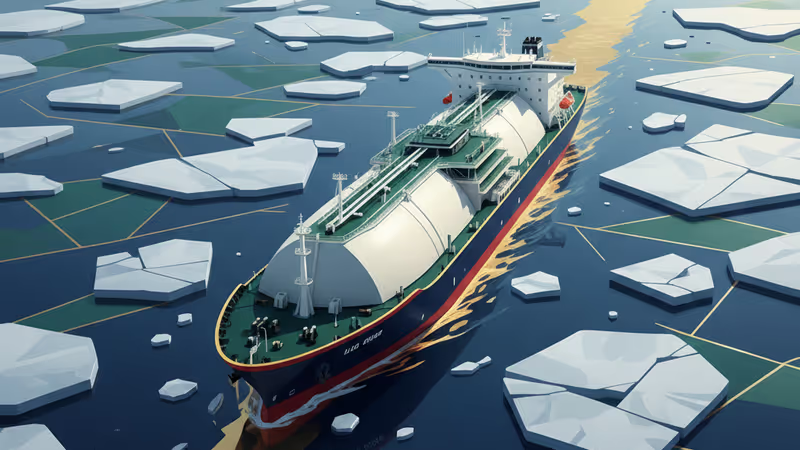
A Chinese-owned tanker, the Kunpeng, has loaded the first LNG cargo from Russia's sanctioned Arctic LNG 2 plant, testing the effectiveness of U.S. sanctions and potentially impacting global energy markets.