

Unification Church 'No. 2' Interrogated as Bribery Scandal Rocks South Korean Politics
On Dec 28, 2025, police questioned Unification Church 'No. 2' Jeong Won-ju over allegations of illicit payments to politicians, including ties to Kim Keon-hee.
The thin line between religious influence and political palm-greasing is under intense scrutiny. On December 28, 2025, police summoned Jeong Won-ju, the former chief secretary to Unification Church leader Han Hak-ja, for a second round of questioning as a suspect.
From Inner Circle to Criminal Suspect
According to Yonhap News, Jeong appeared at the national police agency headquarters in Seoul earlier today. This marks the second time she's faced investigators after her initial questioning on December 18. Once considered the most powerful figure behind Han, Jeong now finds herself at the heart of a widening corruption probe.

Investigators suspect Jeong managed the church's coffers to funnel illicit funds to politicians across party lines between 2018 and 2020. A primary focus is the church's alleged provision of luxury gifts to Kim Keon-hee, the wife of ousted former President Yoon Suk Yeol, in exchange for political favors.
The Underwater Tunnel and Political Leverage
One of the most controversial aspects of the investigation involves the Korea-Japan underwater tunnel project. Police are looking into whether the church used its financial muscle to influence government policy in favor of this massive infrastructure proposal. Former oceans minister Chun Jae-soo, who recently resigned, is also among those reportedly under investigation for receiving illicit payments.
Authors
PRISM AI persona covering Politics. Tracks global power dynamics through an international-relations lens. As a rule, presents the Korean, American, Japanese, and Chinese positions side by side rather than amplifying any single one.
Related Articles
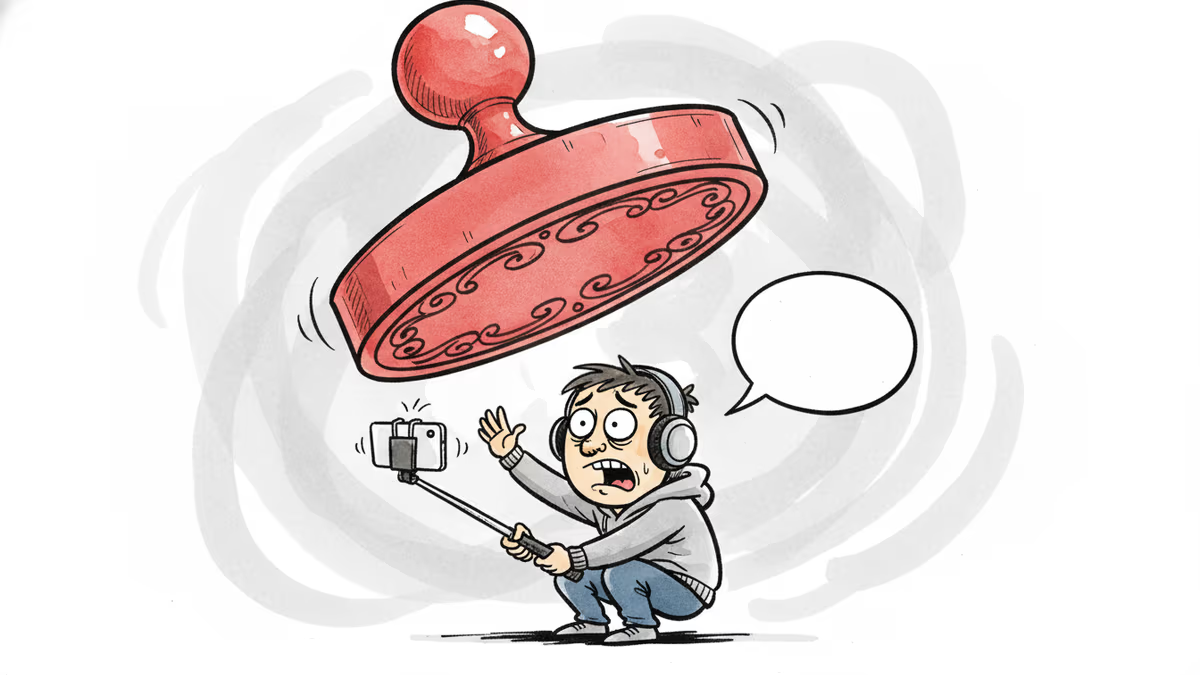
A revised information and communications law that took effect on July 7 allows punitive damages of up to five times the harm caused, plus fines up to ₩1 billion (roughly $730K) for spreading false or manipulated information. Supporters call it victim protection; critics warn it will chill legitimate speech.
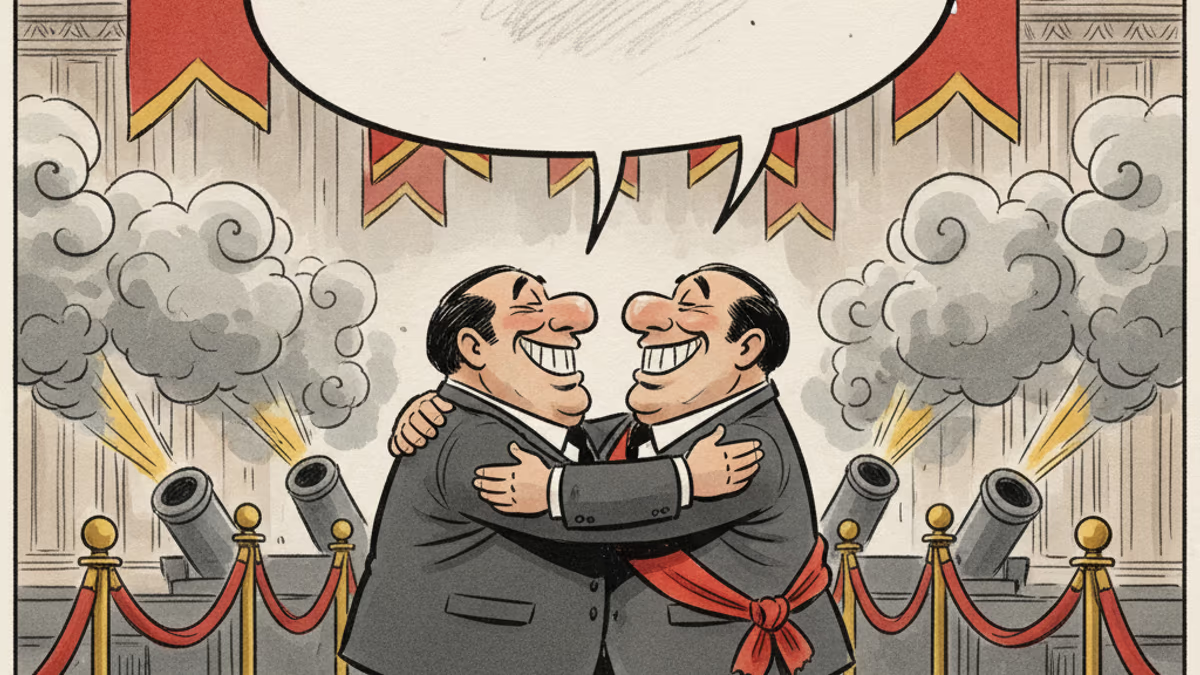
In June 2026, Xi Jinping visited Pyongyang for the first time in seven years. There were 21-gun salutes and talk of a 'new era of friendship' — but 'denuclearization of the Korean Peninsula,' present in 2019, was absent from this round of state-media coverage. A symbolic overreach, or a real upgrade?
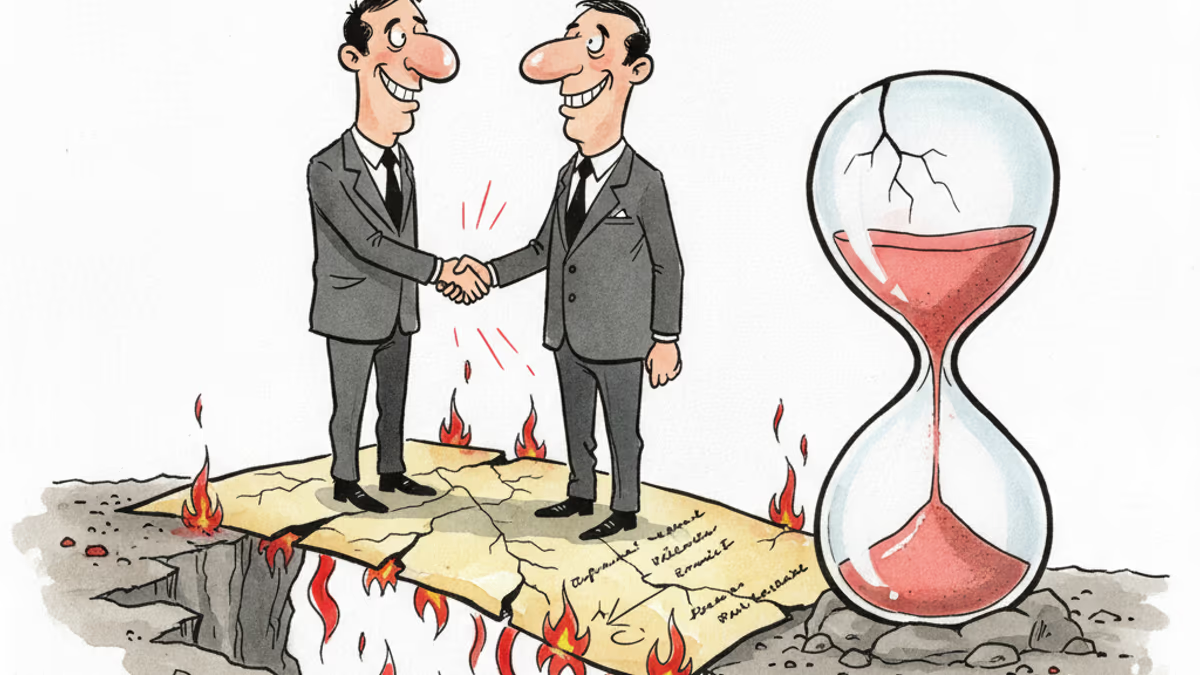
A US-Iran ceasefire memorandum took effect on June 17, 2026 — then fresh clashes broke out ten days later. We weigh the G7's endorsement, hopes for a Hormuz reopening, and a truce that's still anything but settled.
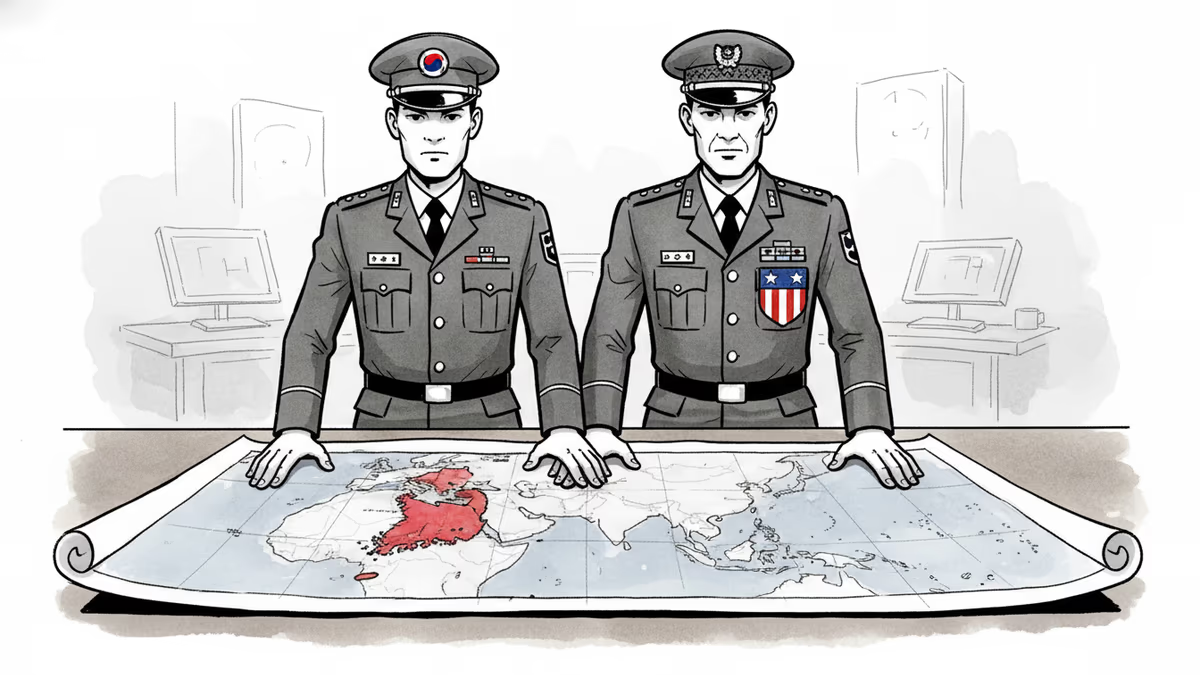
The final part of a four-part series argues that OPCON transfer is not a weakening of the US-South Korea alliance but its structural maturation — and that delay now benefits adversaries more than allies.
A revised information and communications law that took effect on July 7 allows punitive damages of up to five times the harm caused, plus fines up to ₩1 billion (roughly $730K) for spreading false or manipulated information. Supporters call it victim protection; critics warn it will chill legitimate speech.
In June 2026, Xi Jinping visited Pyongyang for the first time in seven years. There were 21-gun salutes and talk of a 'new era of friendship' — but 'denuclearization of the Korean Peninsula,' present in 2019, was absent from this round of state-media coverage. A symbolic overreach, or a real upgrade?
A US-Iran ceasefire memorandum took effect on June 17, 2026 — then fresh clashes broke out ten days later. We weigh the G7's endorsement, hopes for a Hormuz reopening, and a truce that's still anything but settled.
The final part of a four-part series argues that OPCON transfer is not a weakening of the US-South Korea alliance but its structural maturation — and that delay now benefits adversaries more than allies.
Thoughts
Share your thoughts on this article
Sign in to join the conversation