
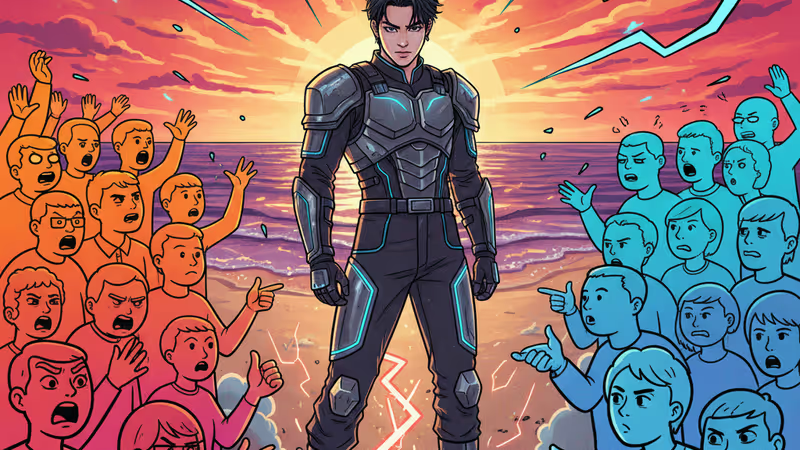
TXT's Soobin Drew a Line in the Sand—And It Sparked a Necessary Fandom Civil War
When TXT's Soobin asked fans not to stalk his friends, he ignited a global debate on parasocial relationships and the toxic side of fandom. Here's why it matters.
Why This Matters in 60 Seconds
When K-pop star Soobin of TXT made a simple, polite request for fans not to track down his non-celebrity friends, he didn't just post a message; he ignited a global firestorm. The incident has become a flashpoint in a much larger conversation about the toxic side of modern fandom, the illusion of digital intimacy, and where the line between devotion and delusion truly lies.
The Story: A Preemptive Strike Against Obsession
The drama began with a surprisingly wholesome premise: a vlog featuring TXT's leader, Soobin, spending a day with a close friend. But a day before the video went live, Soobin took to a fan platform with a crucial message. He explained that his friend's identity would be blurred for privacy, but he needed to ask for more.
In a direct plea, he urged his fans, known as MOA, not to engage in digital detective work to identify or contact his friend. He revealed this wasn't a hypothetical fear—fans had previously managed to track down his middle school friends, an experience he described as "scary" for non-celebrities. He concluded with a gentle warning: if this behavior continued, it would become difficult for him to share candid moments in the future.
The Reaction: Fans vs. Fans
The internet did not disappoint. The majority of the fandom wasn't angry at Soobin; they were furious that his request was necessary in the first place. The discourse quickly turned into a massive, fan-led campaign to call out the invasive behavior of a toxic minority.
Here are the takes that defined the conversation:
The "Basic Human Decency" Plea
Many fans were simply exasperated that a celebrity had to remind grown adults of basic social etiquette. The prevailing sentiment was one of disappointment that the actions of a few were forcing their idol to feel uncomfortable.
- "Basically, he’s reminding you all to act like decent human beings and not be weird." — @bamgyuuuuu313
- "I can’t believe people act like this. Literally doxxing the people who are close to someone you supposedly stan. Have some basic respect." — @TERRYNAT0R
The "You Are Not Owed Their Lives" Reality Check
A core theme was the sense of entitlement some fans display. The discussion centered on the idea that supporting an artist doesn't grant you ownership over their personal life or the lives of those around them.
- "Everyone needs to learn to mind their business you are not owed anything of their personal lives. They try to share sm w us and you taking advantage of that in such a vile way is so disrespectful, what business do u have w those ppl." — @Sonyeondamn7
The Warning Against Digital Stalking
Others pointed out that this behavior goes beyond simple curiosity and veers into a modern form of stalking, where zooming in on photos and cross-referencing social media accounts is treated like a game.
- "i hope you weirdos that like to zoom all the way in and edit his pics to try to see who he's with know this applies to you too btw bc it's not 'no big deal' or 'just for fun' it's also an invasion of privacy." — @estrojjvn
Cultural Context: The Parasocial Paradox
Soobin's plea resonates so deeply because it perfectly illustrates the "parasocial paradox." Social media and content like vlogs are designed to create a feeling of intimacy and closeness between artists and fans. Fans feel like they *know* their idols. However, this is a one-way relationship, and the paradox is that the very platforms fostering this connection can also enable the most toxic invasions of privacy.
While often associated with the intense "sasaeng" culture in South Korea, this behavior is a global phenomenon. From Taylor Swift fans tracking her private jet to online communities doxxing the partners of streamers, the line between fan and stalker has become dangerously blurred. Soobin's message was a stark reminder that behind the celebrity persona is a human being asking for the same privacy anyone would expect for their friends and family.
PRISM Insight: The Power of Setting Boundaries
Beyond the immediate drama, two significant trends are at play here:
1. The Rise of the Self-Advocating Idol: For decades, K-pop idols were notoriously tight-lipped, with companies managing all public-facing communication. Soobin's direct, preemptive message is emblematic of a new generation of artists who are using their platforms to set their own boundaries. Instead of waiting for a crisis, he addressed the issue head-on, treating his fans as adults capable of understanding a reasonable request. This represents a maturation of the artist-fan dynamic, moving from a purely transactional relationship to one based on mutual respect.
2. Fandom Self-Policing as a Feature, Not a Bug: The most telling aspect of this event is not the actions of the obsessive few, but the overwhelming reaction of the many. The healthy majority of the fandom immediately amplified Soobin's message, turning it into a teaching moment and actively policing their own community. This demonstrates how modern, digitally-native fandoms operate. When a leader sets a clear norm, the community often works to enforce it, effectively isolating the toxic elements. Soobin didn't just protect his friend; he empowered the best parts of his fanbase to define their own culture.
Related Articles
SHINee's Key's apology for the 'Injection Auntie' meme sparked a global debate. We break down the controversy, curate the best reactions, and explain why it matters.
An artist's casual mention of NewJeans sparked a global fan backlash. We break down why this moment went viral and what it says about modern fandom.
A deep dive into why aespa Winter's 'rude' behind-the-scenes clips went viral, exposing a massive cultural divide between Korean and international K-pop fans.
KATSEYE's Manon sparked a global debate with a pre-debut photoshoot. Discover why the 'controversy' reveals a massive culture clash in K-pop.