
TXT's Soobin Didn't Just Ask Fans for Privacy—He Exposed a Crisis in Modern Fandom
TXT's Soobin asked fans not to stalk his friends, sparking a massive online debate about K-pop fandom, privacy, and the crisis of parasocial relationships.
Why This is Dominating Your Feed
In a move that sent shockwaves through the K-pop community and beyond, TXT leader Soobin made a simple, yet profound, request: please don't track down and contact my non-celebrity friends. The plea, made ahead of a vlog featuring a friend, has ignited a fierce debate, not just about one artist, but about the very nature of celebrity, privacy, and the unwritten rules of digital-age fandom.
The Story: A Simple Request Reveals a Deeper Problem
On December 15, 2025, ahead of a personal vlog release, Soobin took to a fan communication platform with a preemptive message. He explained that while his friend's face would be blurred for privacy, he needed to ask fans for an additional layer of respect. "Please don’t go around looking for him and contacting him… he’s not someone that’s a celebrity so please don’t do that," he wrote, according to a fan translation.
The request wasn't hypothetical. Soobin revealed that this has happened before, with fans managing to track down his middle school friends—a startling invasion of privacy that he said was "scary" for non-celebrities. He concluded with a gentle warning: if this behavior continues, sharing his personal life with fans will become impossible. The line was drawn.
The Reaction: Fandom's Civil War
The internet did what it does best: it erupted. But the anger wasn't directed at Soobin. Instead, the majority of the fandom turned its fury inward, calling out the minority who make such requests necessary. We've curated the most telling reactions that capture the sentiment.
The "Basic Human Decency" Plea
Many fans were exasperated that such a basic boundary needed to be explicitly stated. It was a moment of collective disbelief that a portion of their own community would stoop to doxxing an idol's personal connections.
- User @bamgyuuuuu313 put it bluntly: "Basically, he’s reminding you all to act like decent human beings and not be weird."
- @Sonyeondamn7 echoed the sentiment: "Everyone needs to learn to mind their business you are not owed anything of their personal lives... taking advantage of that in such a vile way is so disrespectful."
The Warning Against Digital Sleuthing
Others pointed out how seemingly harmless online behavior, like enhancing photos or digging through social media, is part of the same invasive ecosystem.
- @estrojjvn issued a direct call-out: "i hope you weirdos that like to zoom all the way in and edit his pics to try to see who he's with know this applies to you too... it's also an invasion of privacy."
The Fear of Losing Connection
A significant portion of the reaction was rooted in fear—the fear that the actions of a few would ruin the candid, open relationship the artist tries to maintain with the entire fandom.
- As @TERRYNAT0R stated: "I can’t believe people act like this. Literally doxxing the people who are close to someone you supposedly stan. Have some basic respect."
Cultural Context: The Parasocial Paradox
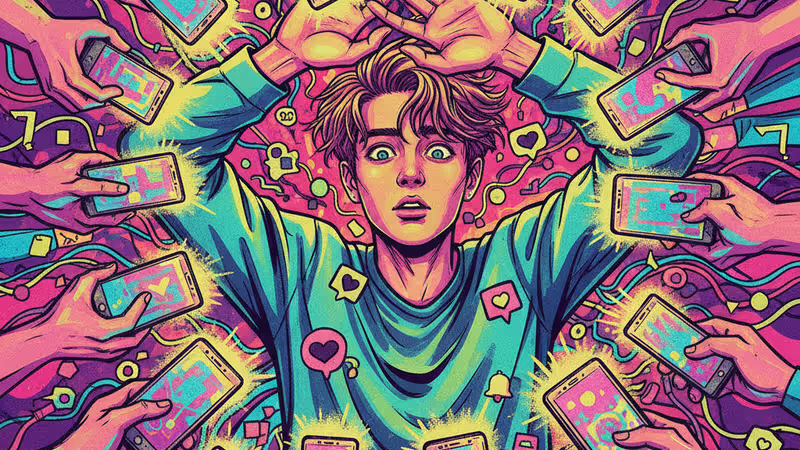
This isn't just a K-pop problem; it's a global internet culture phenomenon amplified by the unique structure of the industry. K-pop has perfected the art of the parasocial relationship—the one-sided, intimate bond fans feel with celebrities. Through constant content, live streams, and direct messaging platforms, idols feel accessible, like friends. Soobin’s vlog with a friend was an extension of this intimacy.
The paradox is that this manufactured intimacy can be misinterpreted by some as a genuine, two-way relationship, leading to a sense of entitlement over an artist's personal life. While obsessive behavior has always existed (see: Beatlemania), social media provides the tools to turn obsession into action with terrifying efficiency. What Soobin is addressing is the dark side of the very fan-centric model that made his group a global success.
PRISM Insight: The Great Fandom Correction
Beyond the immediate drama, Soobin's plea signals two critical shifts in the landscape of modern fandom.
1. The Artist as Boundary-Setter
For decades, managing obsessive fan behavior (known as sasaeng culture in Korea) was the unspoken, behind-the-scenes job of entertainment agencies. Idols were expected to smile through discomfort. Soobin’s public, direct appeal represents a significant change. He is not relying on his agency to police his fans; he is addressing them as adults, attempting to renegotiate the terms of their relationship in real-time. This is the artist taking control of their own narrative and, more importantly, their own safety and sanity. It's a vulnerable move, but a necessary one, reflecting a new generation of stars who are less willing to accept privacy invasion as a cost of fame.
2. The Fandom's Immune System is Kicking In
The most fascinating aspect of this event is not the transgression, but the reaction. The overwhelming response was the fandom policing itself. By publicly shaming the boundary-crossers, the majority of fans are actively trying to establish and enforce healthier community norms. This is a form of collective self-preservation. Responsible fans understand that the actions of a toxic minority threaten the very artist-fan connection they cherish. This internal 'immune response'—where the community itself isolates and attacks the 'virus' of toxic behavior—is perhaps the only sustainable way to ensure the long-term health of any online fandom.
Soobin's request was a distress signal, and in a promising turn of events, the majority of his fanbase heard it not as a complaint, but as a call to action to protect the artist they admire from within.
Related Articles

A former Nogizaka46 member's marriage on her 30th birthday is more than celebrity news. We break down the cultural forces and fan dynamics that made it go viral.

A pillow in Taylor Swift's dressing room went viral. We analyze the 'Swift Effect' and why this accidental endorsement is a masterclass in modern marketing.

SM Entertainment announced EXO's Lay will miss a fanmeeting, sparking a massive online reaction. We break down why it happened and what it means for K-pop.

Uncover how the historical influence of the Arabic language offers a strategic roadmap for AI, tech investment, and unlocking the 400M-strong MENA market.