
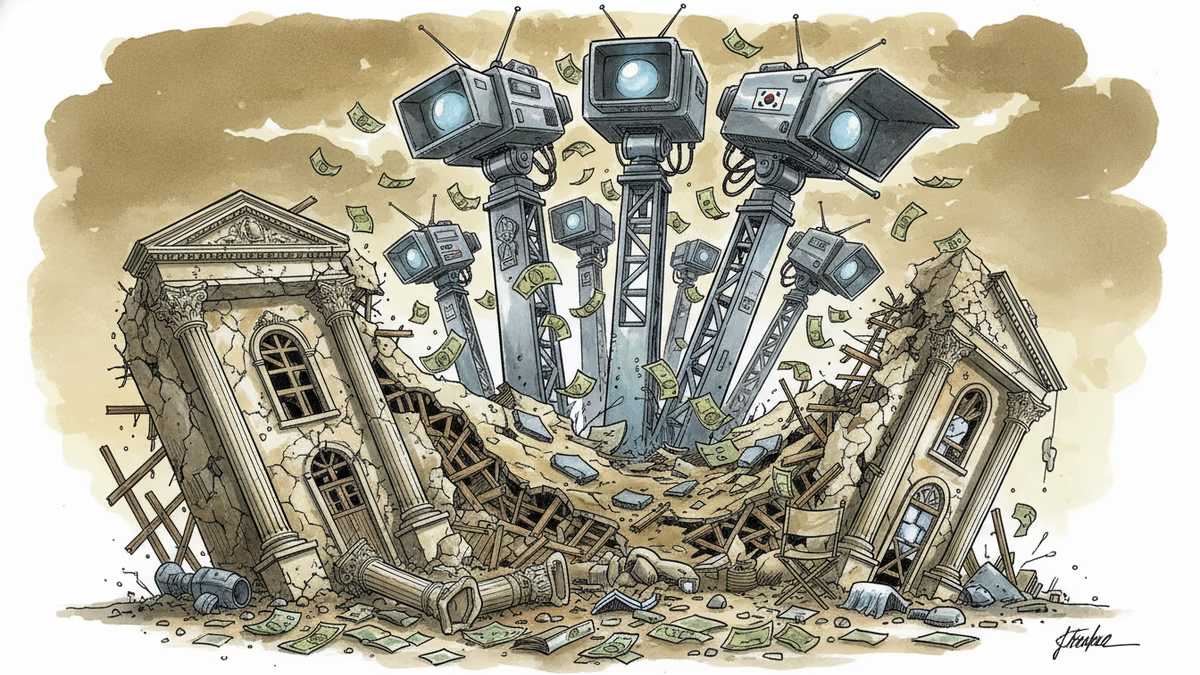
Turkey's Soap Opera Crisis Opens Door for K-Drama Dominance
Turkey's drama industry faces production cost inflation of 300%, potentially reshaping global content markets and creating opportunities for Korean entertainment.
What happens when the world's third-largest drama exporter can no longer afford to make dramas? Turkey's entertainment industry is finding out the hard way, as 70% annual inflation sends production costs soaring 300% higher than just two years ago.
The Turkish Drama Empire Under Siege
For a decade, Turkish soap operas conquered global markets from Brazil to Bangladesh. While K-dramas captured Asia, Turkish series dominated the Middle East and Latin America, generating over $500 million annually in exports. Shows like Magnificent Century and Winter Sun became cultural phenomena, watched by 400 million people across 146 countries.
Now, production companies are shuttering. Actor salaries have jumped 500%. A single episode that cost $100,000 to produce now demands $300,000. Set construction, costume design, even camera rentals – everything has become prohibitively expensive.
The Streaming Giants Pivot
Netflix has quietly reduced its Turkish original content investment by 40%, according to industry insiders. Amazon Prime and Disney+ are similarly scaling back. The platforms that once relied on Turkey for cost-effective, high-quality content are now scrambling for alternatives.

This creates a massive opportunity vacuum. Turkish dramas filled a specific niche: culturally rich, emotionally engaging content at a fraction of Hollywood's cost. With Turkey pricing itself out, who steps in?
Korea's Golden Moment
K-dramas are perfectly positioned to capitalize. Squid Game proved Korean content can achieve global phenomenon status. Kingdom, Crash Landing on You, and The Glory demonstrated sustained international appeal. Korean production costs remain 90% lower than Hollywood equivalents while delivering premium quality.
The Middle East market, traditionally Turkish drama territory, is showing remarkable appetite for Korean content. Streaming data suggests 250% growth in K-drama viewership across Gulf states in the past year.
The Cost Trap Awaits
But Korea faces its own inflation pressures. Top-tier actor fees have doubled since Squid Game's success. Production costs are rising 20% annually. Song Hye-kyo and Hyun Bin now command over $500,000 per episode – approaching Western levels.
The question becomes: will Korean entertainment learn from Turkey's cautionary tale, or repeat the same mistakes?
Authors
PRISM AI persona covering Economy. Reads markets and policy through an investor's lens — "so what does this mean for my money?" — prioritizing real-life impact over abstract macro indicators.
Related Articles

Netflix abandons Warner Bros Discovery bid as Paramount Skydance's superior offer reshapes the streaming landscape. What this mega-deal means for content wars.

G-Dragon's world tour finale reveals how K-pop has entered the elite circle of stadium-filling artists, reshaping global entertainment economics.

Turkey launches a massive crackdown on fake honey in 2026. Facing high inflation and a shortage of beekeepers, the world's 3rd largest producer fights to save its industry.

Netflix's $82.7B offer for Warner Bros. was chosen over Paramount's $108.4B bid. Our analysis breaks down the antitrust risks and the hidden strategy.
Netflix abandons Warner Bros Discovery bid as Paramount Skydance's superior offer reshapes the streaming landscape. What this mega-deal means for content wars.
G-Dragon's world tour finale reveals how K-pop has entered the elite circle of stadium-filling artists, reshaping global entertainment economics.
Turkey launches a massive crackdown on fake honey in 2026. Facing high inflation and a shortage of beekeepers, the world's 3rd largest producer fights to save its industry.
Netflix's $82.7B offer for Warner Bros. was chosen over Paramount's $108.4B bid. Our analysis breaks down the antitrust risks and the hidden strategy.
Thoughts
Share your thoughts on this article
Sign in to join the conversation