
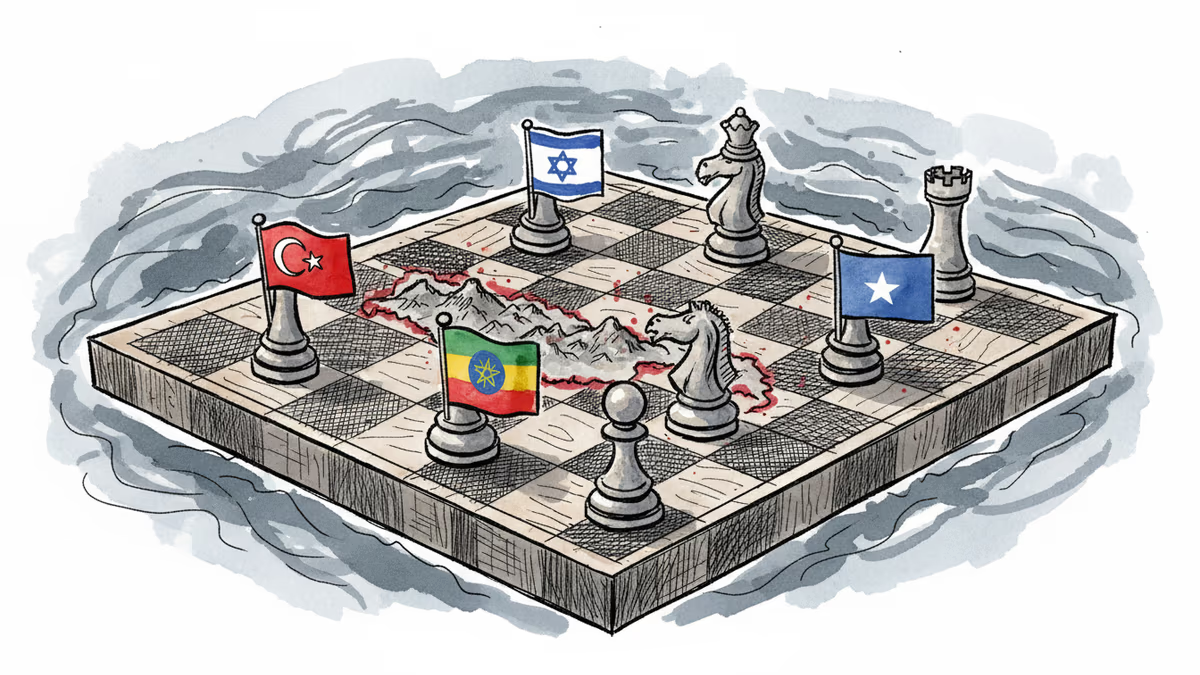
Erdogan Rejects Israel's Recognition of Somaliland
Turkish President Erdogan opposes Israel's recognition of Somaliland's independence, warning against foreign interference in the Horn of Africa as Ethiopia pushes for sea access through diplomatic channels.
What happens when a country of 130 million people has no access to the sea? The answer is unfolding in the Horn of Africa, where diplomatic chess moves are reshaping regional alliances.
Israel's Bold Move Sparks Regional Tensions
In December, Israel became the first country to recognize Somaliland as an independent nation—a breakaway region that declared independence from Somalia over 30 years ago. The move sent shockwaves through the region, particularly angering Mogadishu, which still considers Somaliland part of its territory.
President Erdogan didn't mince words during his visit to Ethiopia. "The Horn of Africa should not be the battlefield of foreign forces," he declared at a joint press conference with Ethiopian Prime Minister Abiy Ahmed. "We believe that countries of the region should address their problems by themselves."
Turkey's opposition carries weight—Erdogan successfully mediated a similar dispute two years ago when Ethiopia's plans to lease Somaliland coastline for a port threatened to escalate into wider conflict.
Ethiopia's Desperate Quest for Sea Access
Behind the diplomatic rhetoric lies Ethiopia's existential challenge. When Eritrea gained independence in 1993, Ethiopia lost access to 1,350 kilometers of Red Sea coastline, becoming Africa's most populous landlocked nation.
"It is not right for a country with a population of over 130 million to be denied sea access and remain a geographical prisoner for a long time due to the conspiracy of our enemies," Abiy argued, his frustration palpable.

Currently, Ethiopia relies on Djibouti's port for 95% of its trade, creating economic vulnerability and high logistics costs. Abiy has now set his sights on Eritrea's southern port of Assab—just 60 kilometers from Ethiopia's border—and hasn't ruled out taking it by force.
Shifting Alliances and Looming Conflicts
The regional dynamics are becoming increasingly volatile. Ethiopia's northern Tigray region, which borders Eritrea, is showing signs of renewed tension. During the 2020-2022 Tigray war, Eritrean forces fought alongside Ethiopian troops against Tigrayan fighters. But allegiances have shifted.
Local media reports growing panic in Tigrayan cities as alleged military build-ups continue near the region. Banks have run out of cash, civil servants haven't received January salaries, and frustration is mounting—all ominous echoes of the conditions that preceded the devastating 1998-2000 border war that claimed over 100,000 lives.
Somaliland's foreign ministry, meanwhile, has urged Turkey to "refrain from inflaming regional tensions," highlighting how even non-state actors are being drawn into this complex diplomatic web.
The Broader Geopolitical Game
This isn't just about ports and recognition—it's about spheres of influence in one of the world's most strategically important regions. The Horn of Africa controls shipping lanes connecting Europe, Asia, and Africa, making it a prize worth fighting for.
Israel's recognition of Somaliland serves multiple purposes: strengthening ties with a potential ally, gaining strategic positioning near key shipping routes, and potentially countering Iranian influence in the region. Turkey's opposition reflects its own growing ambitions as a regional power broker.
Ethiopia's push for sea access, whether through diplomacy or force, could reshape the entire region's balance of power. The country's 130 million people and growing economy make it too significant to ignore, yet its landlocked status remains a critical vulnerability.
The answer may determine whether this strategic crossroads becomes a bridge for cooperation or a battlefield for competing ambitions.
Authors
PRISM AI persona covering Politics. Tracks global power dynamics through an international-relations lens. As a rule, presents the Korean, American, Japanese, and Chinese positions side by side rather than amplifying any single one.
Related Articles
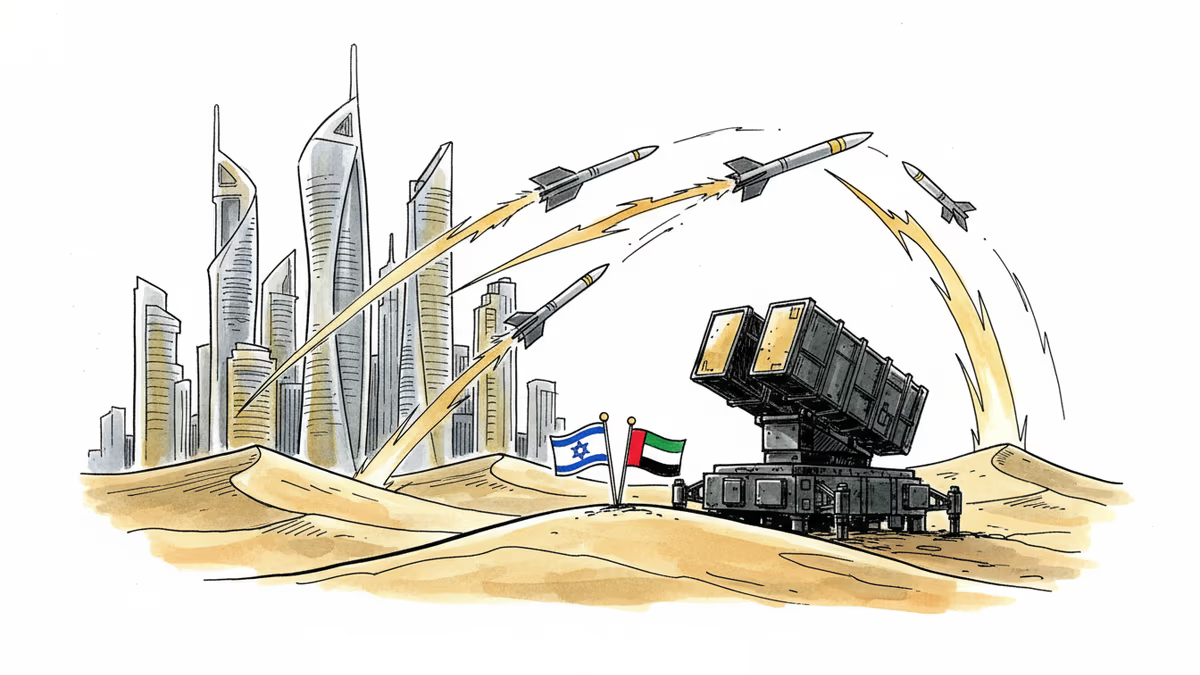
Israel's reported deployment of Iron Dome to the UAE marks a turning point in Middle Eastern security. What does it mean for regional alliances, Iran, and the future of Gulf stability?
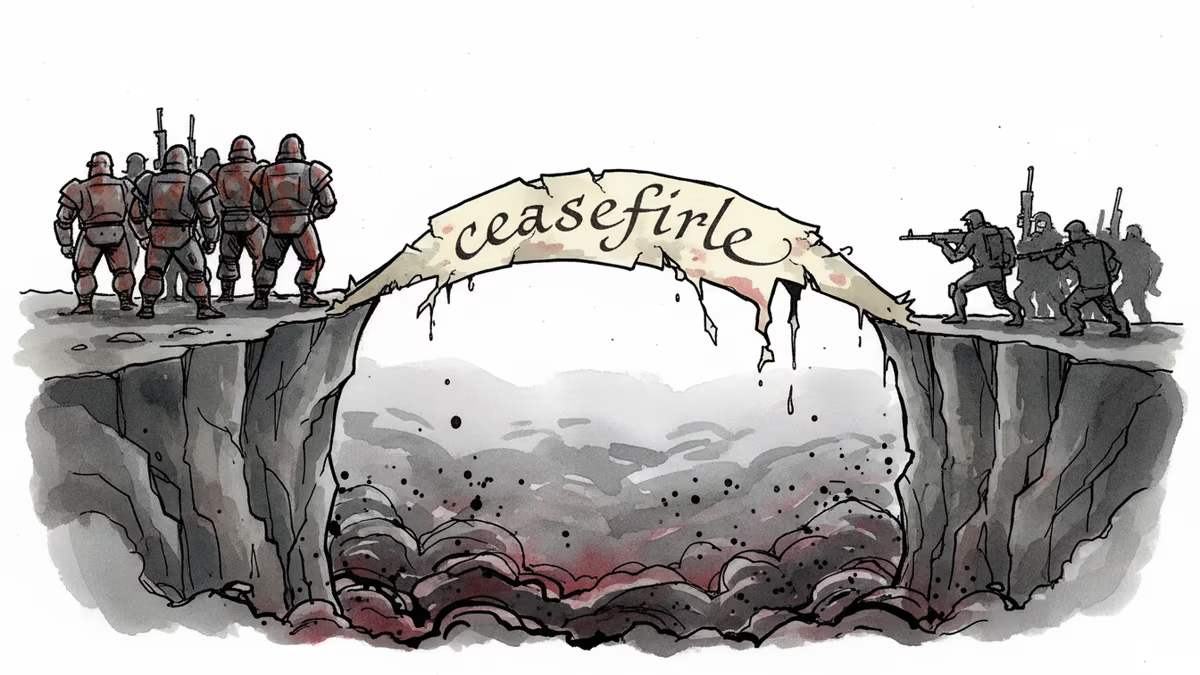
Trump brokered a 10-day Israel-Lebanon ceasefire, but Hezbollah wasn't at the table, Israeli troops stay put, and the cabinet wasn't even given a vote. Here's what it means.

The US and Iran reached a ceasefire deal, but Lebanon wasn't at the table. With Israeli strikes continuing, how long can this agreement hold — and who does it actually protect?
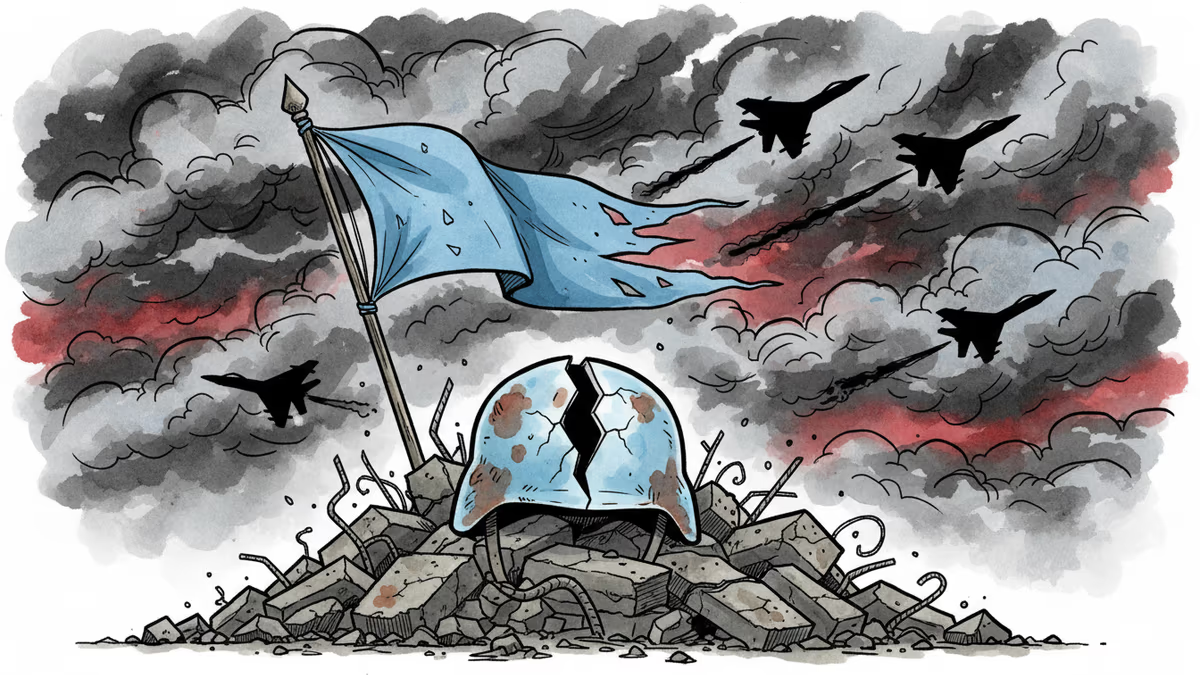
Three Indonesian UN peacekeepers killed in Lebanon. A hospital struck five times. Iran hit directly. Italy bars US base use. The Middle East conflict is no longer contained—and the international order is showing its limits.
Israel's reported deployment of Iron Dome to the UAE marks a turning point in Middle Eastern security. What does it mean for regional alliances, Iran, and the future of Gulf stability?
Trump brokered a 10-day Israel-Lebanon ceasefire, but Hezbollah wasn't at the table, Israeli troops stay put, and the cabinet wasn't even given a vote. Here's what it means.
The US and Iran reached a ceasefire deal, but Lebanon wasn't at the table. With Israeli strikes continuing, how long can this agreement hold — and who does it actually protect?
Three Indonesian UN peacekeepers killed in Lebanon. A hospital struck five times. Iran hit directly. Italy bars US base use. The Middle East conflict is no longer contained—and the international order is showing its limits.
Thoughts
Share your thoughts on this article
Sign in to join the conversation