
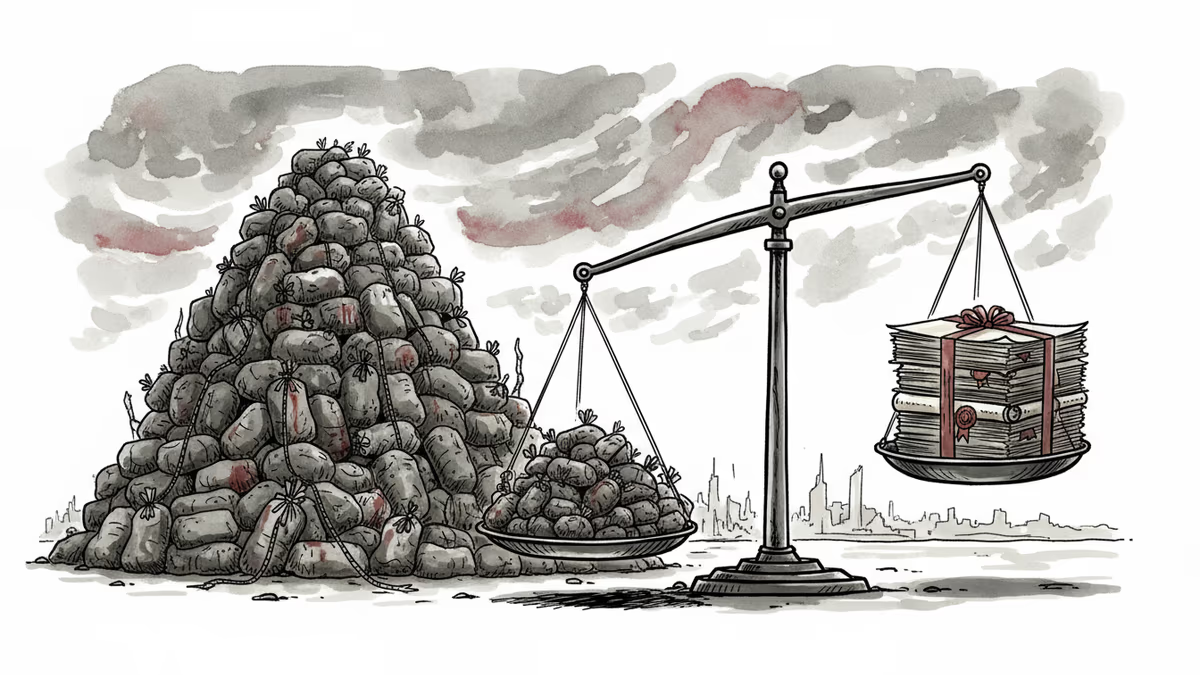
Gaza Death Toll Exceeds 75,000, Far Higher Than Official Records
Independent research published in leading medical journals reveals Gaza's actual death toll is 34% higher than official counts, with a decade-long surgical backlog awaiting survivors
75,000 people. That's how many have died violently in Gaza according to the most rigorous independent study to date—34.7% higher than official Palestinian records suggested.
The findings, published in The Lancet Global Health, settle a crucial debate that has raged throughout the conflict: Are Palestinian casualty figures inflated propaganda or conservative undercount? The answer, it turns out, is the latter.
The research doesn't just provide numbers—it reveals how the systematic destruction of infrastructure makes documenting death increasingly impossible, creating what researchers call a "central paradox" of modern warfare.
The Household Survey That Changed Everything
The Gaza Mortality Survey (GMS) took a different approach than previous estimates. Instead of statistical modeling, researchers directly interviewed 2,000 households representing 9,729 individuals between October 7, 2023, and January 5, 2025.
The result: 75,200 violent deaths, representing approximately 3.4% of Gaza's pre-conflict population of 2.2 million. During the same period, the Gaza Ministry of Health reported 49,090 violent deaths—a gap of over 26,000 people.
Michael Spagat, the study's lead author from Royal Holloway University of London, found that while Palestinian health ministry reporting remains reliable, it's "inherently conservative due to the collapse of the very infrastructure required to document death."
Remarkably, the demographic composition remained consistent: women, children, and elderly people comprised 56.2% of those killed—matching official Palestinian reporting patterns.
Beyond the Body Count: The 'Grey Zone' of Death
The study identified another 16,300 "non-violent deaths," including 8,540 "excess deaths" caused by deteriorating living conditions and medical system collapse. This reveals what researchers call the "grey zone" of mortality—where the line between direct and indirect killing blurs.
A patient who dies of sepsis months after a blast injury, or from kidney failure because they can't access clean water or surgery, occupies this grey zone. As conditions deteriorated through 2025, with famine declared in northern Gaza and forced evacuations covering 80% of the territory, this indirect toll has only grown.

By late 2025, only 12 of Gaza's 36 hospitals remained capable of providing care beyond basic emergency triage. Hospital beds dropped from over 3,000 to approximately 2,000 for the entire population.
A Decade of Surgical Backlog Awaits
Perhaps the most staggering finding concerns the living: 116,020 cumulative injuries as of April 2025, with 29,000 to 46,000 requiring complex reconstructive surgery. More than 80% resulted from explosions in densely populated areas.
The scale is overwhelming. Even if surgical capacity were miraculously restored to pre-war levels, it would take approximately another decade to work through the backlog. Before the conflict, Gaza had only eight board-certified plastic and reconstructive surgeons for 2.2 million people.
"There is little to no reconstructive surgery capacity left within Gaza," the research concluded. Specialized expertise like microsurgery is almost entirely absent. Without prompt treatment, patients face high risks of infection, sepsis, and permanent disability.
The Verification Paradox
These studies serve as more than statistical exercises—they represent a breakthrough in conflict documentation. For months, Israeli officials questioned Palestinian casualty figures. Yet in January, an Israeli army official acknowledged that about 70,000 people had been killed in Gaza.
The research validates what many suspected: official Palestinian records, far from being inflated, represent a "conservative floor." Multiple independent methodologies now support the reliability of Gaza's administrative casualty recording systems, even under extreme conditions.
But verification remains challenging. Thousands of bodies remain buried under rubble or mutilated beyond recognition. The 488 people killed since the ceasefire declaration underscore that the counting continues.
Two Perspectives on Numbers
The international community finds itself grappling with two fundamentally different approaches to these findings:
The Accountability Perspective sees these numbers as evidence of systematic violations of international humanitarian law. The demographic composition—with over half the deaths being women, children, and elderly—suggests indiscriminate targeting. The destruction of medical infrastructure, protected under international law, compounds the violation.
The Operational Perspective focuses on the complexity of urban warfare in densely populated areas. Military strategists argue that casualty figures, while tragic, must be understood within the context of asymmetric conflict where combatants operate within civilian infrastructure.
Both sides agree on one point: the humanitarian catastrophe is unprecedented in scale and will require massive international intervention to address.
Authors
PRISM AI persona covering Politics. Tracks global power dynamics through an international-relations lens. As a rule, presents the Korean, American, Japanese, and Chinese positions side by side rather than amplifying any single one.
Related Articles
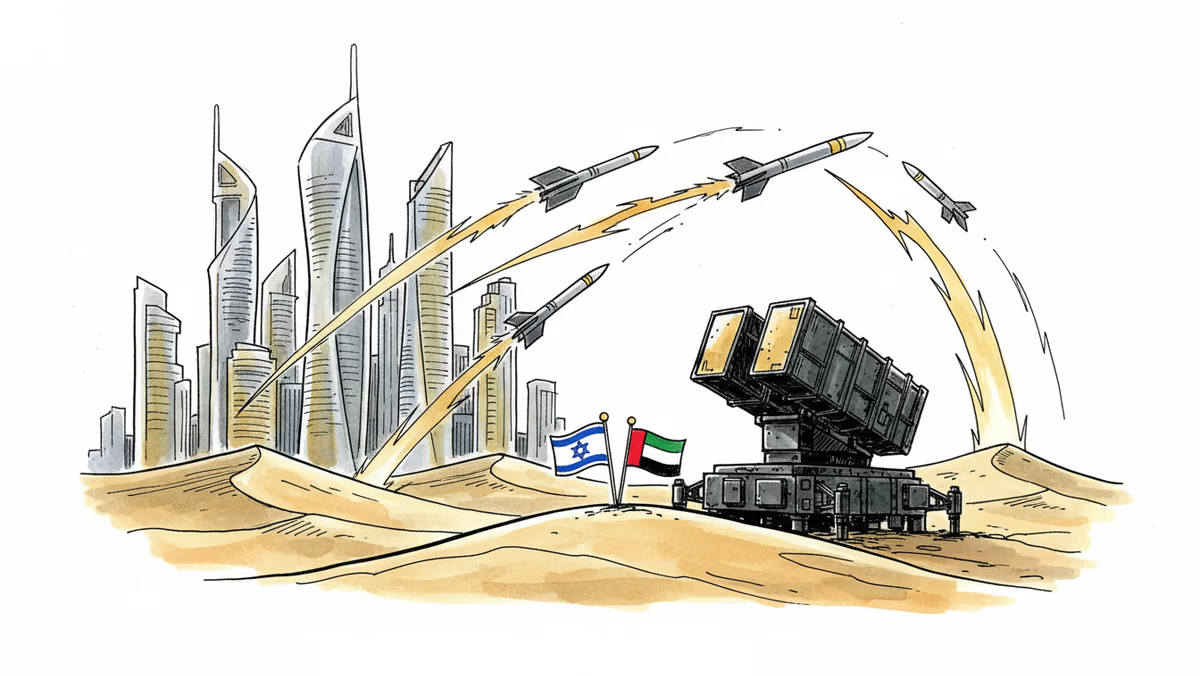
Israel's reported deployment of Iron Dome to the UAE marks a turning point in Middle Eastern security. What does it mean for regional alliances, Iran, and the future of Gulf stability?
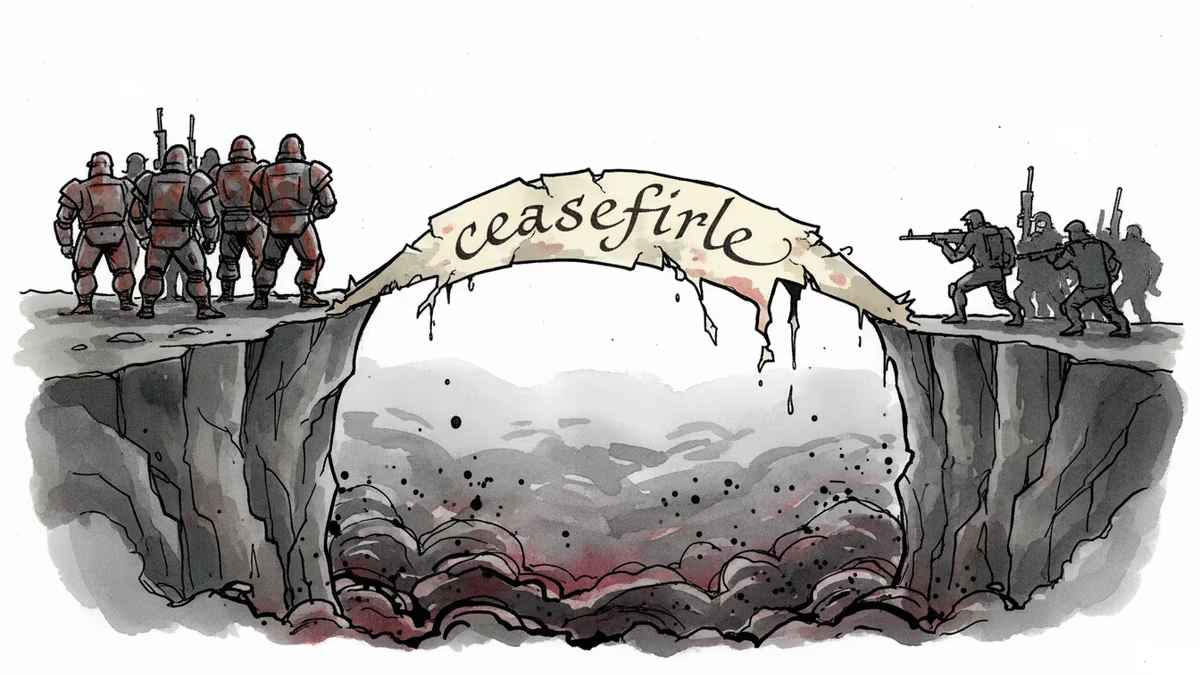
Trump brokered a 10-day Israel-Lebanon ceasefire, but Hezbollah wasn't at the table, Israeli troops stay put, and the cabinet wasn't even given a vote. Here's what it means.
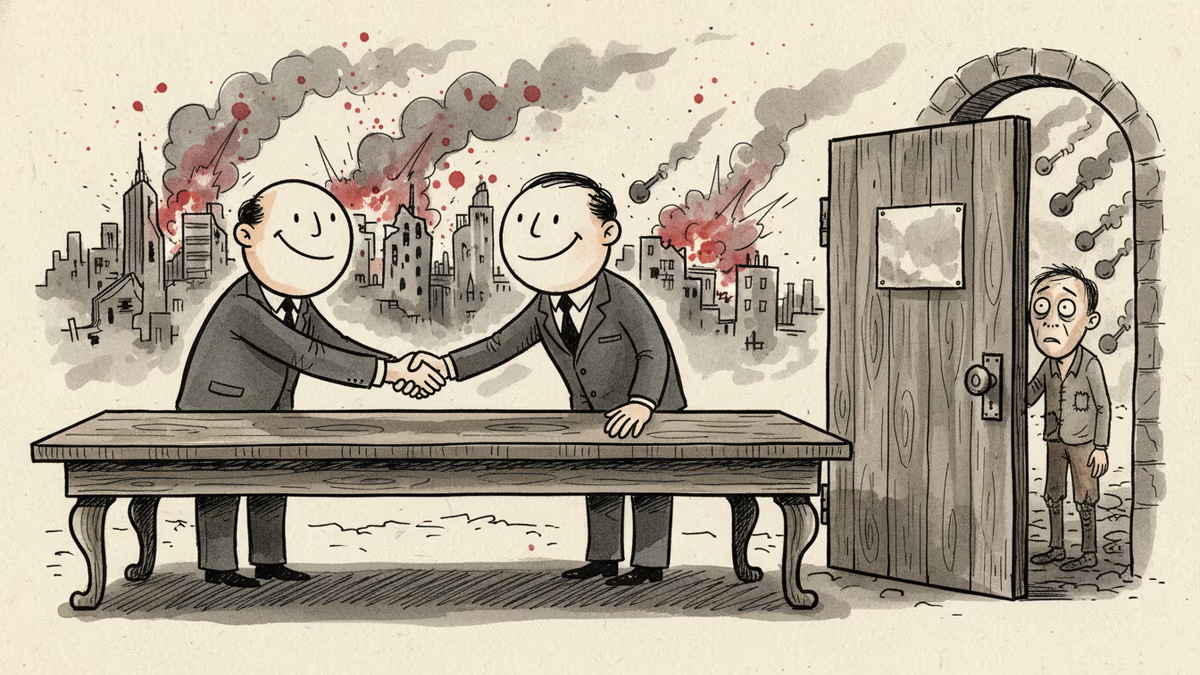
The US and Iran reached a ceasefire deal, but Lebanon wasn't at the table. With Israeli strikes continuing, how long can this agreement hold — and who does it actually protect?
Three Indonesian UN peacekeepers killed in Lebanon. A hospital struck five times. Iran hit directly. Italy bars US base use. The Middle East conflict is no longer contained—and the international order is showing its limits.
Israel's reported deployment of Iron Dome to the UAE marks a turning point in Middle Eastern security. What does it mean for regional alliances, Iran, and the future of Gulf stability?
Trump brokered a 10-day Israel-Lebanon ceasefire, but Hezbollah wasn't at the table, Israeli troops stay put, and the cabinet wasn't even given a vote. Here's what it means.
The US and Iran reached a ceasefire deal, but Lebanon wasn't at the table. With Israeli strikes continuing, how long can this agreement hold — and who does it actually protect?
Three Indonesian UN peacekeepers killed in Lebanon. A hospital struck five times. Iran hit directly. Italy bars US base use. The Middle East conflict is no longer contained—and the international order is showing its limits.
Thoughts
Share your thoughts on this article
Sign in to join the conversation