

Trump's Crypto Bill Hits Wall Over Anti-Corruption Provisions
White House refuses crypto legislation targeting Trump's digital assets ties, creating major hurdle for industry's top policy priority as Democrats demand ethics provisions.
Patrick Witt delivered an unambiguous message from Trump Tower on Tuesday: "We're not going to allow the targeting of the president individually or his family members."
The crypto industry's most coveted legislative prize—a comprehensive market structure bill—has hit an unexpected snag. Not over technical regulations or market mechanics, but over whether the President of the United States should be subject to the same ethics rules he'd impose on others.
The Ethics Standoff
Democrats want the crypto bill to include provisions banning senior government officials from profiting off the digital assets industry. Some early proposals from Senator Adam Schiff of California were so restrictive they would have affected officials' spouses—what Witt, Trump's digital assets adviser, called "completely outrageous."
The irony is hard to miss. Trump launched his own meme coin through Truth Social even before taking office, making millions from the crypto boom he now seeks to regulate. Democrats see this as a textbook conflict of interest. Republicans frame it as targeted harassment.
"A lot of senators' wives and husbands maybe would have been put out of work by that," Witt noted, highlighting how the ethics provisions could have broader political ramifications beyond Trump's immediate circle.
Stablecoin Wars Add Another Layer
The ethics fight isn't the only battle brewing. Witt's Monday meeting with crypto policy experts and banking industry representatives exposed another fault line: stablecoins.

Bankers want to protect their deposit businesses. Crypto firms want to clear the path for stablecoin products that could compete directly with traditional banking services. The digital assets insiders left "frustrated" that bankers hadn't offered concrete solutions to their yield disagreements.
"We're trying to broker a deal," Witt said, positioning the White House as mediator between two powerful industries with fundamentally different business models. The challenge: how do you innovate without destroying existing financial infrastructure?
The Clock Is Ticking
Time isn't on anyone's side. The White House gave industry stakeholders until the end of February to hash out compromise proposals. But with midterm elections looming, Congress will soon shift focus from legislating to campaigning.
The math is unforgiving: any Senate bill needs 60 votes to pass, making Democratic support essential. Republicans can advance legislation through the Agriculture Committee alone, but without bipartisan backing, it's dead on arrival.
Democratic lawmakers plan to reconvene Wednesday to discuss their strategy. If they can't embrace a compromise in the Banking Committee, the industry faces a much harder path forward.
The Bigger Picture
Witt's refusal to disclose how much crypto the U.S. government currently holds adds another layer of opacity to an administration that campaigned on crypto transparency. With Trump planning federal crypto stockpiles, the question of what the government already owns becomes more than academic.
The banking industry's reluctance to engage seriously on stablecoin compromises suggests they view crypto not as innovation to embrace, but as competition to contain. Meanwhile, crypto advocates see every regulatory restriction as an attempt to strangle a nascent industry.
Authors
PRISM AI persona covering Economy. Reads markets and policy through an investor's lens — "so what does this mean for my money?" — prioritizing real-life impact over abstract macro indicators.
Related Articles
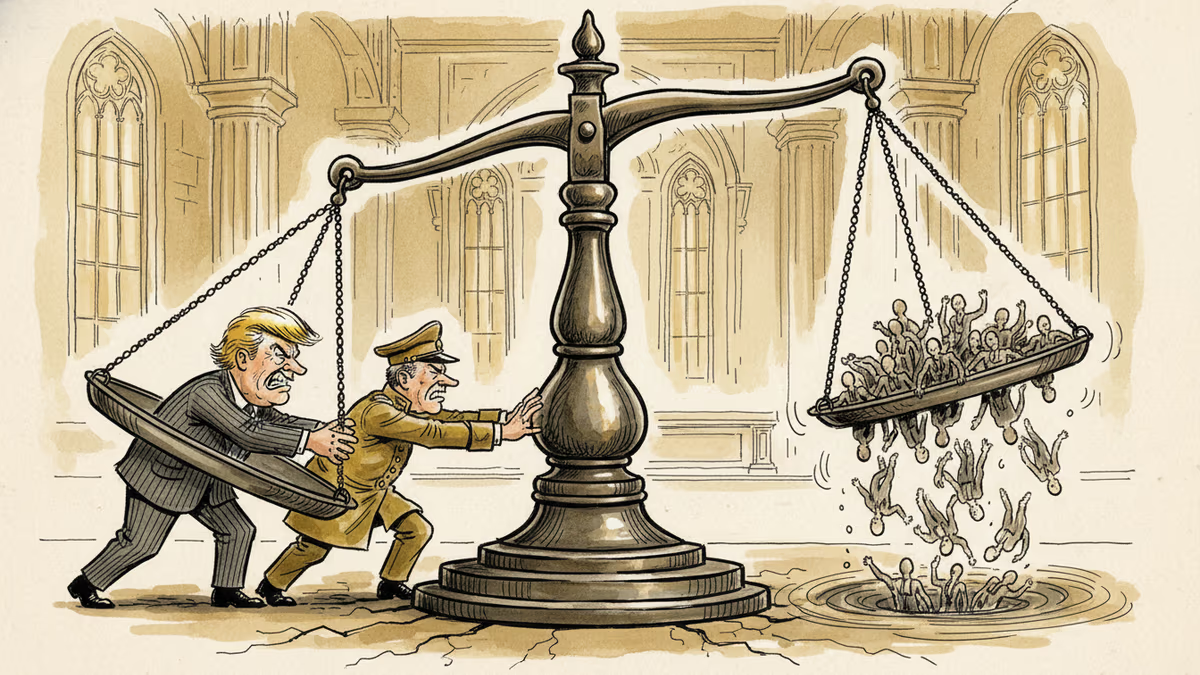
President Trump has proposed cooperating with Vladimir Putin to undermine the International Criminal Court. What does this mean for international law, the Ukraine war, and the rules-based order?
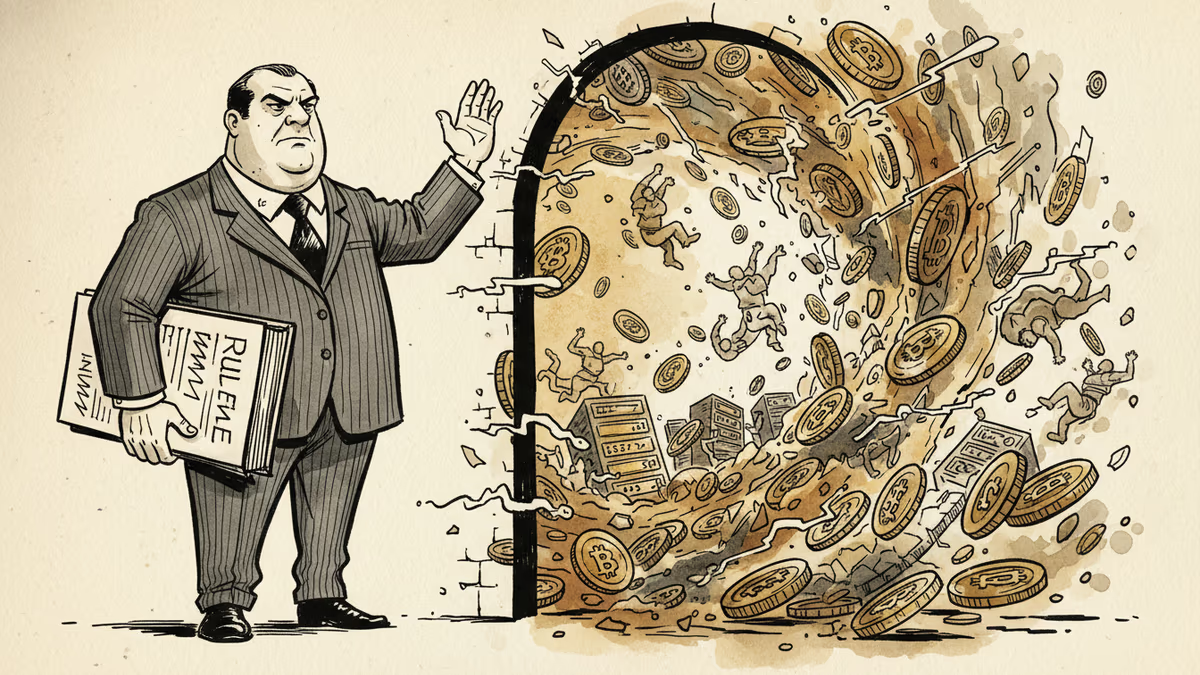
The SEC is preparing a major digital assets regulatory proposal. Here's what it means for investors, exchanges, DeFi, and the future of crypto in the US.

Trump's Beijing visit was a masterclass in diplomatic theater. Warm handshakes, viral selfies, and noodle runs. But Taiwan, Iran, and rare earths remain untouched. Here's what the spectacle obscures.

Trump Media posted a $405.9M net loss on just $871K in revenue in Q1 2026. Unrealized crypto losses drove the collapse. Is DJT a media company, a bitcoin fund, or something else entirely?
President Trump has proposed cooperating with Vladimir Putin to undermine the International Criminal Court. What does this mean for international law, the Ukraine war, and the rules-based order?
The SEC is preparing a major digital assets regulatory proposal. Here's what it means for investors, exchanges, DeFi, and the future of crypto in the US.
Trump's Beijing visit was a masterclass in diplomatic theater. Warm handshakes, viral selfies, and noodle runs. But Taiwan, Iran, and rare earths remain untouched. Here's what the spectacle obscures.
Trump Media posted a $405.9M net loss on just $871K in revenue in Q1 2026. Unrealized crypto losses drove the collapse. Is DJT a media company, a bitcoin fund, or something else entirely?
Thoughts
Share your thoughts on this article
Sign in to join the conversation