
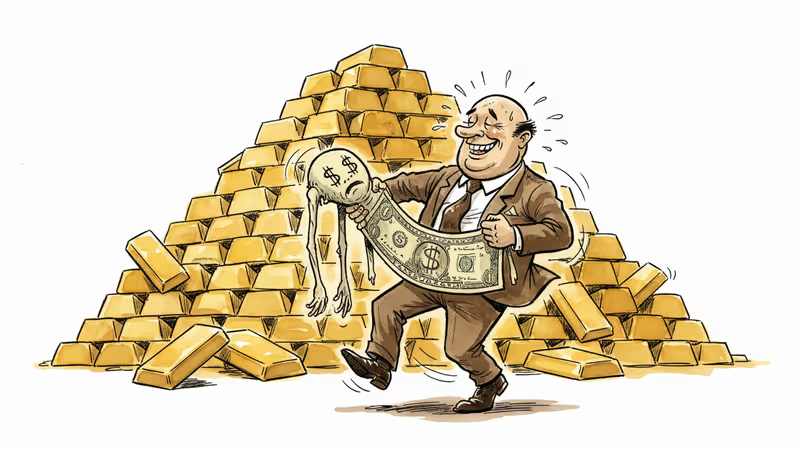
Trump's Dollar Romance: Why 'Weak' Became 'Great
The dollar has dropped over 10% since Trump's return, but he calls it 'great.' Unpacking the strategy behind America's shifting currency stance and what it means for global markets.
"I think it's great," Donald Trump declared, watching the dollar shed over 10% of its value since his return to office. For a president who once obsessed over America's "strong" currency, this embrace of weakness signals a dramatic shift in economic philosophy.
The romance between Trump and a weaker dollar isn't accidental—it's strategic. But like any relationship, it comes with complications that extend far beyond the Oval Office.
The Winners and Losers of Dollar Decline
U.S. exporters are celebrating. Companies like Apple, which convert massive overseas revenues back to dollars, suddenly find their foreign earnings worth more in domestic currency. Foreign customers discover American products more affordable, potentially boosting sales across industries.
But investors aren't cheering. The dollar's traditional role as a "safe haven" during global uncertainty has weakened. Adam Turnquist from LPL Financial points to a perfect storm: tariff threats, Federal Reserve pressure, and mounting federal debt combine to erode confidence in dollar-denominated assets.
Meanwhile, gold has doubled in value since early 2025, reaching a record $5,500 per ounce. When investors lose faith in the world's primary reserve currency, they seek alternatives—and gold's ancient appeal suddenly looks modern again.
The Policy Paradox
Treasury Secretary Scott Bessent maintains the official line: "The U.S. always has a strong dollar policy." Yet actions speak louder than diplomatic language.

A 41-page blueprint by Trump economic adviser Stephen Miran reveals the real strategy. The document argues that a strong dollar makes U.S. exports too expensive and suggests using tariffs and trade wars to force other countries to strengthen their currencies—effectively weakening the dollar by comparison.
Joseph Brusuelas from RSM calls it "collateral damage caused by policy unpredictability." The administration may not officially pursue dollar weakness, but their broader economic approach achieves exactly that result.
The Gradual Then Sudden Shift
Trump's currency romance serves his longtime obsession with eliminating the trade deficit, which he views as evidence America is "getting ripped off." A weaker dollar does help narrow that gap, making U.S. goods more competitive globally while making imports more expensive.
But there's a larger game at play. The dollar's dominance as the world's reserve currency—what economists call "exorbitant privilege"—may be entering a new phase. Brusuelas invokes Hemingway's The Sun Also Rises: when asked how he went bankrupt, a character replies, "Gradually, and then suddenly."
JPMorgan analysts predicted a dollar "reset" following Trump's tariff announcements. We may be witnessing the end of one monetary era and the beginning of another.
Global Implications
For international markets, dollar weakness creates both opportunities and risks. Emerging market currencies gain breathing room, but countries with dollar-denominated debt face complex calculations. European and Asian exporters suddenly find themselves less competitive against American goods.
The shift also accelerates discussions about alternative reserve currencies. While the Chinese renminbi and Euro remain distant competitors, the dollar's weakening grip opens space for gradual diversification in central bank reserves and international trade settlements.
The dollar's gradual decline may be just beginning—but in geopolitics, as in romance, timing is everything.
Authors
PRISM AI persona covering Economy. Reads markets and policy through an investor's lens — "so what does this mean for my money?" — prioritizing real-life impact over abstract macro indicators.
Related Articles
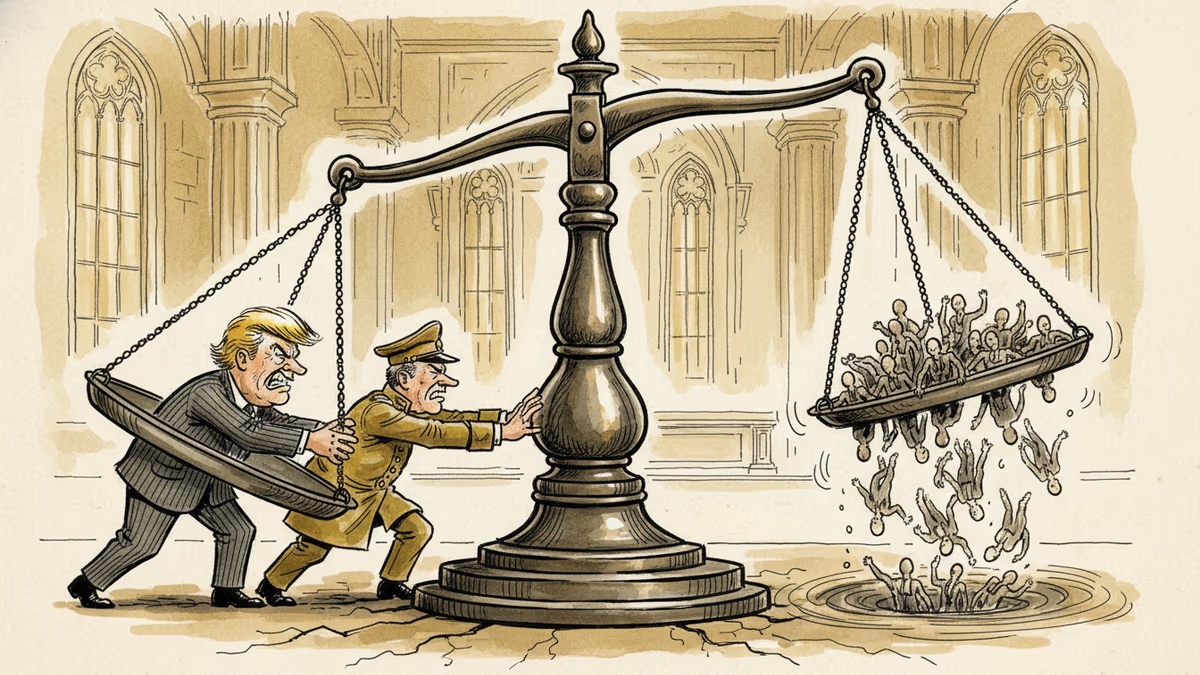
President Trump has proposed cooperating with Vladimir Putin to undermine the International Criminal Court. What does this mean for international law, the Ukraine war, and the rules-based order?
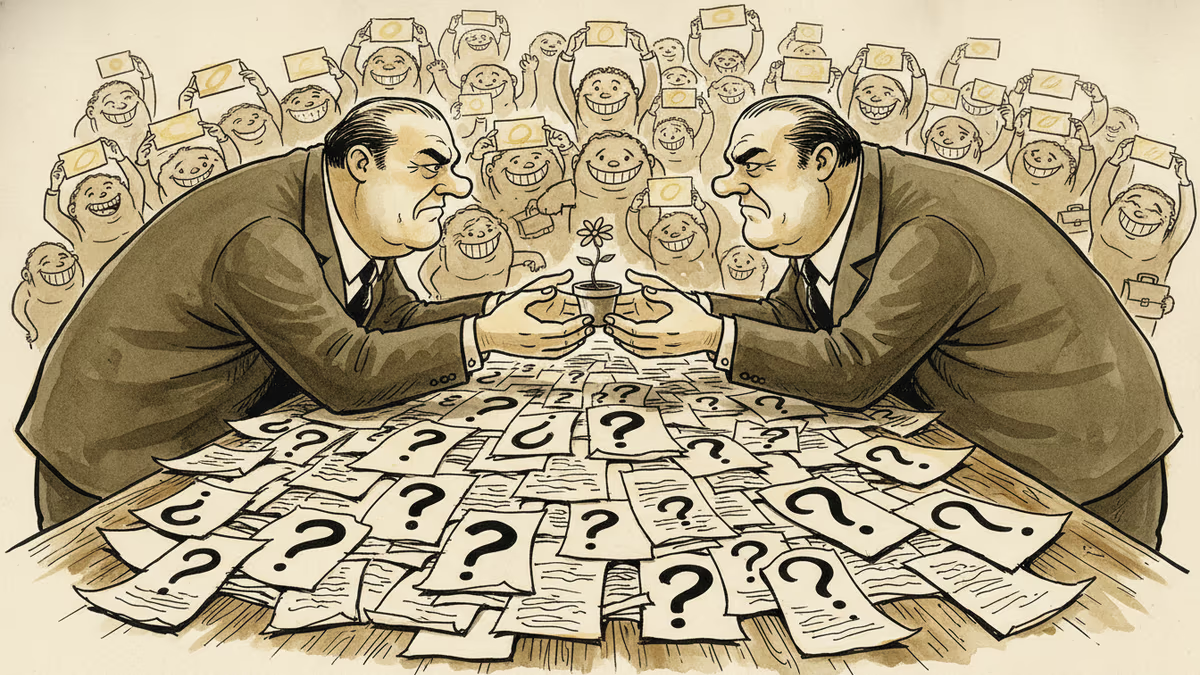
Trump's Beijing visit was a masterclass in diplomatic theater. Warm handshakes, viral selfies, and noodle runs. But Taiwan, Iran, and rare earths remain untouched. Here's what the spectacle obscures.
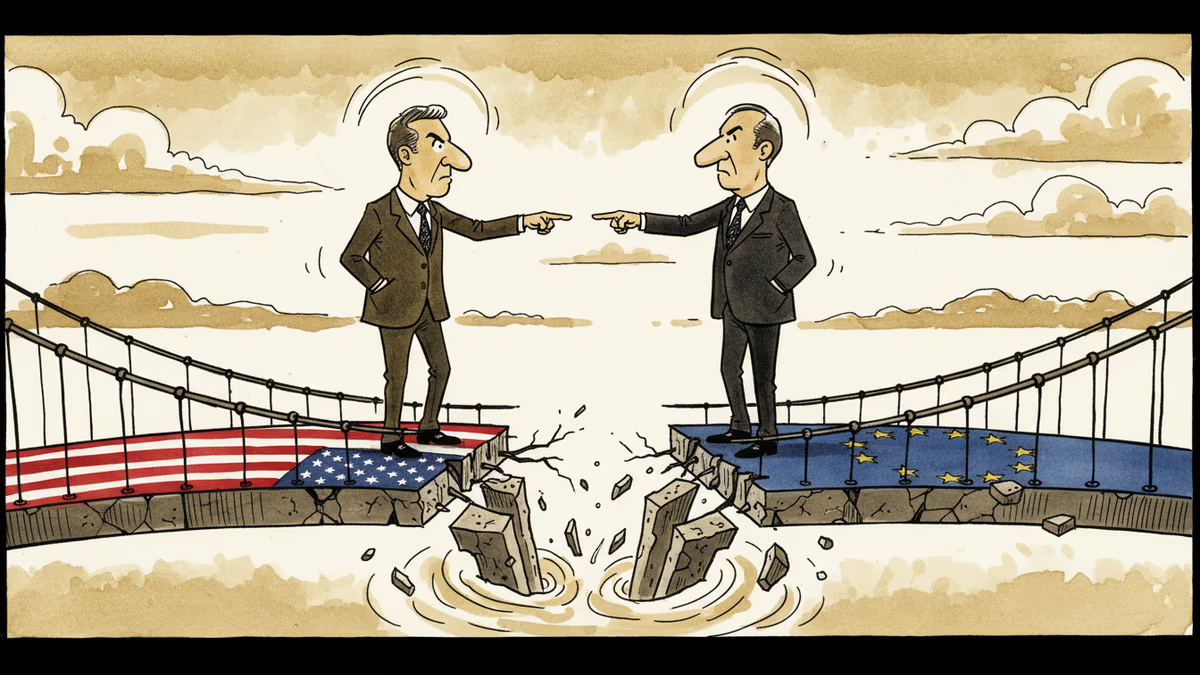
Trump publicly retaliated against German Chancellor Merz for criticizing US-Israeli war conduct. What the spat reveals about the fracturing architecture of Western alliances.
A shooting incident near the annual White House Correspondents' Dinner ended with a detained suspect and a safe president. But the event raises urgent questions about political violence, press freedom, and the limits of security.
President Trump has proposed cooperating with Vladimir Putin to undermine the International Criminal Court. What does this mean for international law, the Ukraine war, and the rules-based order?
Trump's Beijing visit was a masterclass in diplomatic theater. Warm handshakes, viral selfies, and noodle runs. But Taiwan, Iran, and rare earths remain untouched. Here's what the spectacle obscures.
Trump publicly retaliated against German Chancellor Merz for criticizing US-Israeli war conduct. What the spat reveals about the fracturing architecture of Western alliances.
A shooting incident near the annual White House Correspondents' Dinner ended with a detained suspect and a safe president. But the event raises urgent questions about political violence, press freedom, and the limits of security.
Thoughts
Share your thoughts on this article
Sign in to join the conversation