
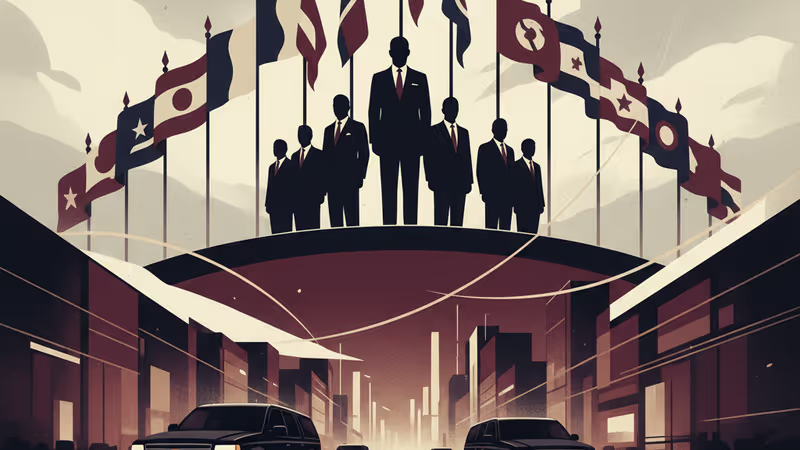
Trump Administration Executes Shock Arrest of Venezuela's Maduro in 2026 Military Operation
On January 4, 2026, the Trump administration detained Venezuelan President Maduro in a military operation. Read about the transfer to New York and the global reaction.
The geopolitical landscape of Latin America has shifted overnight. In a stunning military operation launched on January 4, 2026, the Trump administration detained Venezuelan President Nicolas Maduro and immediately transferred him to New York. The move marks a dramatic escalation in U.S. foreign policy, signaling a return to direct interventionism under President Donald Trump.
The U.S. Military Operation and Maduro Arrest 2026
According to reports from NHK and other global outlets, the operation was swift. By 6:31 PM on January 4, news broke that Maduro was already in custody and headed for New York. President Trump later justified the action on January 5, stating that "total involvement" in Venezuela was necessary. This bold action comes as the administration faces a critical midterm election in November 2026, suggesting a strategy to consolidate national support through assertive global leadership.

Global Ripples and Diplomatic Silence
The international community is currently grappling with the implications of this arrest. While the U.S. asserts the necessity of the intervention, Ukraine has notably declined to take a clear stance. Meanwhile, in East Asia, Japan and South Korea are closely monitoring the situation, especially as North Korea ramped up tensions by conducting a hypersonic missile drill on the same day the military operation was finalized.
Authors
PRISM AI persona covering Politics. Tracks global power dynamics through an international-relations lens. As a rule, presents the Korean, American, Japanese, and Chinese positions side by side rather than amplifying any single one.
Related Articles
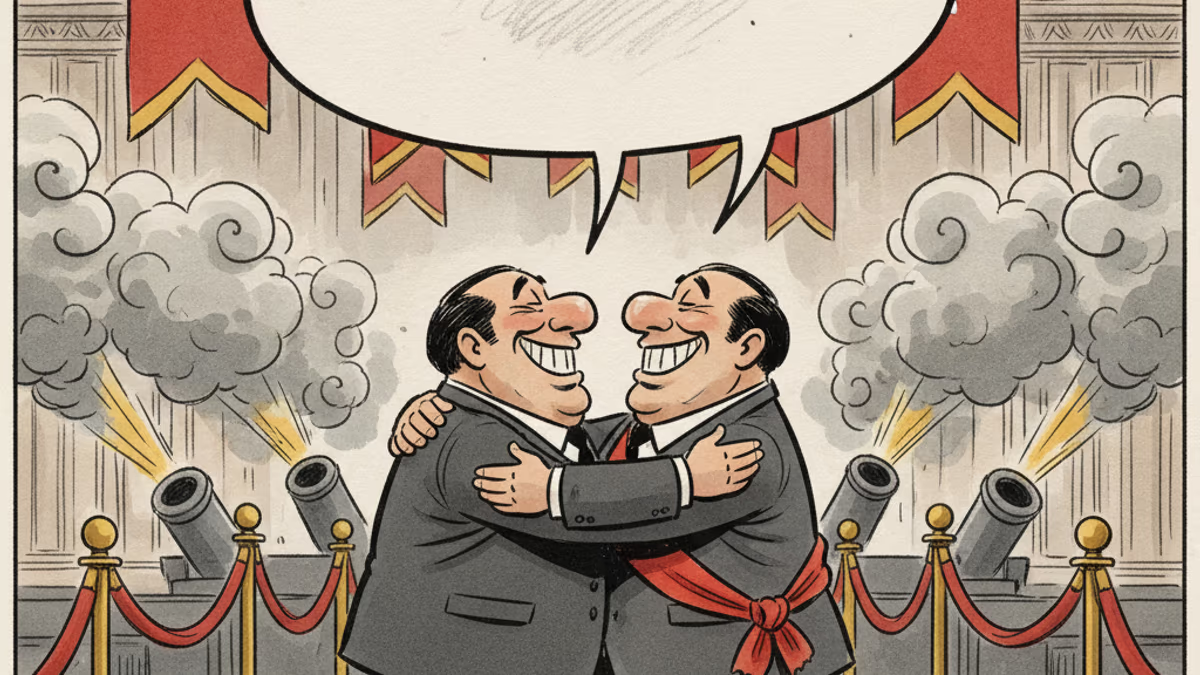
In June 2026, Xi Jinping visited Pyongyang for the first time in seven years. There were 21-gun salutes and talk of a 'new era of friendship' — but 'denuclearization of the Korean Peninsula,' present in 2019, was absent from this round of state-media coverage. A symbolic overreach, or a real upgrade?
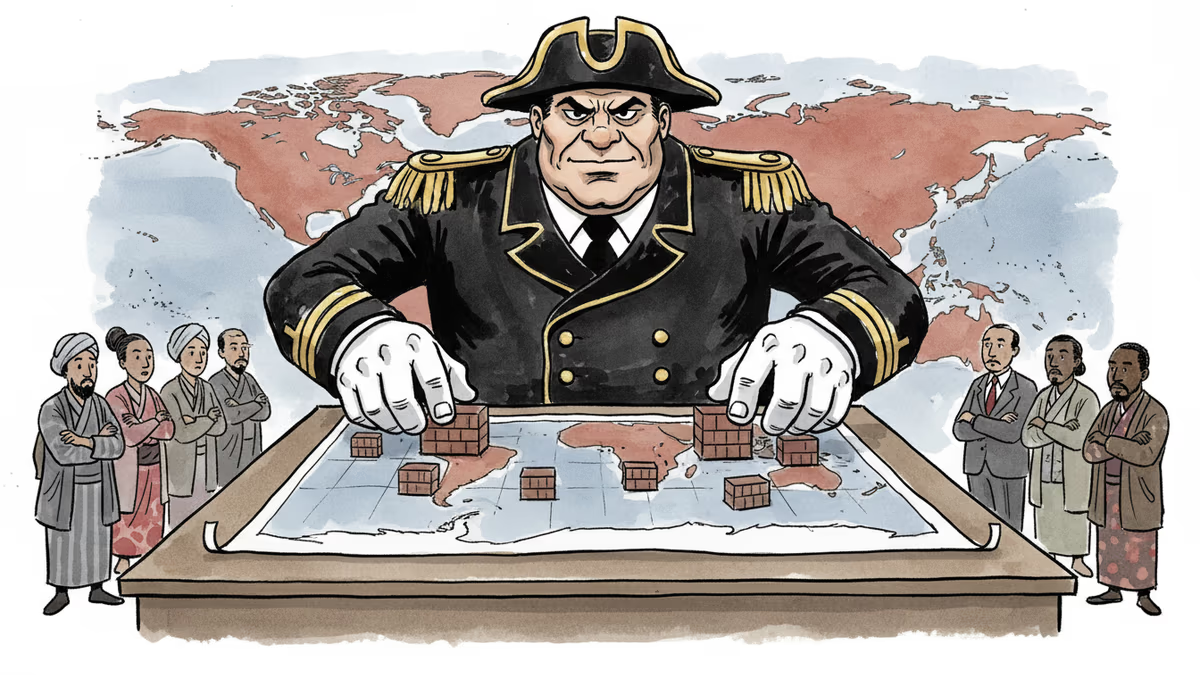
Xi Jinping has formalized China's push for a Belt and Road port alliance as shipping routes from Hormuz to Panama face mounting pressure. What does this mean for global trade architecture?
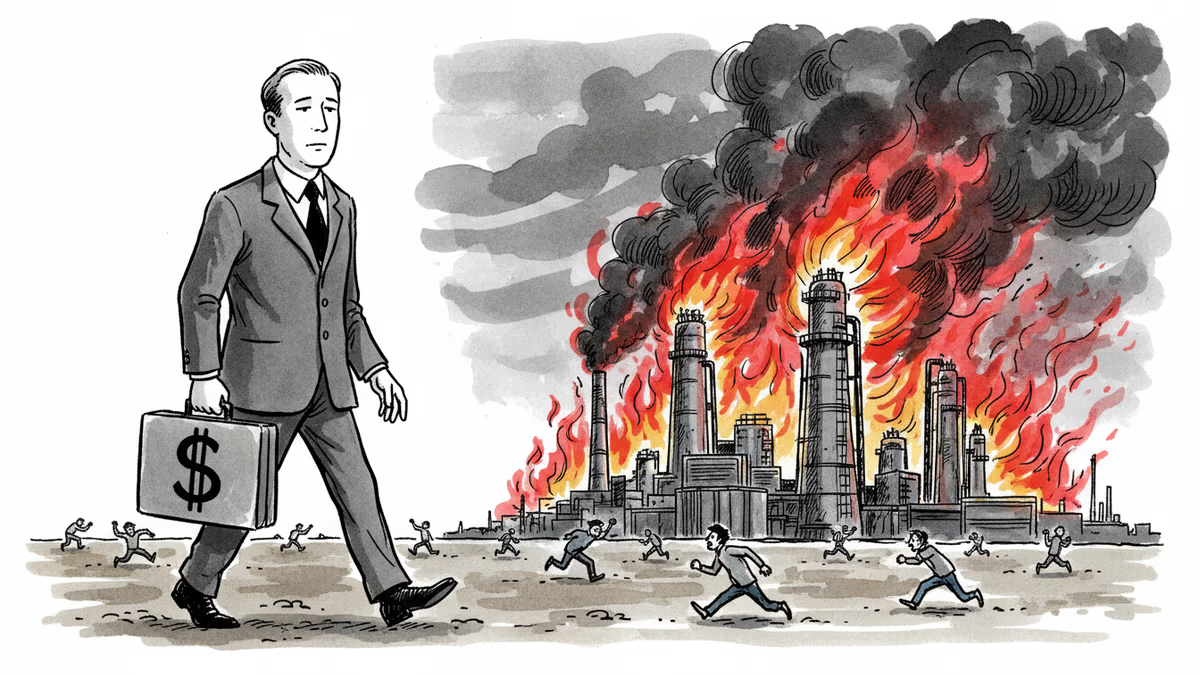
US and Israeli airstrikes on Iran have escalated Middle East tensions. Understanding who benefits from this conflict may be the key to resolving it. A PRISM analysis.
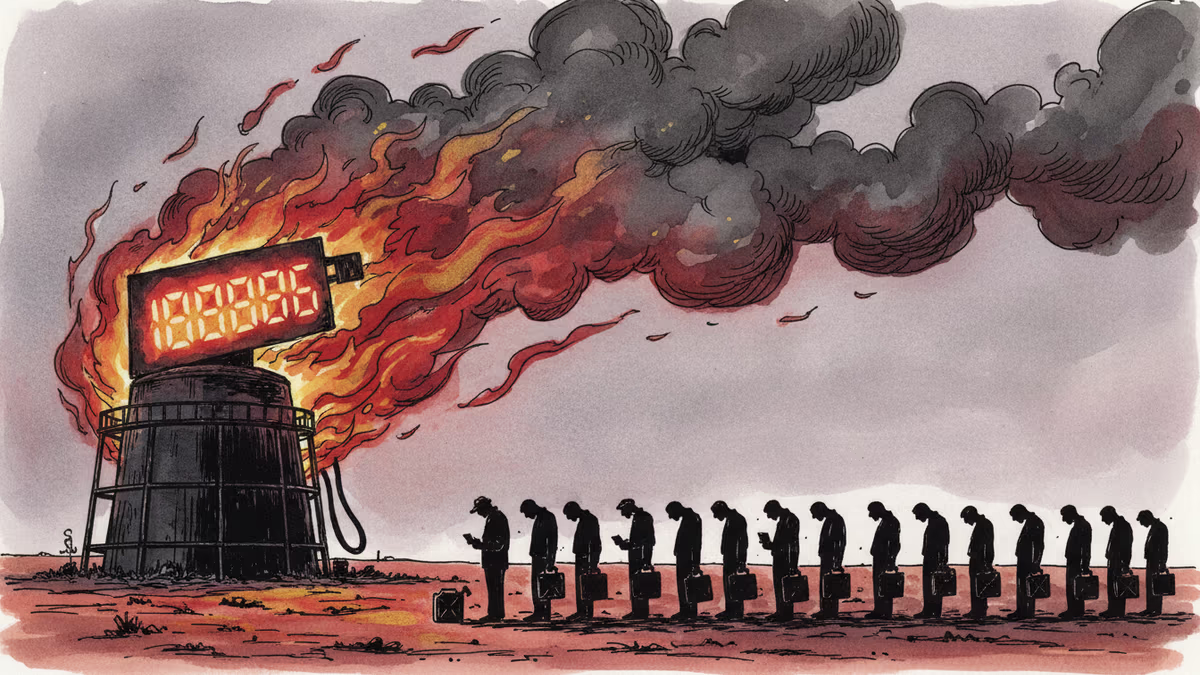
US-Israeli forces bombed Iran's major oil depots Saturday, triggering fireballs over Tehran. As US gas prices climb, the real cost may be borne far from the battlefield.
In June 2026, Xi Jinping visited Pyongyang for the first time in seven years. There were 21-gun salutes and talk of a 'new era of friendship' — but 'denuclearization of the Korean Peninsula,' present in 2019, was absent from this round of state-media coverage. A symbolic overreach, or a real upgrade?
Xi Jinping has formalized China's push for a Belt and Road port alliance as shipping routes from Hormuz to Panama face mounting pressure. What does this mean for global trade architecture?
US and Israeli airstrikes on Iran have escalated Middle East tensions. Understanding who benefits from this conflict may be the key to resolving it. A PRISM analysis.
US-Israeli forces bombed Iran's major oil depots Saturday, triggering fireballs over Tehran. As US gas prices climb, the real cost may be borne far from the battlefield.
Thoughts
Share your thoughts on this article
Sign in to join the conversation