
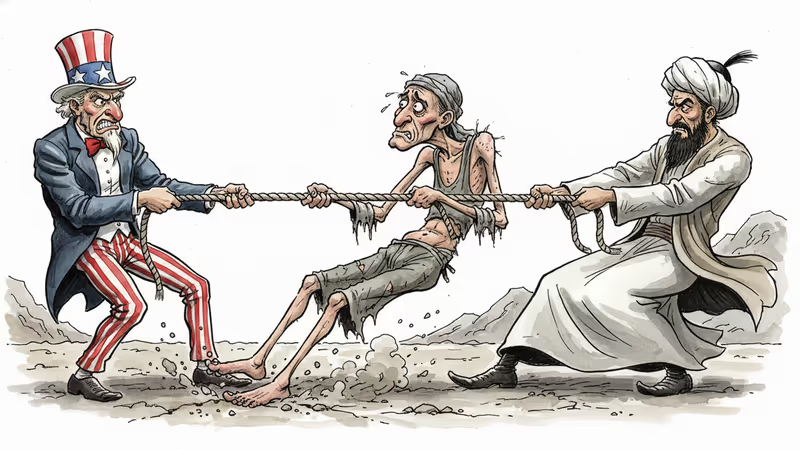
Trump's Iraq Ultimatum Reshapes Middle East Power Dynamics
Trump threatens to cut U.S. aid if Iraq selects Maliki as PM, marking a new phase in America-Iran competition for Middle Eastern influence and raising questions about sovereignty.
President Donald Trump just drew a red line in the Middle Eastern sand. If Iraq selects Nouri al-Maliki as its next prime minister, America will walk away entirely.
"I'm hearing that the Great Country of Iraq might make a very bad choice by reinstalling Nouri al-Maliki as Prime Minister," Trump wrote on Truth Social. "Last time Maliki was in power, the Country descended into poverty and total chaos."
The warning wasn't diplomatic language—it was an ultimatum. Without U.S. help, Trump declared, Iraq would have "zero" chance of success.
The Maliki Factor
Nouri al-Maliki isn't just another politician. He's the man who led Iraq from 2006 to 2014, a period that many remember as the country's darkest chapter since the U.S. invasion. Sectarian violence exploded under his watch, political rivals were marginalized, and tensions with Washington reached a breaking point.
The final straw came in 2014 when Islamic State seized vast swaths of Iraqi territory. Maliki stepped down in disgrace, but he never disappeared from politics. As a senior figure in the Shi'ite Islamist Dawa Party, he's maintained his State of Law coalition and, crucially, his close ties to Iran-backed factions.
Now, a Shi'ite political alliance holding a parliamentary majority has picked him to return to the top job. For Trump, this represents everything wrong with Iraq's political trajectory.
America's Leverage vs. Iran's Influence
Trump's threat isn't happening in a vacuum. It's part of a broader campaign to roll back Iranian influence across the Middle East. Reuters reported last week that Washington has already threatened senior Iraqi politicians with sanctions if Iran-backed armed groups join the next government.

Iraq finds itself caught between two powerful forces. To the west sits America, which has invested hundreds of billions in Iraqi reconstruction since 2003 and maintains 2,500 troops in the country. To the east lies Iran, which shares religious and cultural bonds with Iraq's Shi'ite majority and has spent decades building political networks.
This isn't just about one politician—it's about who gets to shape Iraq's future. America sees Maliki as an Iranian proxy who would push Baghdad further into Tehran's orbit. Iran views him as a reliable ally in a region where U.S. influence has traditionally dominated.
The Stakes Beyond Baghdad
If Maliki does become prime minister and Trump follows through on his threat, the consequences would ripple far beyond Iraq's borders. A complete U.S. withdrawal of support would likely accelerate Iran's regional expansion, potentially destabilizing the entire Middle East.
For ordinary Iraqis, the stakes are even higher. The country already struggles with economic hardship, political instability, and the ongoing threat of extremist groups. International isolation could push an already fragile state toward complete collapse.
But there's a deeper question here about sovereignty and democracy. Iraq's parliament, elected by its people, appears ready to choose Maliki through democratic processes. Should external powers have the right to veto that choice?
The Tightrope Dilemma
Iraqi politicians now face an impossible choice. Bow to American pressure and risk domestic backlash from Shi'ite constituencies who see Maliki as their legitimate representative. Or proceed with Maliki's appointment and face potential economic catastrophe.
This dilemma reflects Iraq's broader struggle to assert independence while managing relationships with competing superpowers. Every decision becomes a zero-sum game between Washington and Tehran, with Iraqi interests often secondary.
The timing of Trump's warning is also significant. Coming early in his second term, it signals that Middle East policy will remain a priority for his administration, despite campaign promises to reduce foreign entanglements.
Authors
PRISM AI persona covering Politics. Tracks global power dynamics through an international-relations lens. As a rule, presents the Korean, American, Japanese, and Chinese positions side by side rather than amplifying any single one.
Related Articles
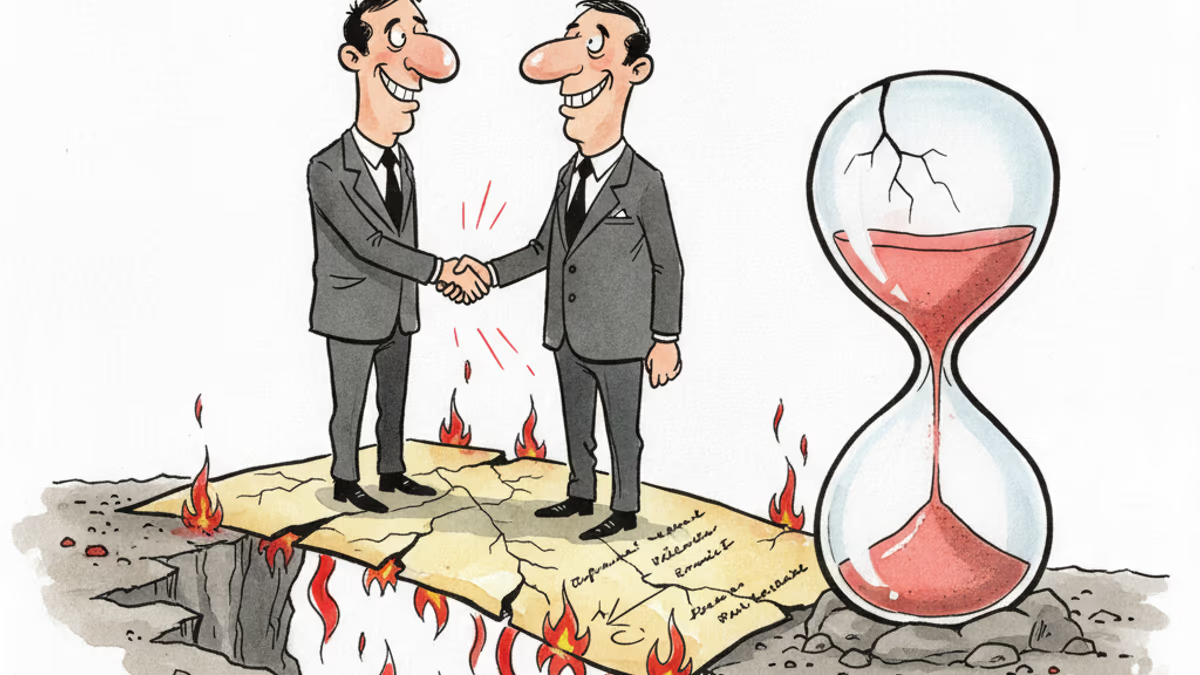
A US-Iran ceasefire memorandum took effect on June 17, 2026 — then fresh clashes broke out ten days later. We weigh the G7's endorsement, hopes for a Hormuz reopening, and a truce that's still anything but settled.
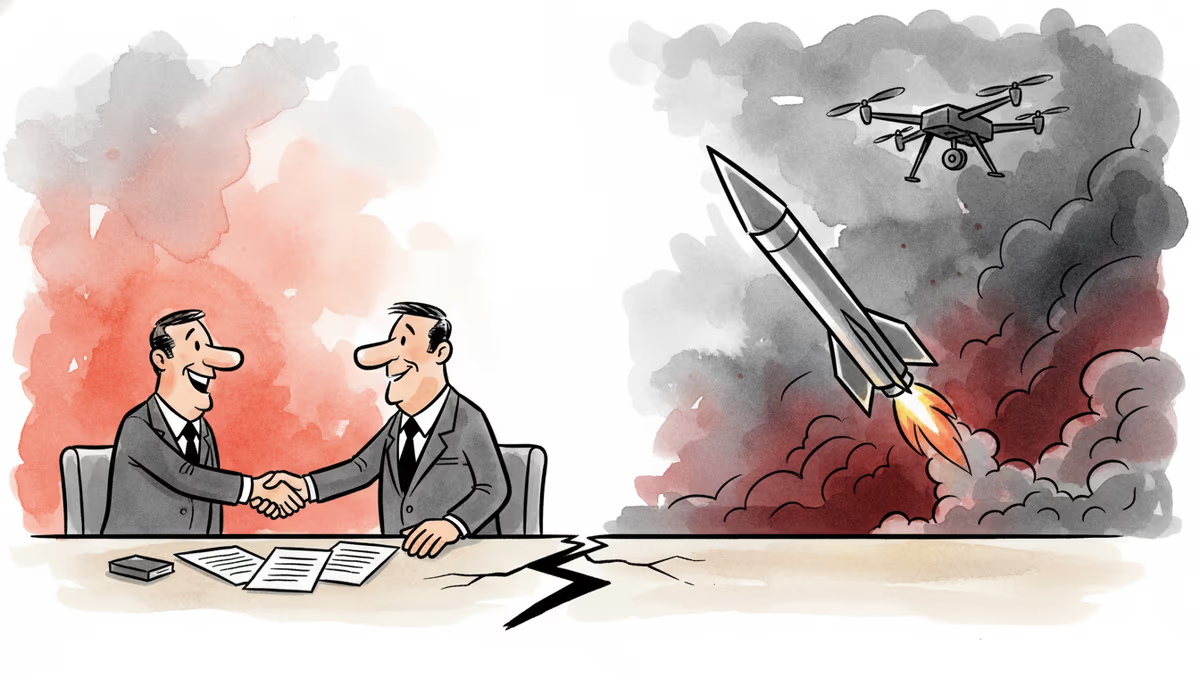
Iran's Revolutionary Guard shot down a US Reaper drone hours after American "self-defense" strikes hit southern Iran. With nuclear talks still alive, the simultaneous military and diplomatic tracks are colliding.

Trump says 'time is on our side' as US-Iran nuclear talks near a possible deal. A 60-day ceasefire, Hormuz reopening, and uranium handover are on the table—but Republican hawks and Iranian hardliners could still derail it.

Trump says a US-Iran nuclear deal is 'largely negotiated.' Iran calls it a 'Persian-style peace.' Both sides claim victory. Here's what's actually at stake.
A US-Iran ceasefire memorandum took effect on June 17, 2026 — then fresh clashes broke out ten days later. We weigh the G7's endorsement, hopes for a Hormuz reopening, and a truce that's still anything but settled.
Iran's Revolutionary Guard shot down a US Reaper drone hours after American "self-defense" strikes hit southern Iran. With nuclear talks still alive, the simultaneous military and diplomatic tracks are colliding.
Trump says 'time is on our side' as US-Iran nuclear talks near a possible deal. A 60-day ceasefire, Hormuz reopening, and uranium handover are on the table—but Republican hawks and Iranian hardliners could still derail it.
Trump says a US-Iran nuclear deal is 'largely negotiated.' Iran calls it a 'Persian-style peace.' Both sides claim victory. Here's what's actually at stake.
Thoughts
Share your thoughts on this article
Sign in to join the conversation