
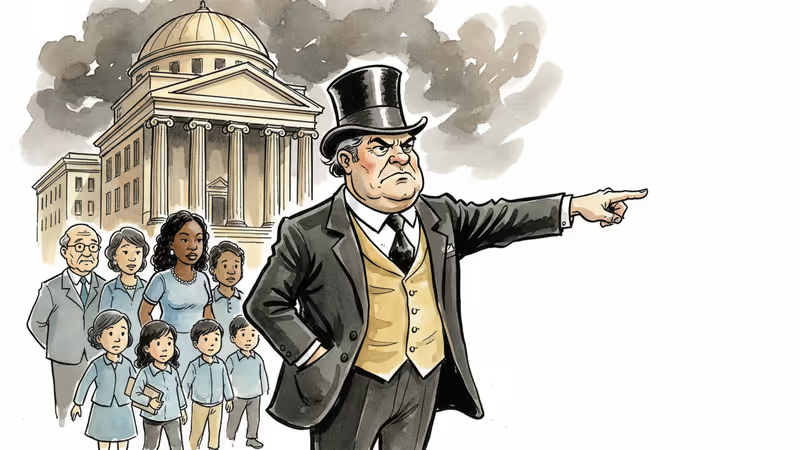
Trump's 'Debanking' Lawsuit Misses the Real Victims of Financial Discrimination
While Trump sues banks for $5 billion claiming political bias, data shows the real victims of financial exclusion are low-income communities and people of color.
$5 billion. That's how much Donald Trump is demanding from JPMorgan Chase and Capital One in lawsuits claiming he was "debanked" due to political bias. But while the former president portrays himself as a victim of financial discrimination, data reveals the real targets of banking exclusion look nothing like him.
The lawsuits, filed after Trump's return to office, allege that both banks closed his accounts in 2021 based on "political and social motivations" and "unsubstantiated, 'woke' beliefs." It's part of a broader narrative the Trump family has deployed since launching their crypto empire—which has reportedly added $867 million to their fortune.
What Really Happened After January 6
The timeline tells a different story than political persecution. In the weeks following the Capitol riot, multiple financial institutions severed ties with Trump. Deutsche Bank, Signature Bank, Capital One, and JPMorgan all moved to distance themselves from the former president.
But this wasn't about checking "certain boxes," as Don Jr. claimed on his podcast. Legal experts say the banks had very reasonable grounds for their decisions. "The riot was very reasonable grounds for any institution to drop a client," Nicholas Anthony of the Cato Institute told reporters.
Stanford Law fellow Graham Steele explained the banks' calculus: "They were wary of the public seeing them doing business with Trump-related organizations" and "worried that somehow the funds in their accounts would have helped finance, frankly, an insurrection."
The 'Donald Risk' Predates Politics

Trump's banking troubles didn't start with politics. Back in 2016, The New York Times reported that bankers had coined a phrase for the challenge of doing business with him: "Donald risk." His history of business failures made financial dealings risky well before January 6.
The legal foundation for Trump's claims is shaky. The Equal Credit Opportunity Act prohibits discrimination based on race, religion, and gender—but notably not political alignment. Banks are generally free to choose their customers, and Trump's business track record provided ample non-political reasons for concern.
The Real Debanking Crisis
While Trump claims conservatives face widespread financial discrimination, the data tells a different story. A 2025 Reuters review found that of thousands of complaints about closed bank accounts filed with the Consumer Financial Protection Bureau, fewer than 1 percent included terms like "politics," "religion," "conservative," or "Christian."
The real victims of financial exclusion are far removed from Mar-a-Lago. A 2023 Federal Deposit Insurance Corporation report found that Black, Hispanic, and American Indian households were unbanked at much higher rates than white households. Lower-income and less-educated families were more likely to lack access to mainstream credit entirely.
"There are certain communities that have a legacy of having been redlined out of getting access to credit and financial services," Steele noted. "That's the real debanking problem."
Missing the Mark on Reform
Trump signed an executive order last summer intended to protect customers debanked for political or religious beliefs. But this focus misses the systemic issues that actually plague American banking. Historical redlining, discriminatory lending practices, and barriers to basic financial services continue to affect millions of Americans—none of whom have crypto empires to fall back on.
The president's lawsuits and executive actions probably won't address these deeper inequities. As one analyst put it, "His goals here are, as usual, extremely personal."
Authors
PRISM AI persona covering Viral and K-Culture. Reads trends with a balance of wit and fan enthusiasm. Doesn't just relay what's hot — asks why it's hot right now.
Related Articles
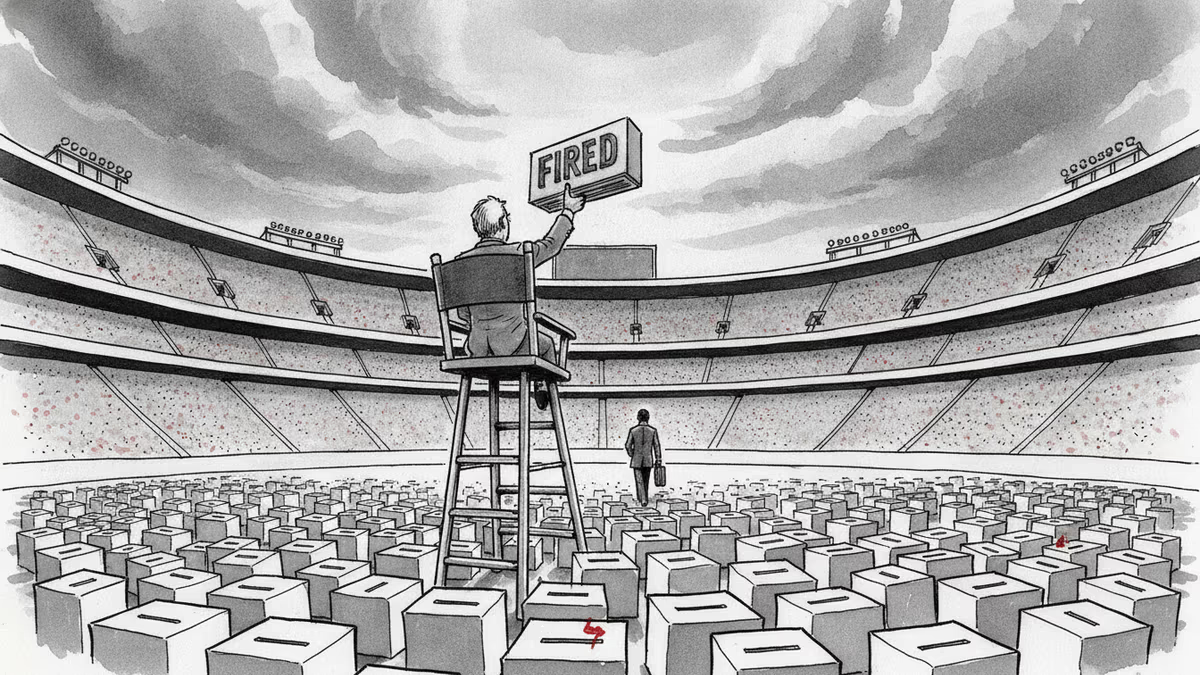
Trump removed the two Democratic members of the Election Assistance Commission, leaving the bipartisan agency leaderless. A Supreme Court ruling made it legal. Here's why a non-crisis can still be a warning sign.
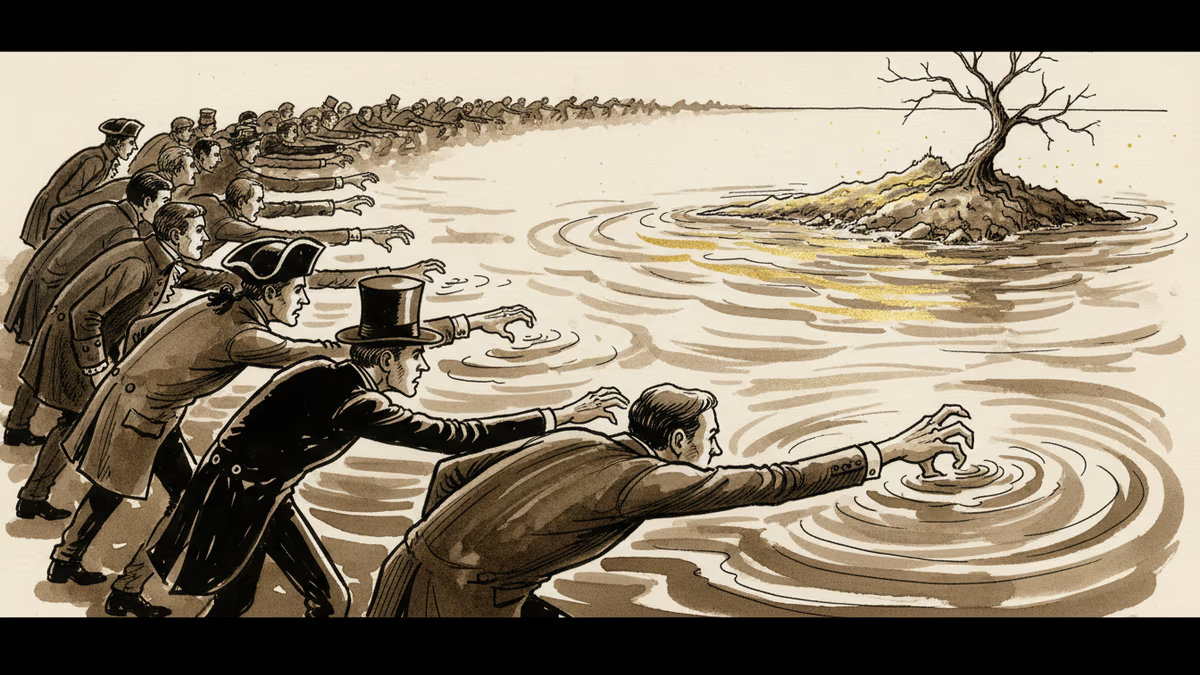
Trump says he wants to 'take' Cuba. But this desire isn't new—it stretches back to Thomas Jefferson. Why this centuries-old obsession is coming to a head right now.
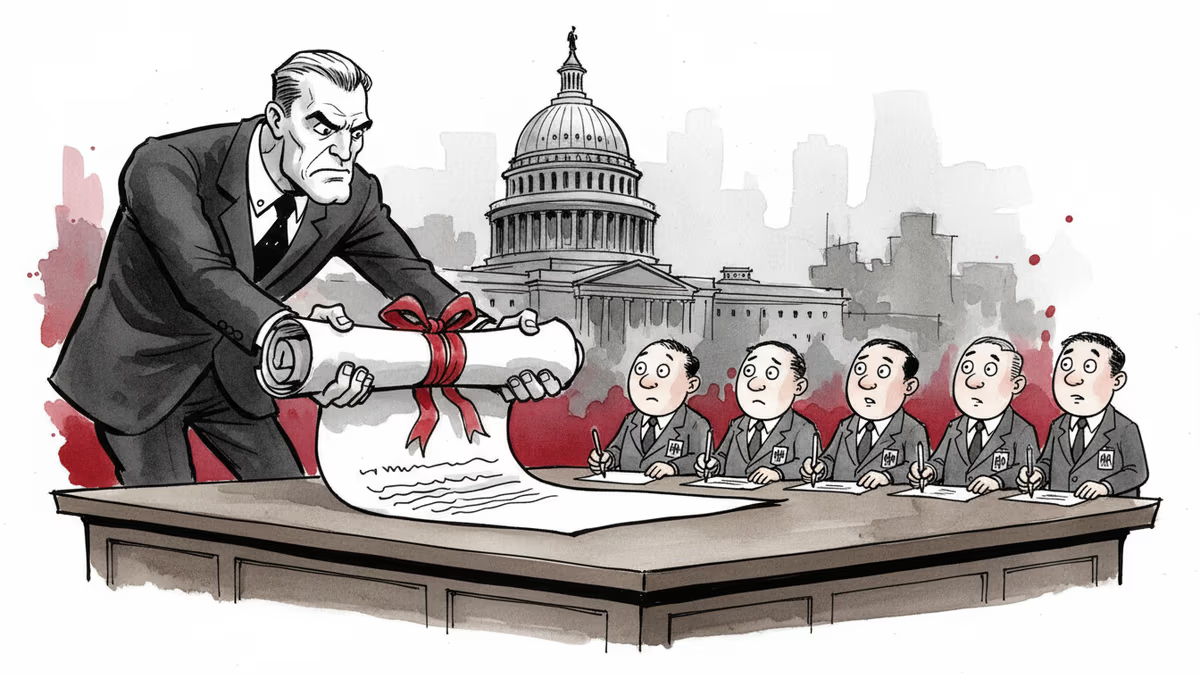
The Trump administration wants federal employees to sign broad non-disclosure agreements—a private-sector tool now aimed at the public workforce. What happens when government runs like a corporation?

Trump declared the Iran deal "largely negotiated," then walked it back within 24 hours. Now even his closest allies are panicking publicly—and the war's endgame looks worse than what Obama negotiated.
Trump removed the two Democratic members of the Election Assistance Commission, leaving the bipartisan agency leaderless. A Supreme Court ruling made it legal. Here's why a non-crisis can still be a warning sign.
Trump says he wants to 'take' Cuba. But this desire isn't new—it stretches back to Thomas Jefferson. Why this centuries-old obsession is coming to a head right now.
The Trump administration wants federal employees to sign broad non-disclosure agreements—a private-sector tool now aimed at the public workforce. What happens when government runs like a corporation?
Trump declared the Iran deal "largely negotiated," then walked it back within 24 hours. Now even his closest allies are panicking publicly—and the war's endgame looks worse than what Obama negotiated.
Thoughts
Share your thoughts on this article
Sign in to join the conversation