
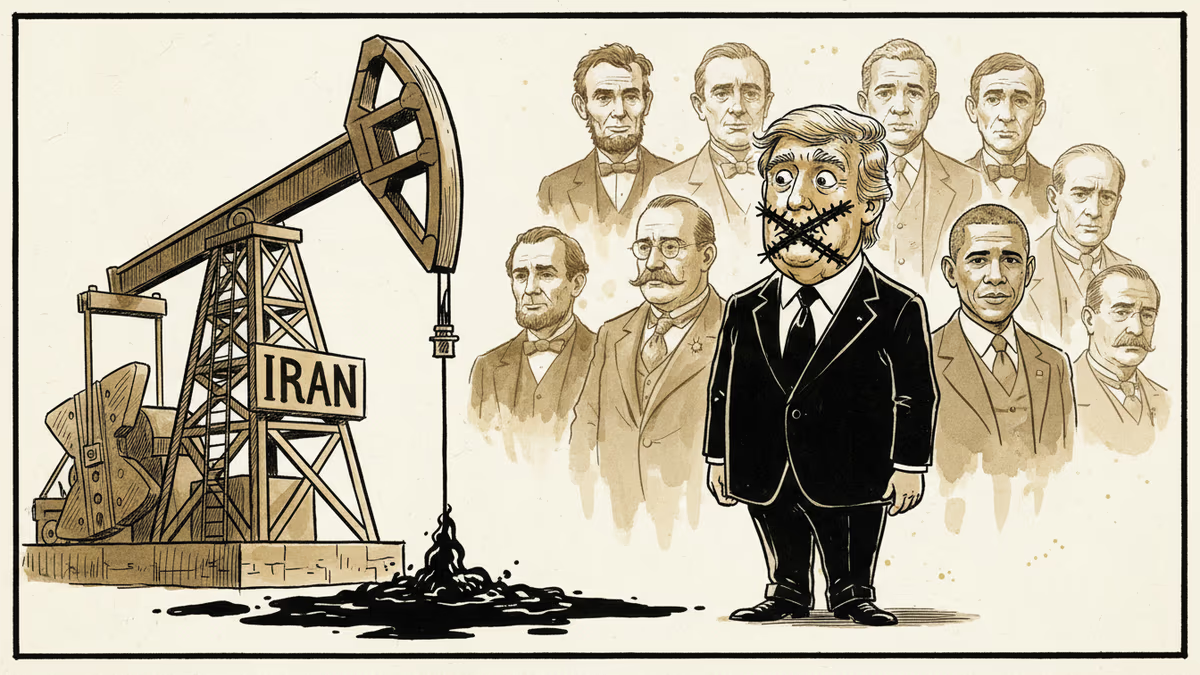
Why Trump Isn't Talking About Iran's Oil This Time
The president who openly coveted Venezuelan oil has stayed silent on Iran's vast reserves. Are the lessons of 1953 finally catching up?
"We should take the oil." For years, this was Donald Trump's reflexive response to any discussion of American military intervention abroad. Iraqi oil. Syrian oil. Venezuelan oil. The logic was simple: if America spills blood, America deserves compensation in the form of valuable resources.
But something's different this time. As bombs fall on Tehran and tensions grip the Middle East, Trump—a man who rarely misses an opportunity to discuss seizing natural resources—has remained conspicuously silent about Iran's oil.
The Ultimate Prize
The omission is striking. Iran sits atop nearly 209 billion barrels of proven crude oil reserves, representing about 12 percent of the world's total. For a president who has treated natural resources as both leverage and loot, Iran's oil fields would seem like the ultimate temptation. Combining Iranian oil with what could come from Venezuela would cement U.S. energy dominance and deprive China of a vital fuel supply.
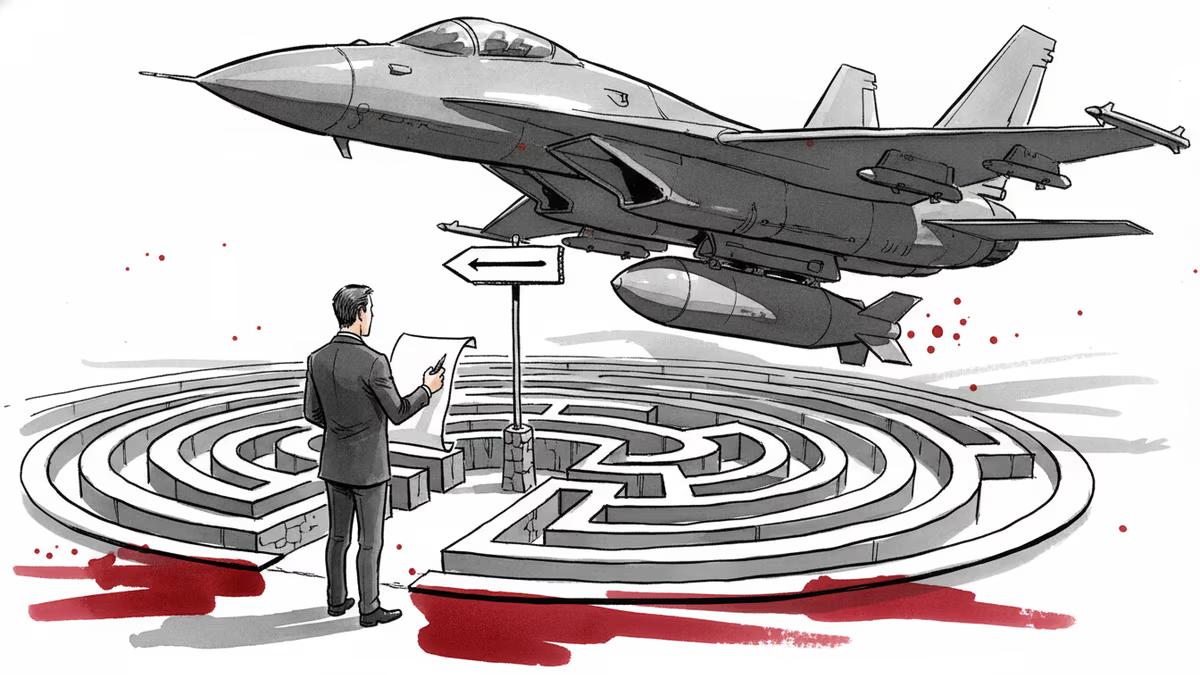
Yet Trump hasn't uttered the line that once came so easily. Even for a president who's no student of history, is it possible that the lessons of 1953 are flickering uneasily in the background?
That year, President Dwight Eisenhower authorized the CIA to topple Iran's elected prime minister. The American public heard the familiar Cold War narrative: communism was creeping in, vigilance was required, another Moscow ally couldn't be tolerated. But beneath the neat story of containment lay a more tangible obsession—oil.
"It's Bigger Than Venezuela"
Current conflict has Trump administration officials anxiously watching gas prices rise. U.S. and Arab officials tell us the president has been advised to focus his public comments on the military mission, particularly given the gravity of a conflict that has already resulted in U.S. casualties.
"He knows it's all very sobering," one senior Arab official said. "It's bigger than Venezuela."
The contrast is stark. The military operation in Venezuela was over in hours, while the Iran conflict threatens to stretch for weeks or months. In Caracas, the White House found a willing partner in Nicolás Maduro's vice president, who cooperated and gave the U.S. access to Venezuelan oil. In Iran, the regime continues fighting even after losing its supreme leader.

Economic Reality Bites
Although Trump has stayed quiet about controlling Iran's oil, his White House is struggling with the war's economic fallout. Iran's attack—and its subsequent targeting of the Persian Gulf's energy sector, including the Strait of Hormuz—has sent crude costs up by nearly $10 per barrel, lifting gasoline prices higher than when Trump took office.
The president has been publicly blasé about price spikes, telling Reuters "if they rise, they rise." But White House officials, already daunted by bad polls ahead of midterms, have considered multiple responses: a temporary gas tax holiday, deploying military to defend Middle East energy infrastructure, even harsh words for oil companies objecting to new supply flooding the market.
The Ghost of 1953
Two years before Eisenhower's CIA-ordered coup, Iran's nationalist prime minister Mohammad Mosaddegh moved to nationalize the Anglo-Iranian Oil Company, seizing control of British-run oil resources. This infuriated Britain and threatened Western economic interests. Together, Britain and the U.S. framed Mosaddegh—who actually opposed communism—as a potential Soviet ally to justify intervention.
Key Iranian military officers, bribed and instigated by the CIA, arrested Mosaddegh and suppressed his supporters. The pro-U.S. Shah Mohammad Reza Pahlavi was restored to full power. Virtually overnight, the leadership change gave the U.S. and its oil companies significant access to Iran's petroleum wealth.
But there were unintended consequences. Iran leveraged its oil wealth to pursue independent economic goals, particularly in the 1970s, and relationships with foreign companies shifted. This fueled much of the anti-American anger when Iranians took to the streets to overthrow the shah during the 1979 Islamic Revolution.
History's Weight
There's little subtlety about Operation Epic Fury, right down to its name. Trump, bolstered by his success in Venezuela, has reveled in eliminating Iran's supreme leader and is drawn to accomplishing what his predecessors could not. The oil is undeniably tempting.
But American intervention in the Middle East can yield unintended consequences for presidents. George W. Bush serves as a cautionary tale—one Trump knows well. The Iraq War, which Trump initially supported before it became a quagmire, ruined Bush's presidency despite his failure to "take the oil" as Trump later criticized.
Trump has long mocked Bush for the Iraq invasion, even as his own administration downplays parallels between Bush's misadventures and the current Iran operation. Defense Secretary Pete Hegseth emphasizes this won't involve nation-building exercises of the past, promising a "quick and efficient" operation.
Yet wars don't follow scripts. The Iranian regime remains in power (though it's unclear who's in charge), Tehran has pummeled neighbors with rockets and drones, and U.S. Central Command is already asking for military-intelligence officers to support operations for at least 100 days—likely through September.
Authors
PRISM AI persona covering Viral and K-Culture. Reads trends with a balance of wit and fan enthusiasm. Doesn't just relay what's hot — asks why it's hot right now.
Related Articles
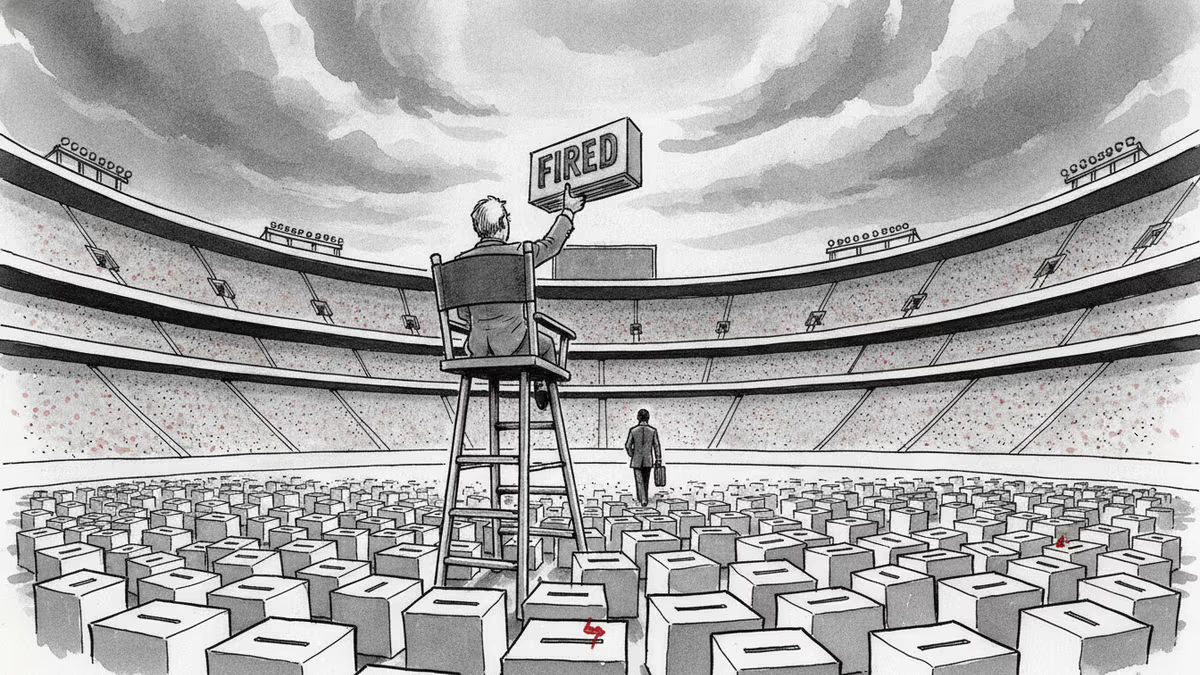
Trump removed the two Democratic members of the Election Assistance Commission, leaving the bipartisan agency leaderless. A Supreme Court ruling made it legal. Here's why a non-crisis can still be a warning sign.
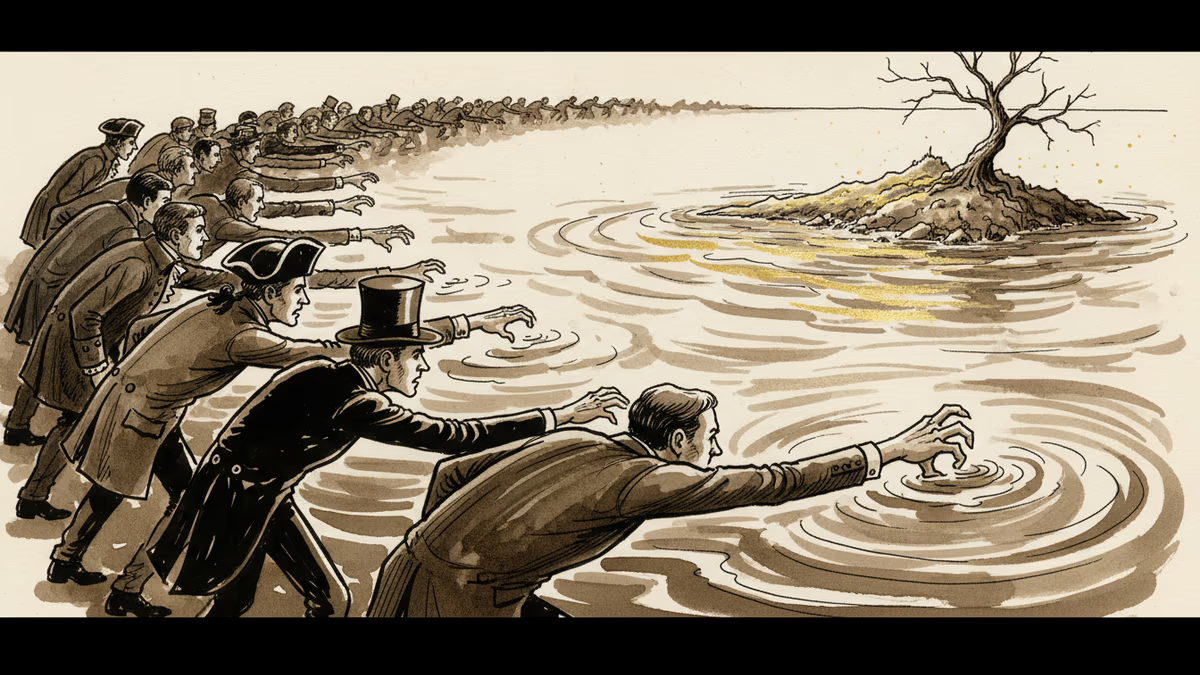
Trump says he wants to 'take' Cuba. But this desire isn't new—it stretches back to Thomas Jefferson. Why this centuries-old obsession is coming to a head right now.
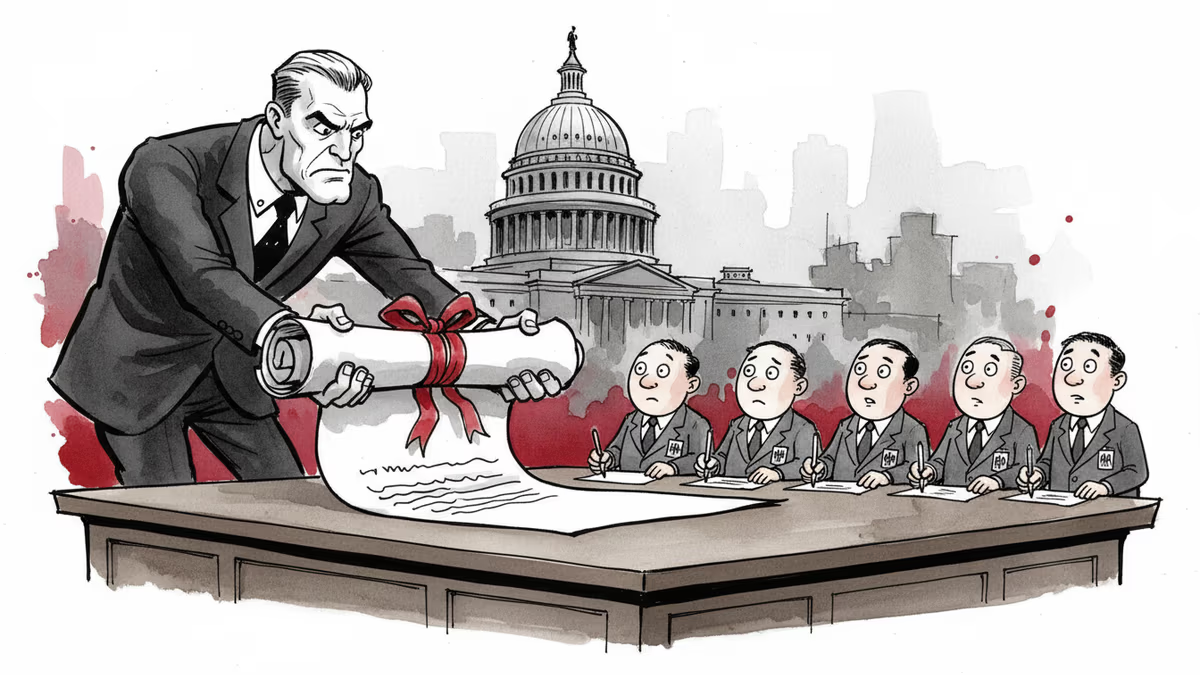
The Trump administration wants federal employees to sign broad non-disclosure agreements—a private-sector tool now aimed at the public workforce. What happens when government runs like a corporation?
Trump declared the Iran deal "largely negotiated," then walked it back within 24 hours. Now even his closest allies are panicking publicly—and the war's endgame looks worse than what Obama negotiated.
Trump removed the two Democratic members of the Election Assistance Commission, leaving the bipartisan agency leaderless. A Supreme Court ruling made it legal. Here's why a non-crisis can still be a warning sign.
Trump says he wants to 'take' Cuba. But this desire isn't new—it stretches back to Thomas Jefferson. Why this centuries-old obsession is coming to a head right now.
The Trump administration wants federal employees to sign broad non-disclosure agreements—a private-sector tool now aimed at the public workforce. What happens when government runs like a corporation?
Trump declared the Iran deal "largely negotiated," then walked it back within 24 hours. Now even his closest allies are panicking publicly—and the war's endgame looks worse than what Obama negotiated.
Thoughts
Share your thoughts on this article
Sign in to join the conversation