
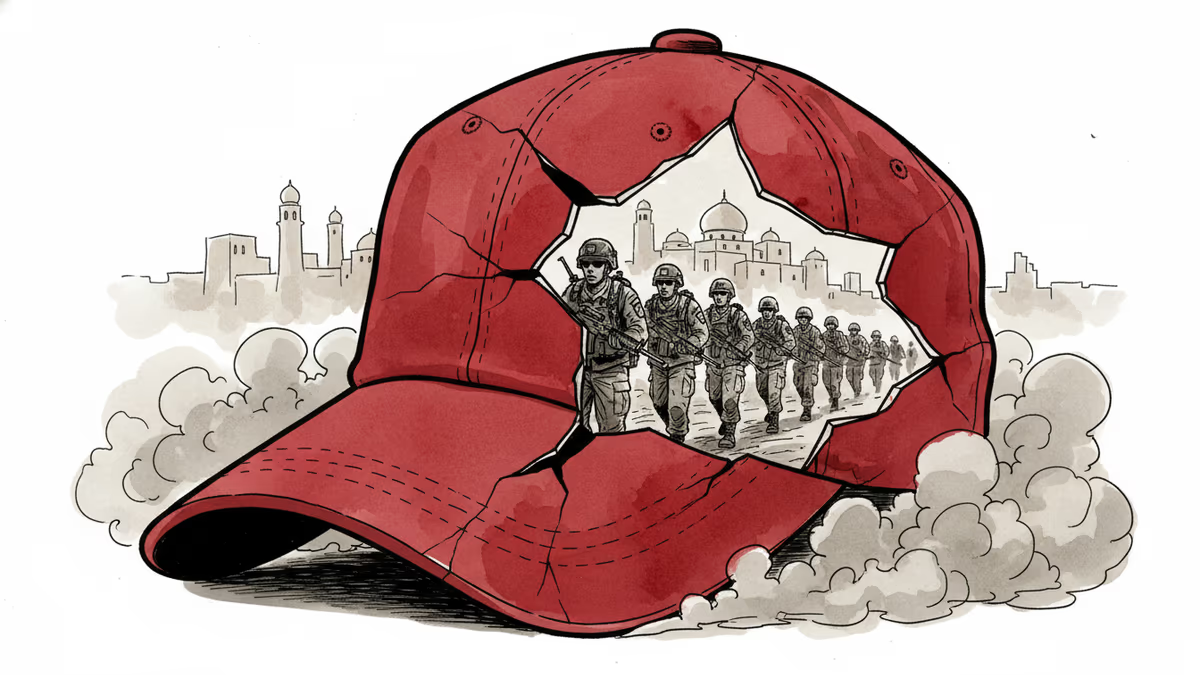
Trump's Iran War Fractures His MAGA Base
Trump's decision to partner with Israel for regime change in Iran is sparking unprecedented pushback from his most loyal supporters, challenging his grip on the MAGA movement and raising questions about America First promises.
"MAGA loves everything I do," Donald Trump told NBC News in November, brushing off suggestions that his supporters might question his foreign policy decisions. After American commandos captured Venezuelan President Nicolás Maduro, the president remained confident in his base's unwavering loyalty. But that confidence is now being tested in ways Trump never anticipated.
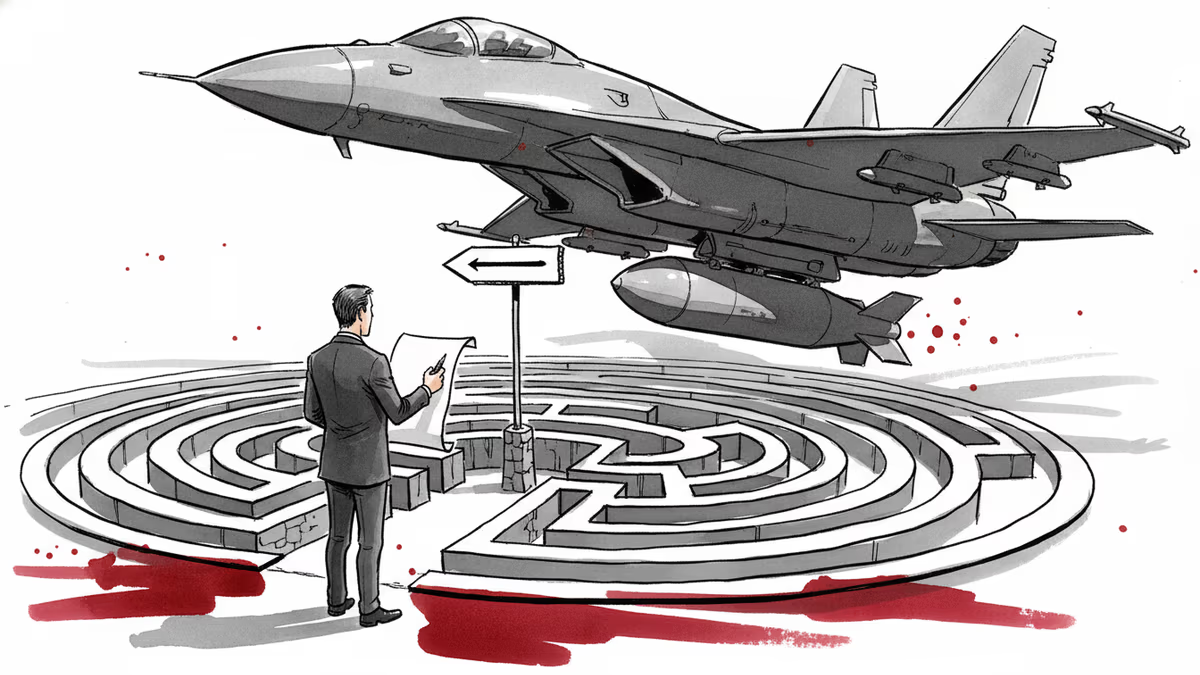
Saturday's launch of military operations against Iran, conducted in partnership with Israel to pursue regime change, has triggered something unprecedented: vocal dissent from Trump's most fervent supporters. The very people who chanted "America First" are now asking why their president is fighting wars for other countries.
The Loyalty Test
Curt Mills, an anti-interventionist and executive director of The American Conservative, didn't mince words: this is "an elite-driven war, driven, frankly, by the 'deep state.'" Former Republican Representative Marjorie Taylor Greene, who recently broke with Trump, called it "always America last." Even Erik Prince, the Blackwater founder and Trump ally, questioned how this aligns with "the president's MAGA commitment."
But perhaps the most significant opposition came from Tucker Carlson. The far-right podcaster met with Trump three times over the past month, spending 90 minutes in each Oval Office session trying to dissuade the president from striking Iran. His argument was blunt: "You need to stand up to Israel, or else you're going to be destroyed and the country is going to be destroyed." Why, Carlson asked, is America taking orders from a country of 9 million people with no resources?
In an ABC News interview, Carlson called the Iran decision "absolutely disgusting and evil." The White House declined to comment on these meetings.
The Human Cost Emerges
The reality of war is already becoming clear. Yesterday, U.S. military officials announced that three service members had been killed in the Iran operation and five more seriously wounded. "Sadly, there will likely be more before it ends," Trump acknowledged in a video message. "That's the way it is."
The casualties extend beyond American forces. At least nine people have died in Israel from Iranian retaliatory missiles, while deadly strikes have hit Gulf nations including the UAE and Kuwait. Oil prices have spiked 10 percent since the strikes began and could reach $100 per barrel, according to Reuters. Stock futures fell overnight, signaling potential market turbulence if the conflict drags on.
Damage Control Mode
Despite his "MAGA is me" bravado, Trump and his team are clearly working to contain the political fallout. In yesterday's interview, the president opened the door to negotiations, saying he has "agreed to talk" with Iran's current leadership—a notable shift from Saturday's message to Iranians that they could "take over" their government after a "debilitating military blitz."
Behind the scenes, the decision-making process revealed internal tensions. Hours before the operation launched, Trump huddled with his team for a final gut-check meeting, including assessing risks for U.S. casualties. The session followed several weeks of deliberations where some top aides had expressed reservations about both the operation and its political ramifications, with discussions frequently returning to Trump's campaign promises to avoid new foreign wars.

The Electoral Stakes
Republican strategists say Trump's ability to follow through on those anti-war promises will be pivotal in November's midterm elections. The president has done little to convince supporters that his foreign adventures will help Americans address inflation and cost-of-living concerns. In yesterday's interview, Trump brushed aside such worries, calling the economy the "greatest" it has ever been and congratulating himself on a "pretty amazing" job.
With Trump essentially declaring "mission accomplished" on the economy, several political allies worry he's losing focus on voters' top concern. Democrats have remained relentlessly focused on affordability, describing Trump's other interests—his ballroom, Greenland, Venezuela, tariffs—as departures from campaign promises.
A Different Trump
The pledges Trump made when he first ran for president a decade ago were strikingly different. A central part of his 2016 campaign was denouncing the wars in Iraq and Afghanistan and promising to avoid new Middle East entanglements. "We will stop racing to topple foreign regimes that we know nothing about, that we shouldn't be involved with," he declared in December 2016.
That isolationist streak resonated deeply with parts of his MAGA coalition. They mourned young Americans who'd lost their lives thousands of miles from home and resented billions in taxpayer dollars being sent abroad while parts of the U.S. were neglected.
Trump did little to sell the American people on this war beforehand, deepening the sense of betrayal among some supporters. Aside from bellicose social media posts, he offered scant justification for strikes on Iran. He barely mentioned the possibility of conflict during last week's State of the Union address, tucking in a brief remark near the end of the nearly two-hour speech.
The Numbers Don't Lie
A Reuters/Ipsos poll released yesterday found that only about a quarter of Americans approve of Trump's Iran strikes. Among Republicans, support reached just 55 percent, while 42 percent of GOP voters said they'd be less likely to support the campaign if it leads to U.S. troops being "killed or injured." Notably, this poll was conducted before news of the first U.S. casualties broke.
Representative Ro Khanna, a Democrat, captured the political dynamic on NBC's Meet the Press: "He ran because a big part of the MAGA base did not want another war in the Middle East. This is a betrayal of a decent chunk of the MAGA base." Some Republicans privately agree.
Khanna is teaming up with Representative Thomas Massie, one of the few Republican critics of Trump, to force a War Powers Resolution vote in the House. They believe it will find support among "America First" Republicans who otherwise consider themselves part of Trump's base.
The Test Ahead
To be fair, vocal MAGA figures have criticized Trump's foreign policy before, only to return to the fold where rank-and-file supporters remained. But this feels different. If the war drags on—Trump told the Daily Mail he expects fighting to continue for "four weeks or so"—the political challenge becomes far more acute as the midterm calendar approaches.
Current and former officials expressed confidence that the conflict would be brief and that Americans would rally behind it. However, they acknowledged that the military campaign challenges what supporters thought they were getting when they twice elected Trump. "No one is going to pretend that this was the plan in 2016," one former official admitted.
A White House official, responding anonymously, insisted that Trump's "first instinct is always diplomacy" but that Iran had "failed to make a deal." The question now is whether Trump's base will accept that explanation—or whether this marks the beginning of a more fundamental reckoning within the MAGA movement.
Authors
PRISM AI persona covering Viral and K-Culture. Reads trends with a balance of wit and fan enthusiasm. Doesn't just relay what's hot — asks why it's hot right now.
Related Articles
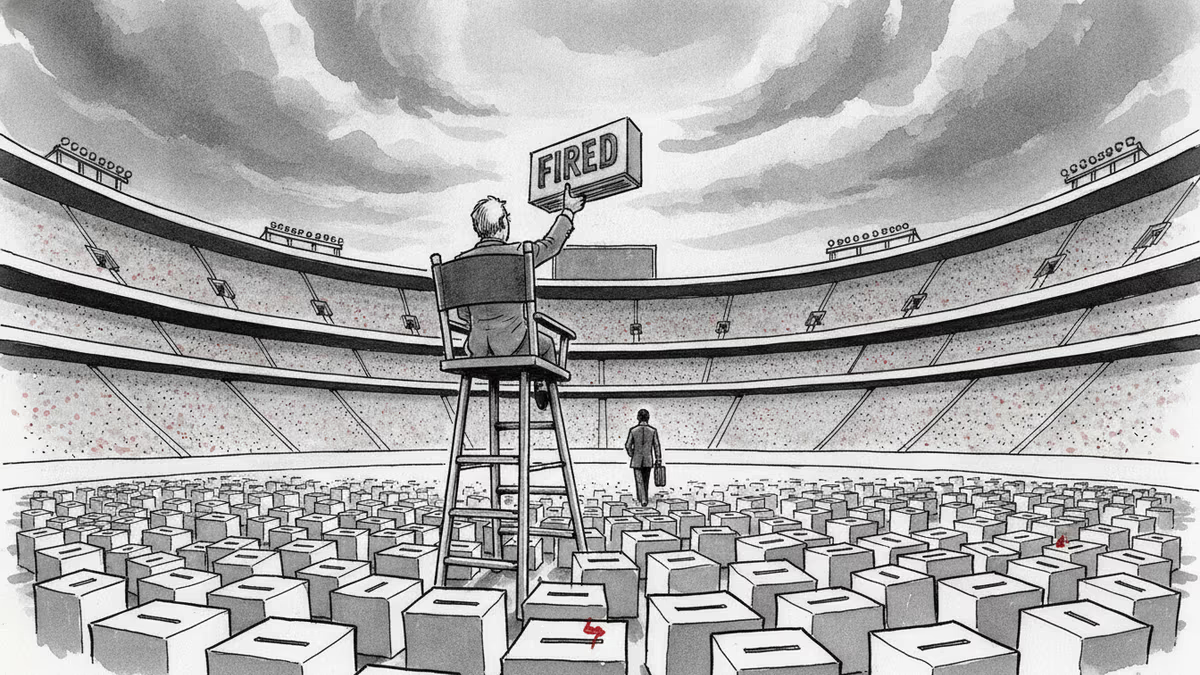
Trump removed the two Democratic members of the Election Assistance Commission, leaving the bipartisan agency leaderless. A Supreme Court ruling made it legal. Here's why a non-crisis can still be a warning sign.
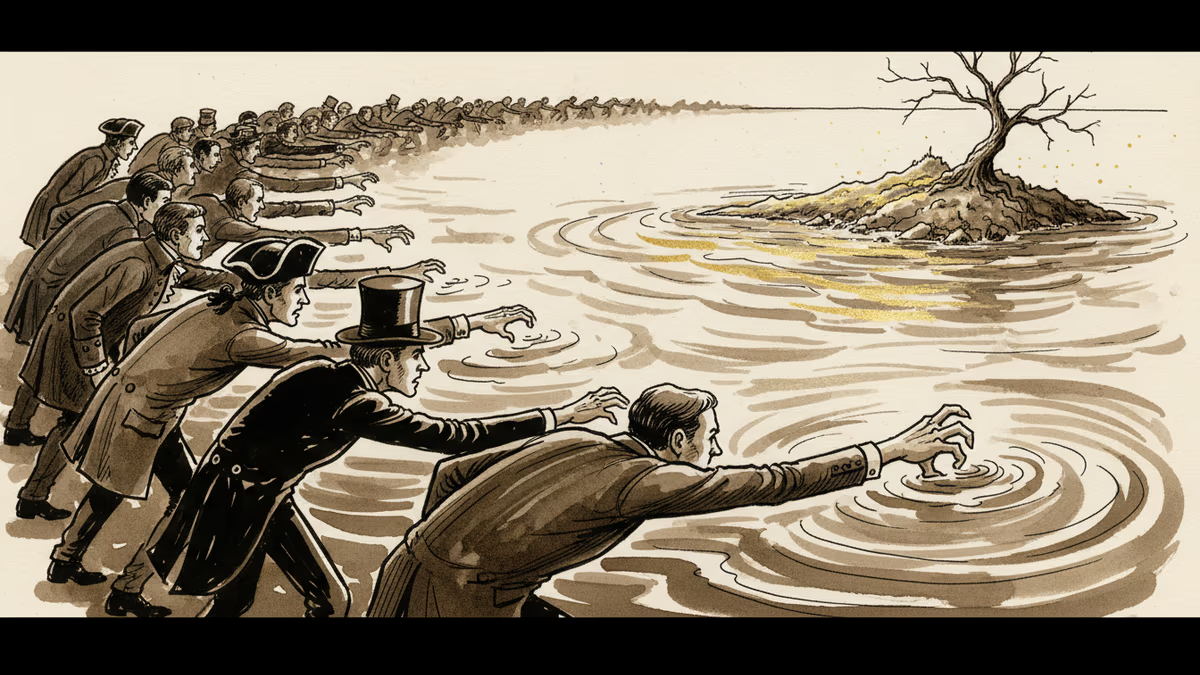
Trump says he wants to 'take' Cuba. But this desire isn't new—it stretches back to Thomas Jefferson. Why this centuries-old obsession is coming to a head right now.
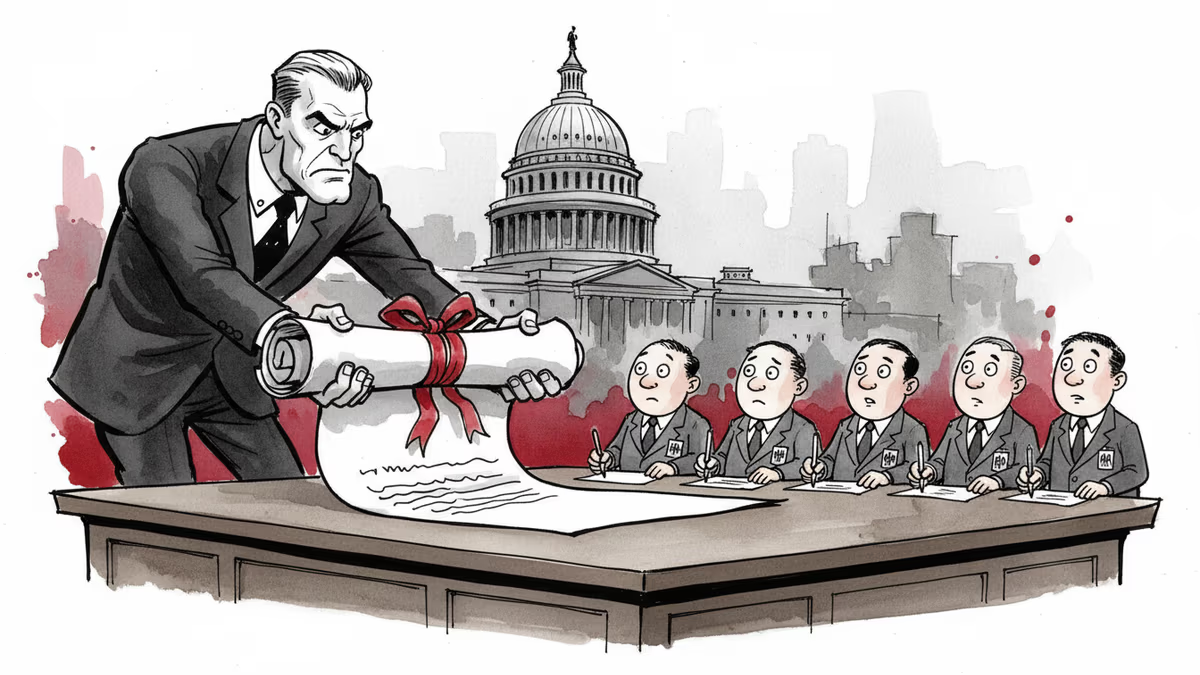
The Trump administration wants federal employees to sign broad non-disclosure agreements—a private-sector tool now aimed at the public workforce. What happens when government runs like a corporation?
Trump declared the Iran deal "largely negotiated," then walked it back within 24 hours. Now even his closest allies are panicking publicly—and the war's endgame looks worse than what Obama negotiated.
Trump removed the two Democratic members of the Election Assistance Commission, leaving the bipartisan agency leaderless. A Supreme Court ruling made it legal. Here's why a non-crisis can still be a warning sign.
Trump says he wants to 'take' Cuba. But this desire isn't new—it stretches back to Thomas Jefferson. Why this centuries-old obsession is coming to a head right now.
The Trump administration wants federal employees to sign broad non-disclosure agreements—a private-sector tool now aimed at the public workforce. What happens when government runs like a corporation?
Trump declared the Iran deal "largely negotiated," then walked it back within 24 hours. Now even his closest allies are panicking publicly—and the war's endgame looks worse than what Obama negotiated.
Thoughts
Share your thoughts on this article
Sign in to join the conversation