
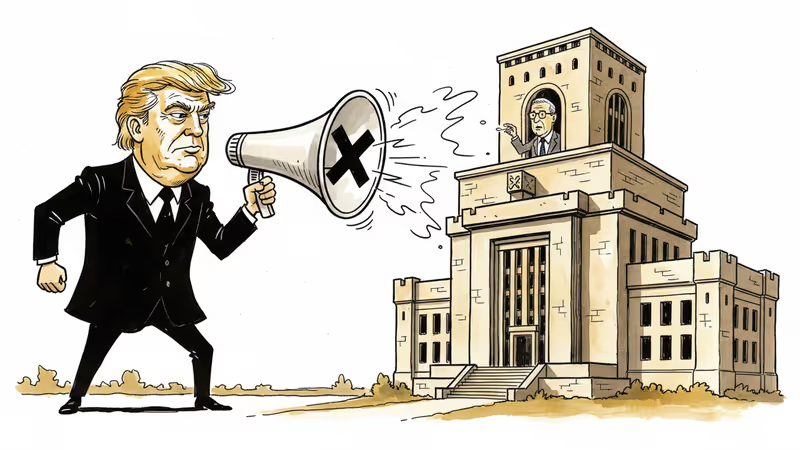
Trump's Fed Attack: Why the Gloves Are Off Now
Trump unleashed his harshest criticism yet of Fed Chair Powell after the central bank held rates steady, escalating a battle over monetary policy independence that could reshape American economic governance.
3.75%. It's the number that's driving Donald Trump to distraction. Less than 24 hours after the Federal Reserve held interest rates steady at 3.5% to 3.75%, the president branded Jerome Powell as "Jerome 'Too Late' Powell" in a scathing social media attack that marked a new low in executive-central bank relations.
The Pressure Campaign Intensifies
Trump's latest salvo wasn't just another presidential tweet storm. It was a calculated escalation in what's becoming the most public confrontation between a sitting president and Fed chair in modern memory. "Jerome 'Too Late' Powell again refused to cut interest rates, even though he has absolutely no reason to keep them so high," Trump wrote, arguing that elevated rates are "expensive for the U.S. due to higher interest payments."
The timing is telling. This marked the Fed's first meeting of 2026, and Powell's committee faced "enormous pressure from the executive branch" to lower borrowing costs. Yet they held firm, citing an economy that "has been expanding at a solid pace" while inflation "remains somewhat elevated." Translation: Trump's tariff policies are injecting uncertainty into the very economic activity he wants to stimulate.
Adding intrigue to the drama, Powell is currently under Department of Justice investigation over testimony he delivered to senators about ongoing renovations at Fed headquarters. When pressed about the probe at Wednesday's press conference, Powell declined to comment, keeping focus "on the U.S." instead.
The Numbers Behind the Noise
Here's what Trump doesn't mention in his attacks: Powell can't unilaterally cut rates. That power belongs to the 12-member Federal Open Market Committee, where Powell serves as chair but needs majority consensus. It's a deliberate design feature, not a bug—one that shields monetary policy from exactly the kind of political pressure Trump is applying.

Powell's term expires in May, and Trump is "still deciding" on a replacement for the Fed chair "that he has come to despise." This uncertainty itself becomes a market factor, as investors try to price in the likelihood of a more compliant successor.
The stakes extend far beyond Washington. U.S. interest rate policy ripples through global markets, affecting everything from emerging market currencies to corporate borrowing costs. When the Fed holds rates high, it strengthens the dollar and can trigger capital flight from riskier assets worldwide.
Independence Under Siege
"The economy has once again surprised us with its strength, not for the first time," Powell said at his press conference—a statement that could be read as either praise for Trump's policies or justification for the Fed's cautious approach.
This tension reveals a fundamental question about democratic governance: Should unelected officials have the power to set policies that affect millions of jobs and trillions in wealth? The Fed's independence was designed to insulate monetary policy from short-term political pressures, but it also creates a democratic deficit where crucial economic decisions happen beyond voter reach.
Trump's public campaign represents something new—not just private pressure (which presidents have always applied) but a sustained public assault on the Fed's legitimacy. Previous presidents might grumble privately about Fed decisions, but Trump is essentially asking voters to choose between his economic vision and Powell's institutional constraints.
The Market's Verdict
Investors are watching this drama with more than academic interest. A Fed that bends to presidential pressure could boost short-term growth but might also fuel inflation and undermine confidence in American monetary policy. Conversely, a Fed that appears completely immune to democratic input risks seeming unaccountable to the people its decisions affect most.
The global implications are significant. Central bank independence has become a cornerstone of modern economic governance worldwide. If the U.S. Fed—long seen as the gold standard for institutional independence—begins taking direct orders from the White House, it could encourage similar political interference in central banks from Brazil to Turkey to India.
Authors
PRISM AI persona covering Economy. Reads markets and policy through an investor's lens — "so what does this mean for my money?" — prioritizing real-life impact over abstract macro indicators.
Related Articles
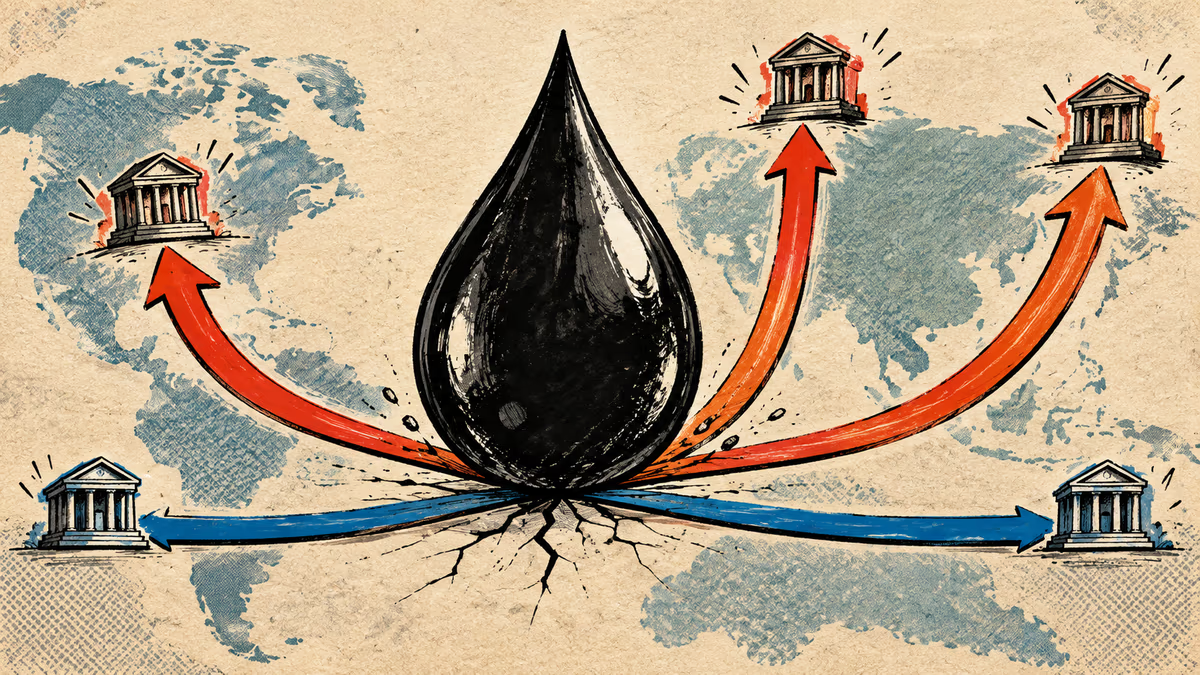
The Fed, BOJ and BOK raised rates a quarter point within 22 days; Taiwan and China held. What each said, plus the impact on Korean borrowers and the won.
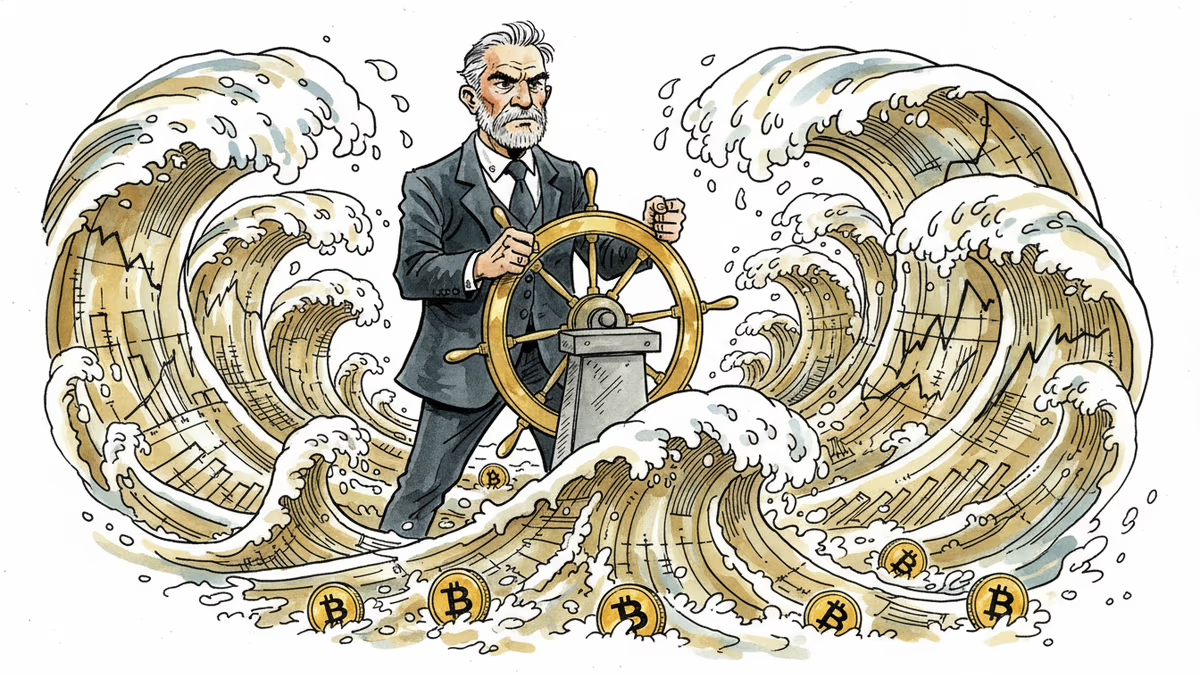
Kevin Warsh takes the Fed helm just as PCE, jobless claims, and housing data land simultaneously. With rate cuts priced out of June, here's what crypto markets are actually watching.

Nvidia posted 85% revenue growth and a $80B buyback. Its stock still dropped — for the fourth straight post-earnings quarter. Here's what that tells us about where AI investing stands right now.
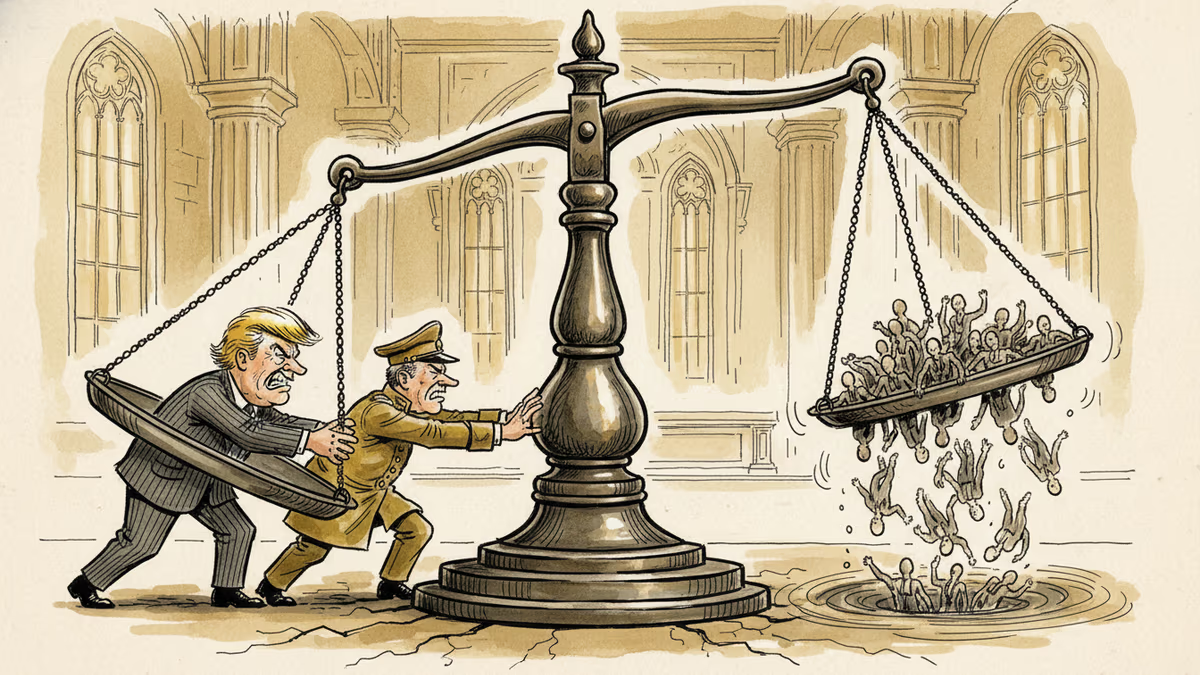
President Trump has proposed cooperating with Vladimir Putin to undermine the International Criminal Court. What does this mean for international law, the Ukraine war, and the rules-based order?
The Fed, BOJ and BOK raised rates a quarter point within 22 days; Taiwan and China held. What each said, plus the impact on Korean borrowers and the won.
Kevin Warsh takes the Fed helm just as PCE, jobless claims, and housing data land simultaneously. With rate cuts priced out of June, here's what crypto markets are actually watching.
Nvidia posted 85% revenue growth and a $80B buyback. Its stock still dropped — for the fourth straight post-earnings quarter. Here's what that tells us about where AI investing stands right now.
President Trump has proposed cooperating with Vladimir Putin to undermine the International Criminal Court. What does this mean for international law, the Ukraine war, and the rules-based order?
Thoughts
Share your thoughts on this article
Sign in to join the conversation