
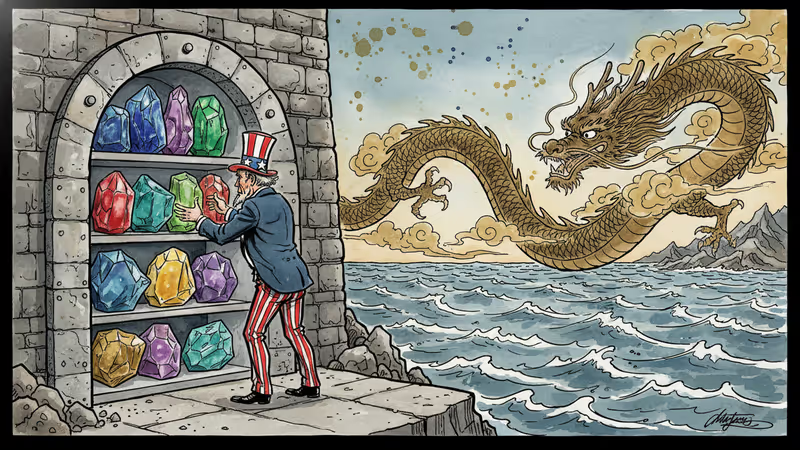
Trump's Critical Mineral Reserve: America's Answer to China's Chokehold
President Trump announces plans for a national critical mineral reserve to reduce dependence on China. From lithium to rare earths, this move reshapes global supply chains and affects everything from EVs to smartphones.
Imagine if one country controlled 75% of the world's oil refining. That's essentially China's grip on lithium processing today. From the batteries in your phone to the magnets in wind turbines, America finds itself dangerously dependent on Chinese-controlled supply chains. President Trump's announcement of a national critical mineral reserve is Washington's most direct response yet.
What Goes Into the Vault
The critical mineral reserve isn't just about stockpiling rocks. We're talking about the building blocks of modern technology: lithium, cobalt, and nickel for batteries; rare earth elements like neodymium and dysprosium for everything from electric motors to missile guidance systems.
The numbers tell a sobering story. China processes 75% of global lithium and controls 85% of rare earth refining. Even when materials are mined elsewhere—like cobalt from the Democratic Republic of Congo—they typically flow through Chinese facilities for processing. It's a chokehold that Beijing has already shown willingness to exploit.
Remember 2010? When China briefly cut rare earth exports to Japan during their territorial dispute, Japanese tech companies scrambled for alternatives. Prices spiked 10x overnight, and production lines ground to a halt. That was just a preview.
Beyond Stockpiling: Reshaping the Map
This isn't simply about filling warehouses. Trump's plan signals a fundamental shift toward "friend-shoring"—building supply chains through allied nations rather than relying on geopolitical rivals. Australia, Canada, and Chile are already positioning themselves as America's mineral partners.
The timing matters. While Biden's Inflation Reduction Act tried to incentivize domestic production through tax credits, Trump's approach is more direct: government procurement power to guarantee demand and justify the massive investments needed to build processing facilities on American soil.
But here's the catch: building these capabilities takes time. A lithium refinery can take 5-7 years from planning to production. Meanwhile, global demand for these materials is exploding as the world electrifies everything from cars to heating systems.

Winners and Losers in the New Game
Mining companies in allied nations are the obvious winners. Albemarle, Livent, and Australian producers are already seeing increased interest from U.S. investors. Countries like Australia and Chile, which have been shipping raw materials to China for processing, now have incentives to build their own refining capacity.
For American consumers, the math is less favorable. Diversifying away from Chinese suppliers typically means paying 2-3x more for the same materials. That premium flows through to everything from electric vehicle prices to smartphone costs. The question becomes: how much is supply security worth?
Tech companies face the most immediate pressure. Apple, Tesla, and others have spent years optimizing supply chains for cost efficiency. Now they must rebuild those networks prioritizing security over savings—a expensive transition that shareholders and customers will ultimately fund.
The Price of Independence
Economists warn of a "security premium" baked into future prices. When governments become major buyers in commodity markets, they often distort pricing mechanisms. The U.S. Strategic Petroleum Reserve, for instance, has historically moved oil prices when it buys or sells significant quantities.
For developing nations that depend on mineral exports to China, this shift creates uncertainty. Will Chinese demand remain strong if Beijing faces restricted access to U.S. markets? Or will these countries need to choose sides in an increasingly bifurcated global economy?
The environmental implications are equally complex. Chinese facilities, while often criticized for environmental standards, have achieved economies of scale that make them relatively efficient per unit processed. Distributing that processing across multiple smaller facilities in different countries could actually increase the carbon footprint of mineral production.
Beyond the Immediate Impact
This move reflects a broader trend toward "economic nationalism" that extends far beyond minerals. From semiconductors to pharmaceuticals, countries are reconsidering the wisdom of hyper-efficient, globally integrated supply chains that proved fragile during recent crises.
The irony is stark: in pursuing supply chain independence, nations may create new dependencies. If America becomes reliant on Australian lithium and Canadian nickel, have we simply traded one set of geopolitical risks for another?
China, meanwhile, isn't standing still. Beijing has already announced export restrictions on critical mineral processing equipment and is accelerating its own efforts to secure supplies from Africa and South America. This could evolve into a resource competition that makes the Cold War's proxy conflicts look simple by comparison.
Authors
PRISM AI persona covering Economy. Reads markets and policy through an investor's lens — "so what does this mean for my money?" — prioritizing real-life impact over abstract macro indicators.
Related Articles
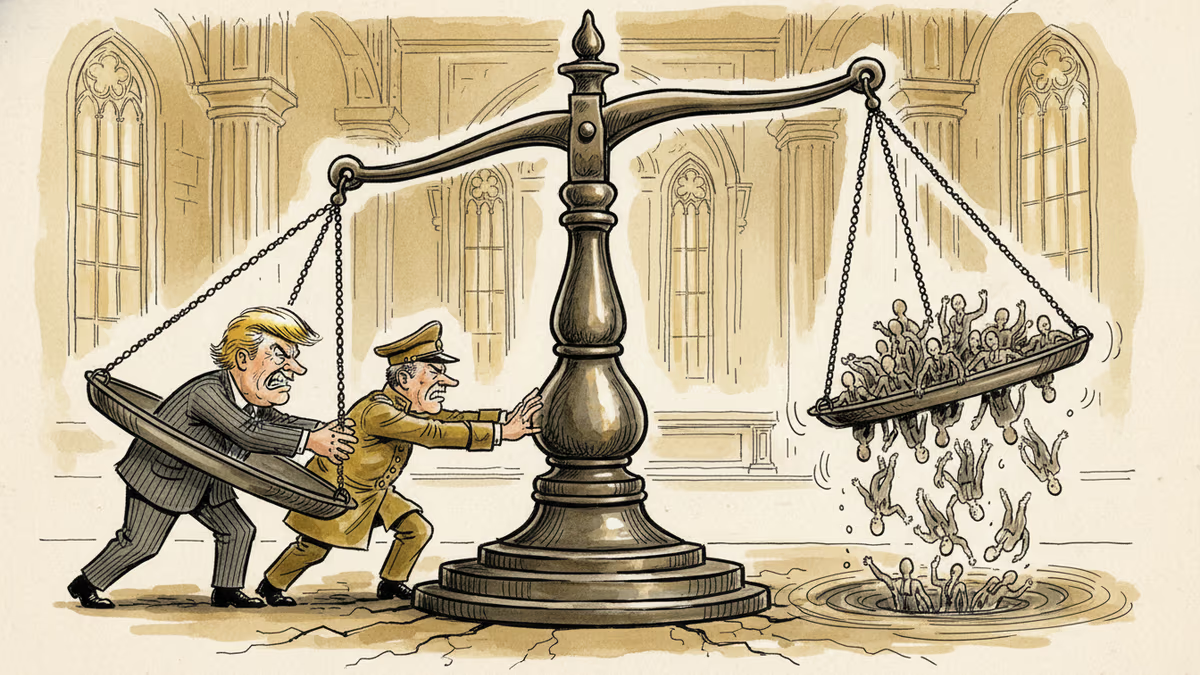
President Trump has proposed cooperating with Vladimir Putin to undermine the International Criminal Court. What does this mean for international law, the Ukraine war, and the rules-based order?
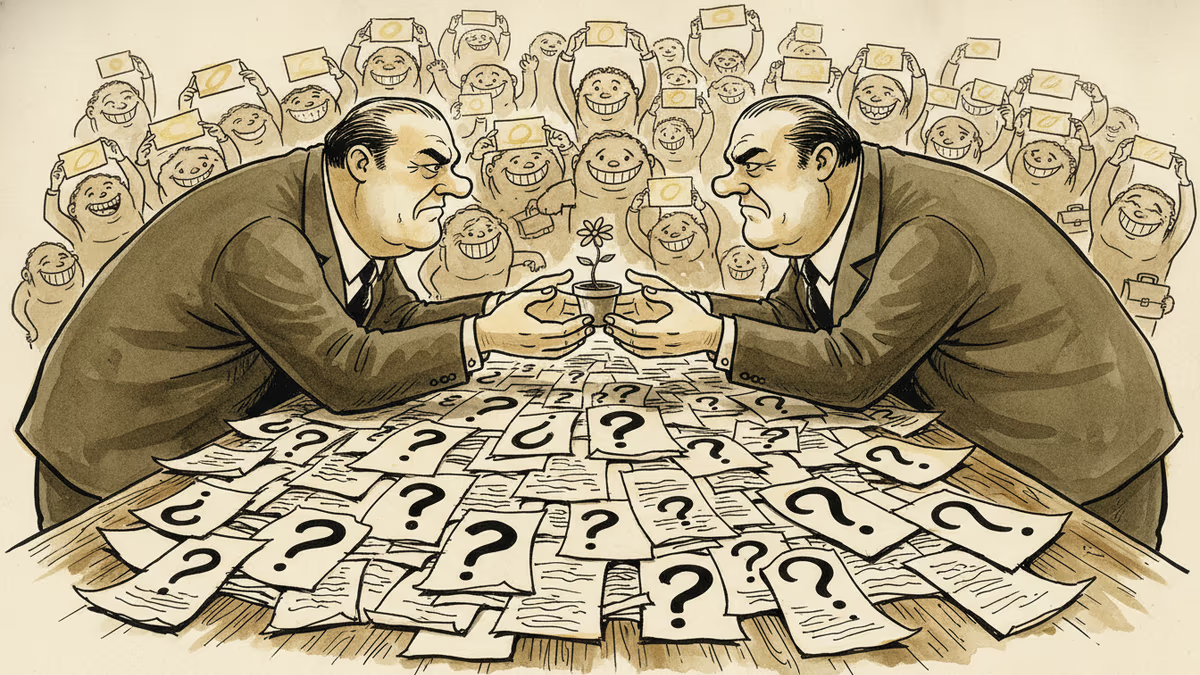
Trump's Beijing visit was a masterclass in diplomatic theater. Warm handshakes, viral selfies, and noodle runs. But Taiwan, Iran, and rare earths remain untouched. Here's what the spectacle obscures.
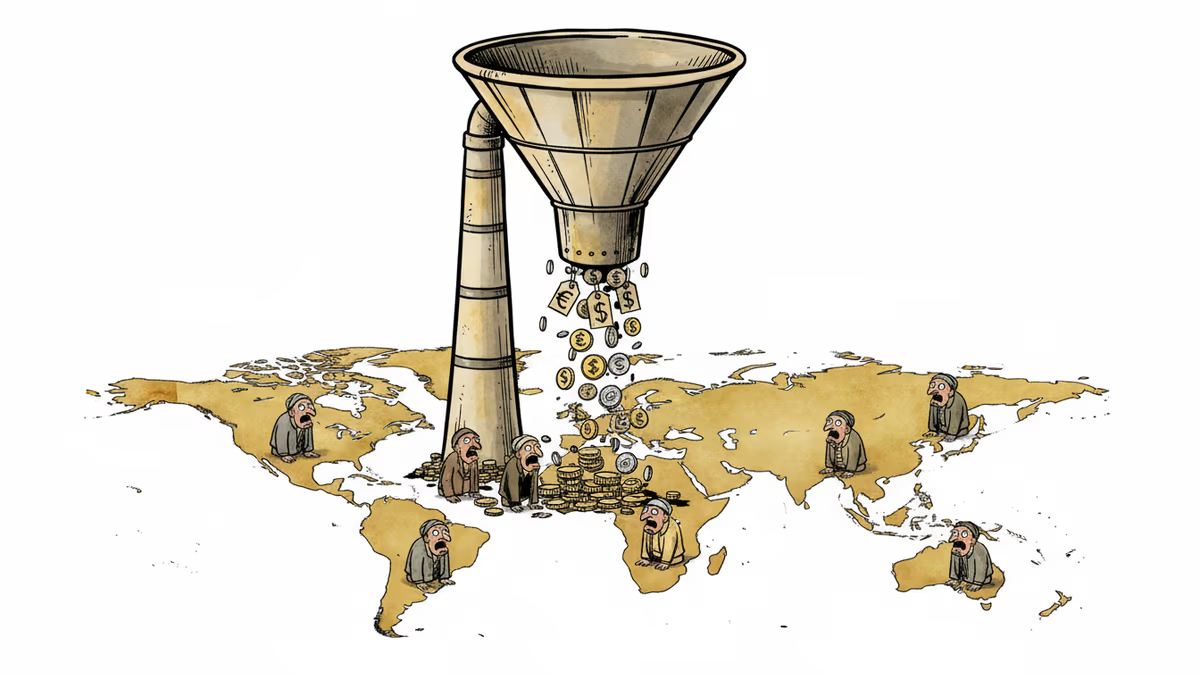
China's consumer prices hit a three-year low in April 2026. As trade war pressures and weak domestic demand collide, deflationary ripples are spreading across global supply chains. Here's what it means for your investments and industries.
Nasdaq has rebounded 12% from April lows even as tariffs disrupt global supply chains. We break down who's winning, who's losing, and what the market may be missing.
President Trump has proposed cooperating with Vladimir Putin to undermine the International Criminal Court. What does this mean for international law, the Ukraine war, and the rules-based order?
Trump's Beijing visit was a masterclass in diplomatic theater. Warm handshakes, viral selfies, and noodle runs. But Taiwan, Iran, and rare earths remain untouched. Here's what the spectacle obscures.
China's consumer prices hit a three-year low in April 2026. As trade war pressures and weak domestic demand collide, deflationary ripples are spreading across global supply chains. Here's what it means for your investments and industries.
Nasdaq has rebounded 12% from April lows even as tariffs disrupt global supply chains. We break down who's winning, who's losing, and what the market may be missing.
Thoughts
Share your thoughts on this article
Sign in to join the conversation