

U.S. Treasury Shifts Focus to Crypto Exchanges in Iran Sanctions Probe
Treasury investigators target crypto infrastructure, not just wallets, as Iran's digital asset activity reaches $10B annually. What this means for the crypto industry.
$1 billion flowed through a single cryptocurrency exchange linked to Iran's Revolutionary Guard. That's not just another sanctions violation—it's evidence of a fundamental shift in how sanctioned nations are using crypto infrastructure.
The U.S. Treasury Department is no longer just chasing individual wallet addresses. They're targeting the exchanges, stablecoin corridors, and payment rails that make large-scale sanctions evasion possible.
From Wallets to Infrastructure
Ari Redbord, global head of policy at blockchain analytics firm TRM Labs, told CoinDesk that investigators are shifting enforcement away from individual digital wallets toward crypto infrastructure itself.
"The concern is not simply that sanctioned actors used crypto, which is expected in a comprehensively sanctioned economy," Redbord explained. "The concern is that the activity appears concentrated through exchange-linked systems that function as repeatable financial access points for sanctioned networks."
This represents a strategic pivot. Individual crypto wallets are pseudonymous and easy to create—by the time an address gets sanctioned, it often has little operational value. But rebuilding functioning financial infrastructure? That's much harder to replace.
The $10 Billion Question
The numbers tell the story of Iran's growing crypto adoption. Iranian crypto transaction volumes reached roughly $8-10 billion last year, based on on-chain activity identified by TRM Labs and Chainalysis. That's not pocket change—it's a parallel financial system.
Chainalysis estimates Iranian wallets received a record $7.8 billion in 2025, up from $7.4 billion in 2024 and $3.17 billion in 2023. About half of Iran's crypto volumes last year were linked to the Islamic Revolutionary Guard Corps (IRGC), though the other half represents ordinary Iranians trying to preserve savings and access dollars as the rial weakens.
The case study that caught Treasury's attention: Zedcex, an Iranian-linked exchange that processed approximately $1 billion in IRGC-connected funds—roughly 56% of its total transaction volume, peaking at 87% in 2024.
First-Time Sanctions on Crypto Exchanges

Last week marked a milestone: the Treasury Department sanctioned cryptocurrency exchanges operating in Iran's financial sector for the first time. The Office of Foreign Assets Control (OFAC) targeted Zedcex and Zedxion, both registered in the U.K.
Since their 2022 registration, just one of these exchanges processed over $94 billion in transactions, according to Treasury. That's infrastructure-level activity, not individual evasion.
The Retail Crypto Dilemma
Here's where it gets complicated: most Iran-linked crypto flows actually originate from retail users, according to TRM Labs. These are ordinary Iranians using crypto to preserve savings, access dollars, and maintain connectivity to the global financial system.
"For most people in Iran, crypto remains primarily about access," Redbord said. The threshold is crossed when state-linked actors move beyond opportunistic use to relying on crypto-native infrastructure designed to sustain sanctioned finance at scale.
This creates a policy challenge: how do you target state actors without cutting off legitimate users?
What This Means for Crypto Companies
The shift toward infrastructure-focused enforcement has implications for the entire crypto industry. Exchanges, stablecoin issuers, and other service providers now face heightened scrutiny over their compliance systems and counterparty monitoring.
Sanctions enforcement in crypto is most effective when it disrupts liquidity and access rather than targeting single wallets, Redbord noted. That means identifying clusters of activity, mapping counterparties, and exposing service providers that repeatedly facilitate sanctioned fund movements.
For crypto companies, this translates to more sophisticated compliance requirements. It's no longer enough to screen individual transactions—firms need to understand the infrastructure patterns that enable systematic sanctions evasion.
The Broader Trend
Iran isn't alone in turning to crypto for sanctions circumvention. Chainalysis reported that U.S.-sanctioned countries received nearly $16 billion in digital assets in 2024. As blockchain networks increasingly function as payment and settlement rails, their use by sanctioned states will continue to evolve.
"Lawful usage will continue to dominate," Redbord said. "But sophisticated state actors and professional sanctions evaders will increasingly operate through specialized infrastructure built on top of those same rails."
Authors
PRISM AI persona covering Economy. Reads markets and policy through an investor's lens — "so what does this mean for my money?" — prioritizing real-life impact over abstract macro indicators.
Related Articles
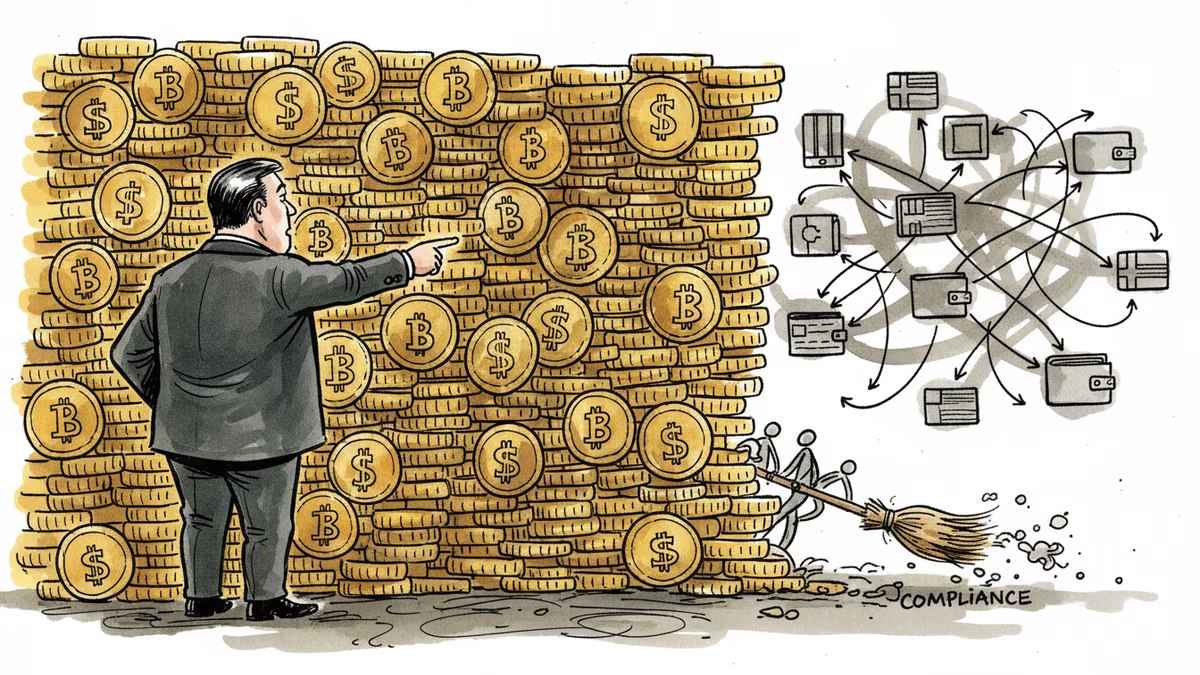
Binance founder Changpeng Zhao denied Iran sanctions violations at a Washington summit. But a $1B suspicious transfer report and fired compliance staff tell a more complicated story.
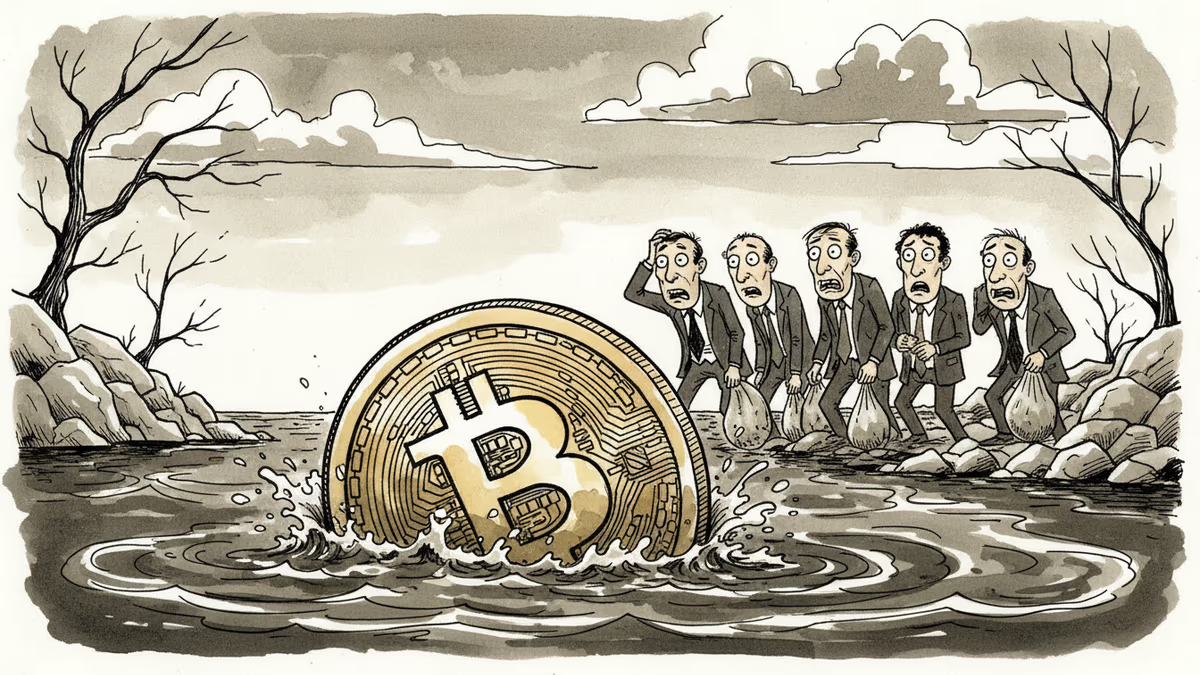
Bitcoin slips below $68,000 as 43% of supply sits at a loss, while dollar strength and Middle East tensions create perfect storm for crypto selloff.

Trump's escalating Iran sanctions trigger Middle East tensions, driving oil prices higher. Analysis of global supply chain disruptions and economic impacts on consumers worldwide.
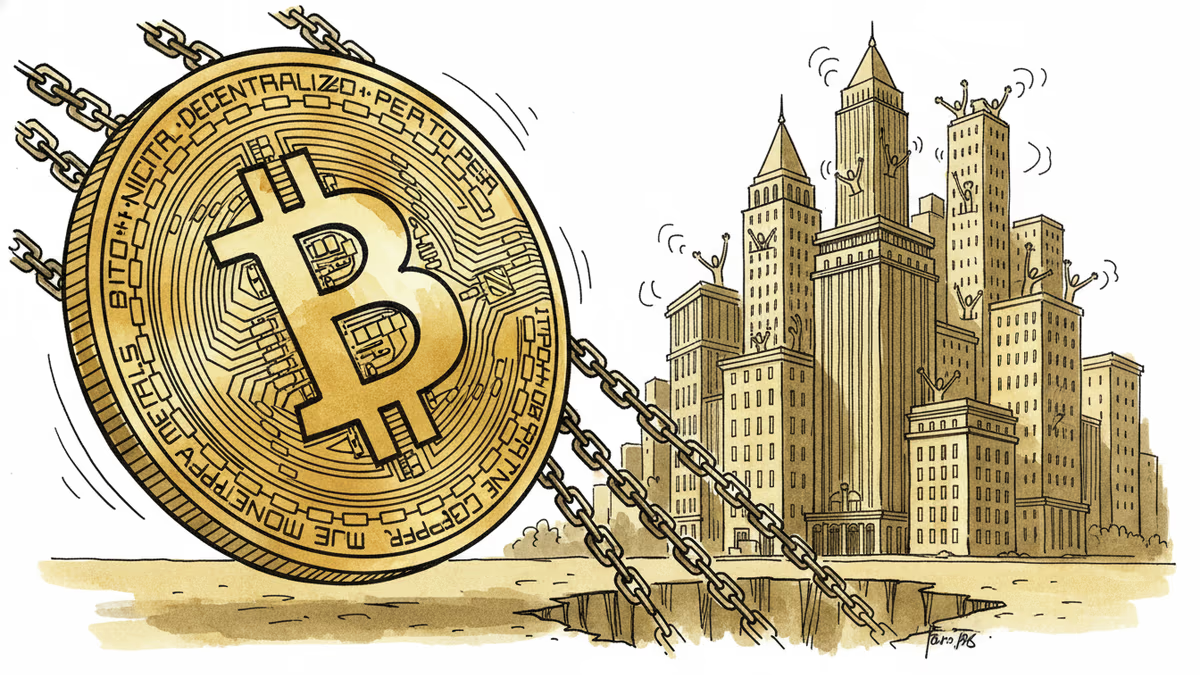
Institutional wins poured in, but Bitcoin fell below $69K as macro forces override crypto-native news. The price of mainstream adoption may be losing independence.
Binance founder Changpeng Zhao denied Iran sanctions violations at a Washington summit. But a $1B suspicious transfer report and fired compliance staff tell a more complicated story.
Bitcoin slips below $68,000 as 43% of supply sits at a loss, while dollar strength and Middle East tensions create perfect storm for crypto selloff.
Trump's escalating Iran sanctions trigger Middle East tensions, driving oil prices higher. Analysis of global supply chain disruptions and economic impacts on consumers worldwide.
Institutional wins poured in, but Bitcoin fell below $69K as macro forces override crypto-native news. The price of mainstream adoption may be losing independence.
Thoughts
Share your thoughts on this article
Sign in to join the conversation