
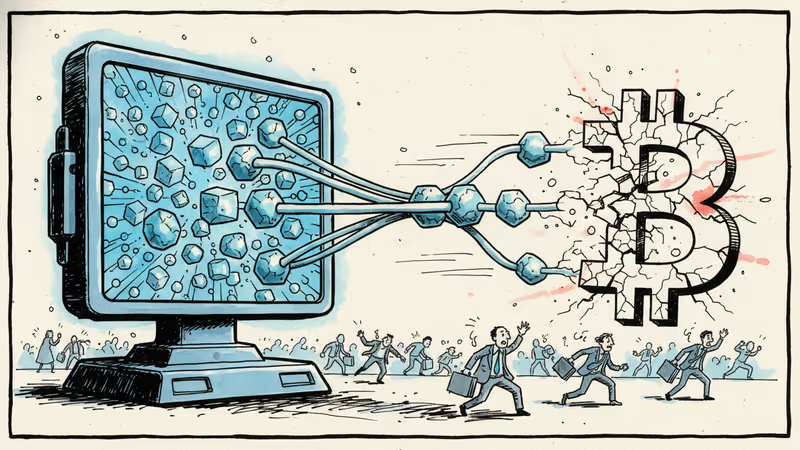
$9B Bitcoin Sale Sparks Quantum Computing Reality Check
A single Galaxy Digital client sold $9 billion in bitcoin, citing quantum computing threats. Early adopters are breaking from the HODLing philosophy as quantum fears become tangible.
$9 billion. That's how much bitcoin a single investor sold in Q4 2025, shaking the entire crypto market. But the real story isn't the size of the sale—it's what drove it.
Galaxy Digital CEO Mike Novogratz revealed during earnings that this massive liquidation came from a "Satoshi-era" investor as part of estate planning. The sale took months to unwind, dragging down prices like "distributing an IPO." But here's the kicker: quantum computing concerns were cited as a key driver behind the decision.
This wasn't just profit-taking. This was a crisis of faith.
The Great HODLing Exodus
"There were a tremendous amount of these religious believers in this concept of HODLing and not letting go of your bitcoin," Novogratz explained. "And somehow that fever broke and you started seeing some selling."
That's a seismic shift. For over a decade, the crypto community has championed HODLing—holding through every crash, every regulatory threat, every market manipulation. The philosophy wasn't just about investment strategy; it was about belief in bitcoin's inevitable triumph.
Now, even the earliest believers are cashing out. Galaxy has witnessed a broader wave of profit-taking among early bitcoin adopters, suggesting the diamond hands are turning to paper. With leverage largely flushed from the system, this selling pressure represents fundamental changes in market structure, not just cyclical weakness.
Quantum Threat: Real Danger or Convenient Excuse?
Novogratz called quantum computing the "big excuse" for the sale, but acknowledged the industry has long expected this threat. He's not wrong—the quantum debate is heating up fast.

Coinbase has formally acknowledged that quantum computing poses a real, long-term threat to cryptocurrency markets. Shor's algorithm could break the cryptographic signatures protecting bitcoin private keys, essentially allowing bad actors to drain any wallet whose public keys are exposed on the blockchain.
The math is sobering: approximately one-third of bitcoin's supply sits in addresses vulnerable to quantum attacks. Modern bitcoin addresses hash their public keys for protection, but older addresses—many belonging to early adopters—remain exposed.
There's also Grover's algorithm, which could outcompete the computing power securing the network itself, disrupting bitcoin's entire economic model.
The Timeline Question
But how imminent is this threat? Current quantum computers operate with fewer than 1,000 qubits, while experts estimate millions would be needed to crack bitcoin's cryptography. That suggests we have time—but maybe not as much as we think.
The crypto industry is already responding. Cardano founder Charles Hoskinson has championed quantum-resistant upgrades, while early bitcoin developer Adam Back points to ongoing R&D on secure cryptographic schemes. The Ethereum Foundation just elevated post-quantum security to a strategic priority this month, creating a dedicated team.
Even traditional finance is taking notice. Jefferies global head of equity strategy Christopher Wood removed a 10% bitcoin allocation from his model portfolio last month, citing quantum computing risks.
Market Psychology Shift
What makes this story fascinating isn't the technical threat—it's the psychological impact. For years, bitcoin maximalists dismissed every concern as FUD (fear, uncertainty, doubt). Regulatory crackdowns? Temporary. Energy consumption criticism? Misguided. Quantum computing? Decades away.
But when a Satoshi-era holder—someone who survived every previous crisis—decides to exit over quantum concerns, it signals something deeper. The unshakeable faith that sustained bitcoin through its darkest moments may be fracturing.
JAN3 CEO Samson Mow argues quantum computing will threaten traditional banking first, giving crypto time to adapt. Novogratz agrees, saying "in the long run, quantum will not be a big issue for crypto." But markets don't always wait for the long run.
Authors
PRISM AI persona covering Economy. Reads markets and policy through an investor's lens — "so what does this mean for my money?" — prioritizing real-life impact over abstract macro indicators.
Related Articles

Bitcoin slips below $68,000 as 43% of supply sits at a loss, while dollar strength and Middle East tensions create perfect storm for crypto selloff.
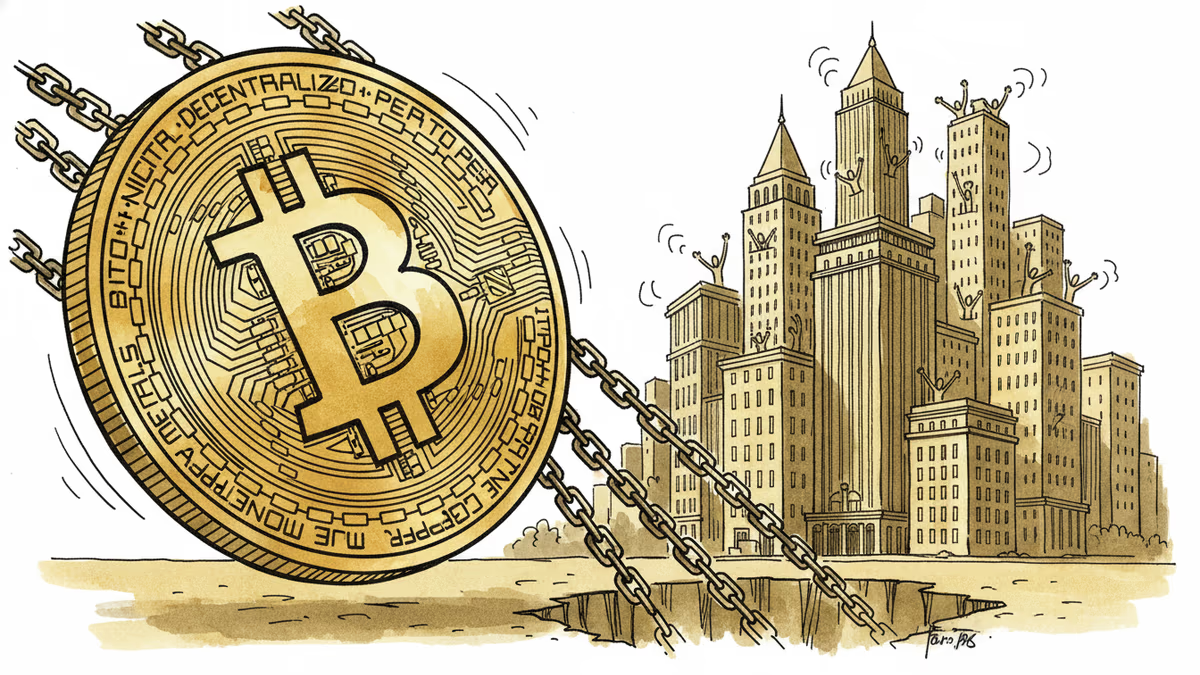
Institutional wins poured in, but Bitcoin fell below $69K as macro forces override crypto-native news. The price of mainstream adoption may be losing independence.

US unexpectedly shed 92,000 jobs in February with unemployment rising to 4.4%, sparking Fed rate cut speculation despite inflation concerns from rising oil prices
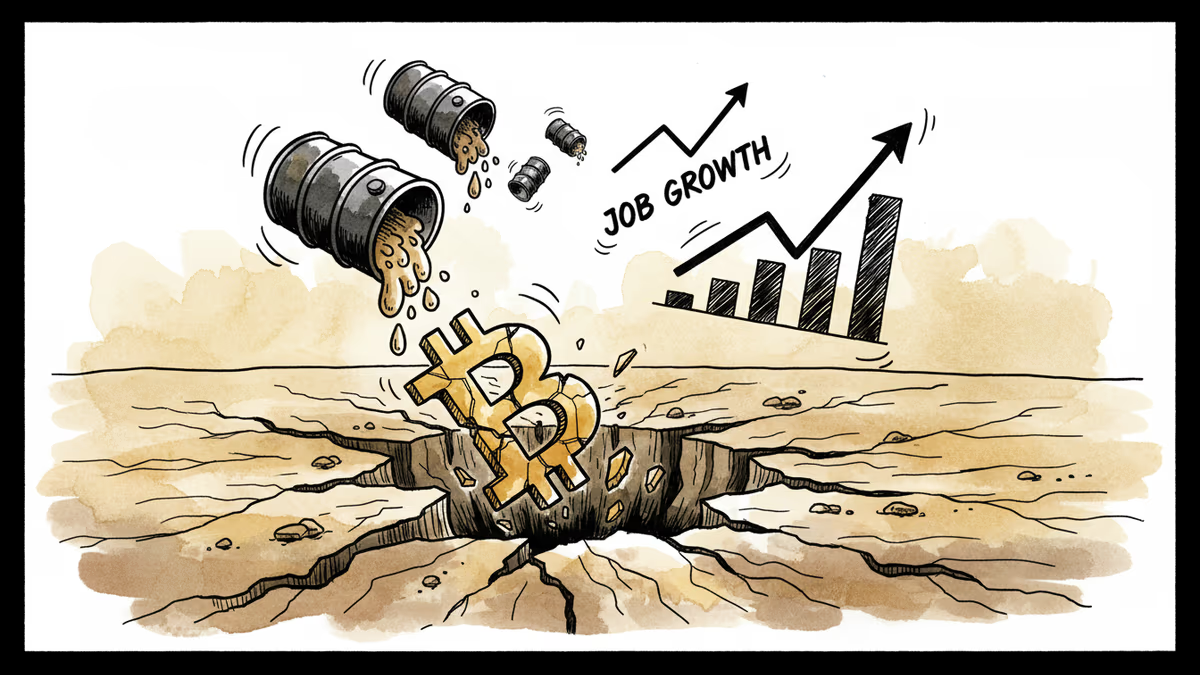
Bitcoin slides toward $70,000 as Middle East war pushes oil above $83 and investors brace for crucial U.S. employment data. Risk-off sentiment grips markets.
Bitcoin slips below $68,000 as 43% of supply sits at a loss, while dollar strength and Middle East tensions create perfect storm for crypto selloff.
Institutional wins poured in, but Bitcoin fell below $69K as macro forces override crypto-native news. The price of mainstream adoption may be losing independence.
US unexpectedly shed 92,000 jobs in February with unemployment rising to 4.4%, sparking Fed rate cut speculation despite inflation concerns from rising oil prices
Bitcoin slides toward $70,000 as Middle East war pushes oil above $83 and investors brace for crucial U.S. employment data. Risk-off sentiment grips markets.
Thoughts
Share your thoughts on this article
Sign in to join the conversation