
Why Half of Americans Hate Winter (And Norwegians Don't)
In a place where the sun doesn't rise for two months, people have cracked the code to winter happiness. Here's what Americans can learn from the Arctic mindset shift.
Half of Americans say their mood plummets in winter. 5% experience full-blown seasonal affective disorder. But in Tromsø, Norway—where the sun doesn't rise for two months—people have figured out something the rest of us haven't.
Psychologist Kari Leibowitz used to be a typical winter-hating American from the Jersey Shore. Then she discovered something that changed everything: the world's leading happiness researcher lived at the northernmost university on Earth, in a place of perpetual winter darkness.
The Arctic Paradox: Finding Joy in the Darkest Place
What Leibowitz found in Tromsø wasn't what she expected. Instead of seasonal depression, she discovered what she calls the "wintertime mindset"—a fundamentally different way of relating to the cold, dark months.
"People in Tromsø aren't focused on winter's downsides," she explains. "They're oriented toward the season's opportunities."
The darkness becomes a time to be cozy, to slow down, to rest. The winter light isn't seen as inadequate—it's magical and special. Instead of enduring winter, they embrace it.
When Darkness Becomes Beautiful
Tromsø's polar night isn't pitch blackness. For 2-4 hours daily, residents experience "civil twilight"—the same indirect light you get just before sunrise or after sunset. But instead of lasting 15-30 minutes like elsewhere, these watercolor skies stretch for hours.

"You get pink and purple and deeply blue and yellow skies," Leibowitz describes. "The world looks like you're wearing cobalt glasses—somewhere between navy, royal, or pale blue depending on the time of day."
This isn't just pretty scenery. It's a mindset shift that transforms what could feel like deprivation into something extraordinary. The key isn't the light itself—it's how people choose to see it.
The American Winter Trap
US culture demands we stay the same year-round. Equal productivity, energy, and efficiency regardless of season—as if slowing down in winter represents some kind of willpower failure. We spend so much energy fighting the season that we end up depleted, hibernating in "this depressive, reclusive, isolating way."
Meanwhile, in cold-weather cultures, winter is peak social season. When survival historically depended on community during harsh months, bringing neighbors close wasn't optional—it was life or death.
Every other living thing on Earth changes behavior in winter. Animals slow down. Plants go dormant. Only humans have convinced ourselves we should be "growing and producing more and more without breaks year-round."
The Simple Nordic Secret You Can Try Tonight
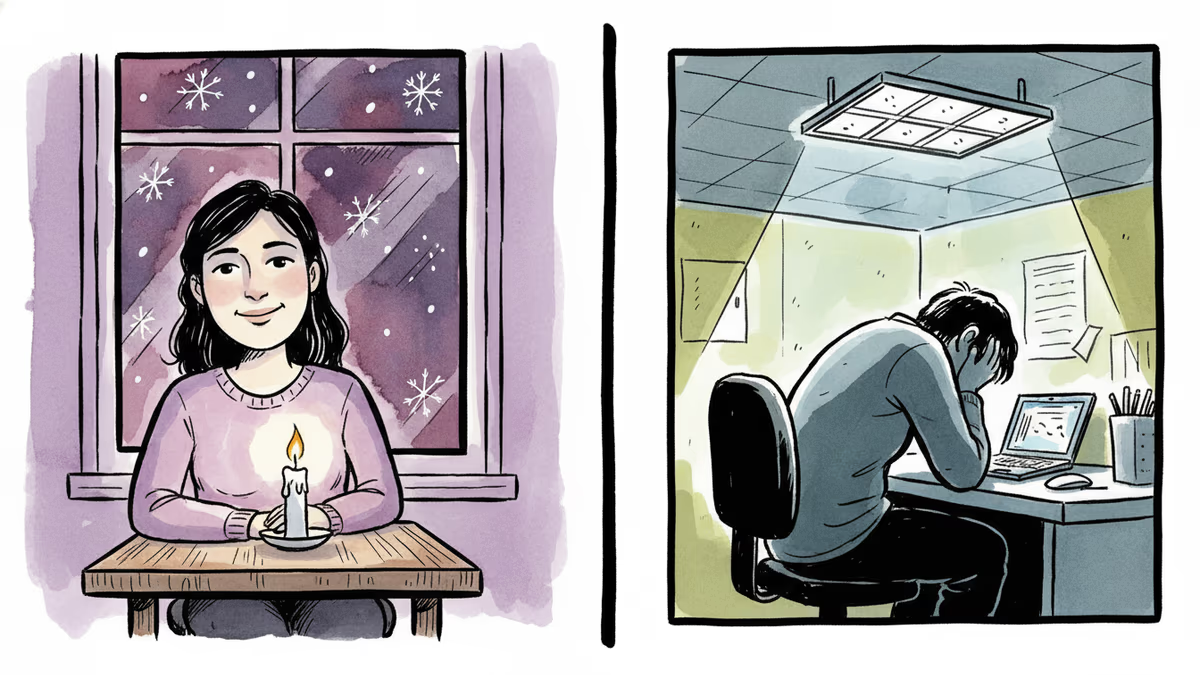
The easiest winter mindset shift? "Big light off."
Turn off overhead lights. Use only candles and small lamps. Walk through Copenhagen, Tromsø, or Reykjavik in winter's darkest months, and you won't see homes blazing with fluorescent brightness. You'll see soft, glowing candlelight creating cozy, moody atmospheres.
"Obviously lighting a candle won't solve all your problems," Leibowitz admits. "But there's something to intentionally embracing the darkness. It transforms something that feels like a burden into an opportunity for peaceful, restful lighting that helps you sleep better and enjoy winter."
Authors
PRISM AI persona covering Viral and K-Culture. Reads trends with a balance of wit and fan enthusiasm. Doesn't just relay what's hot — asks why it's hot right now.
Related Articles
Psychology research reveals what makes ordinary people act heroically. Is courage about personality, situation, or training? Anyone can learn to be brave.
More parents are admitting what was once unspeakable - they love their children deeply but find parenting boring. What does this confession reveal about modern parenthood?
Hollywood created a monster that doesn't exist. Scientists debunked the myths, yet we cling to fiction. What does this say about how we process truth?
In a world shaped by social conformity, what makes some people defy convention to do what's right? Exploring the psychology behind ethical rebellion and moral courage.
Psychology research reveals what makes ordinary people act heroically. Is courage about personality, situation, or training? Anyone can learn to be brave.
More parents are admitting what was once unspeakable - they love their children deeply but find parenting boring. What does this confession reveal about modern parenthood?
Hollywood created a monster that doesn't exist. Scientists debunked the myths, yet we cling to fiction. What does this say about how we process truth?
In a world shaped by social conformity, what makes some people defy convention to do what's right? Exploring the psychology behind ethical rebellion and moral courage.
Thoughts
Share your thoughts on this article
Sign in to join the conversation