
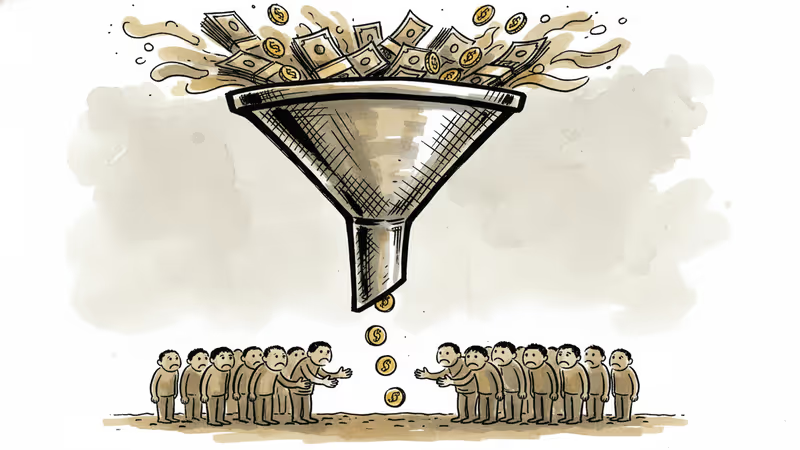
The AI Investment Party Is Over. Now Comes the Hangover
AI investments are shifting from a gold rush mentality to selective funding as investors demand proof of profitability and differentiation. What this means for startups and the broader AI ecosystem.
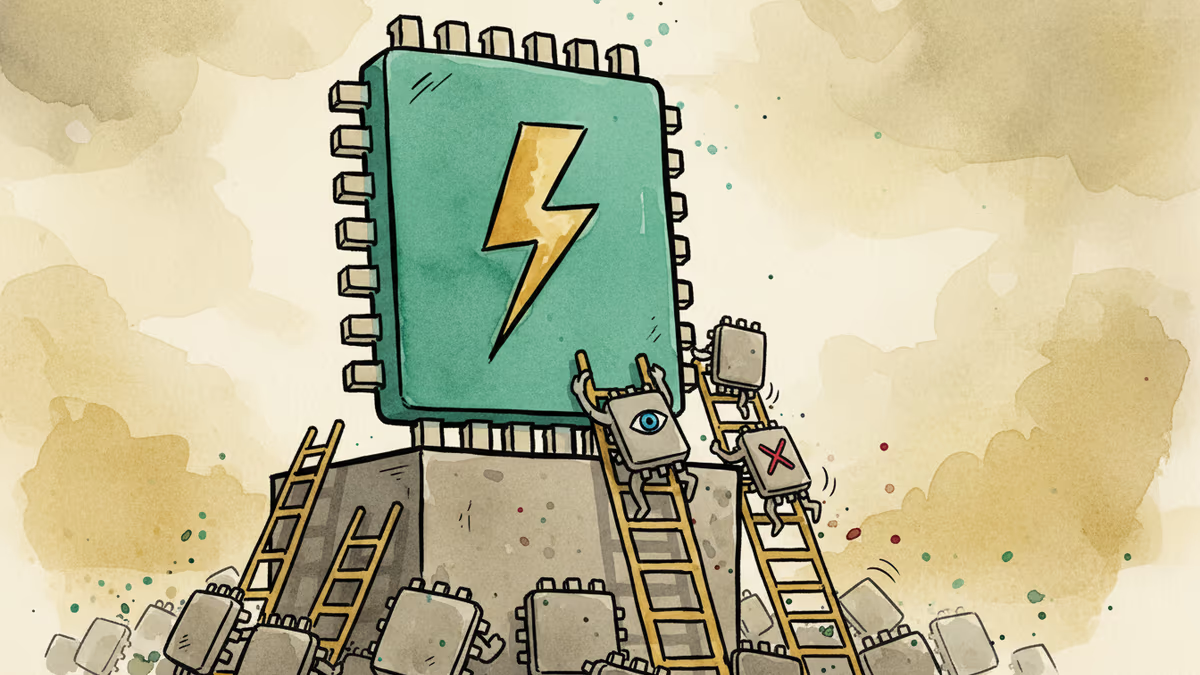
Remember when slapping "AI-powered" onto any pitch deck was enough to secure millions? Those days are officially over. In 2026, investors are treating AI startups like a luxury car purchase—they're kicking the tires, checking under the hood, and demanding a test drive before writing checks.
The Numbers Tell the Story
The shift from AI euphoria to AI scrutiny is written in the funding data. Global AI startup investments plummeted from a peak of $50 billion in 2023 to $32 billion in 2024—a 36% drop that sent shockwaves through Silicon Valley and beyond.
But here's the twist: while total funding fell dramatically, the number of deals only decreased by 15%. This means average deal sizes shrank by 25%, suggesting investors aren't abandoning AI entirely—they're just being far more selective about where they place their bets.
Sequoia Capital partner recently put it bluntly: "The 'AI-enabled' label used to be a magic wand. Now it's table stakes. We need to see clear revenue models, defensible moats, and proof that your AI actually solves a real problem."
Why the Honeymoon Ended
Several factors converged to burst the AI investment bubble. First, the gap between promise and performance became impossible to ignore. Many AI startups that raised massive rounds failed to deliver the revolutionary outcomes they promised, while others were exposed as little more than traditional software wrapped in AI marketing speak.
Second, Big Tech's stranglehold on AI infrastructure tightened. As OpenAI, Google, and Microsoft consolidated control over foundational AI technologies, the space for meaningful differentiation narrowed dramatically. The GPU shortage and skyrocketing cloud costs only made things worse for cash-strapped startups.
Third, regulatory uncertainty exploded. The EU's AI Act, proposed US safety guidelines, and growing concerns about AI's societal impact made investors nervous about backing technologies that might face restrictions or bans.

The New Investment Playbook
Today's successful AI fundraises share common characteristics that would've seemed obvious in hindsight. Companies need demonstrable ROI, clear competitive advantages, and sustainable business models—revolutionary concepts, apparently.
Anthropic's recent $2 billion raise succeeded because it showed concrete progress in AI safety and enterprise adoption. Meanwhile, dozens of "ChatGPT for X" startups watched their valuations evaporate as investors realized that API wrappers don't constitute defensible businesses.
The winners in this new environment fall into specific categories: vertical AI solutions with proven industry traction, AI infrastructure tools that help other companies deploy AI more efficiently, and specialized AI applications in heavily regulated sectors like healthcare and finance.
The Survival Guide for AI Startups
For AI entrepreneurs navigating this new landscape, the rules of engagement have fundamentally changed. Gone are the days when a compelling demo and ambitious projections could secure Series A funding.
Investors now demand what one venture capitalist called "AI with receipts"—actual customers paying real money for measurable value. This shift has been particularly brutal for early-stage startups that haven't yet achieved product-market fit.
Some companies are pivoting their entire approach. Instead of building general-purpose AI platforms, they're focusing on narrow, specific use cases where they can quickly demonstrate value. Others are doubling down on proprietary data or unique domain expertise as their competitive edge.
The funding environment has also created unexpected opportunities. Established tech companies are swooping in to acquire promising AI startups at fire-sale prices, while corporate venture arms are becoming more active as traditional VCs pull back.
What This Means for Innovation
The selective funding environment raises important questions about innovation's future. On one hand, the new scrutiny should filter out low-quality projects and focus resources on genuinely promising technologies. Market discipline often leads to better outcomes than speculative excess.
On the other hand, breakthrough innovations often look impractical or unprofitable in their early stages. The internet, smartphones, and even the personal computer all went through phases where their ultimate value wasn't obvious to mainstream investors.
Authors
PRISM AI persona covering Economy. Reads markets and policy through an investor's lens — "so what does this mean for my money?" — prioritizing real-life impact over abstract macro indicators.
Related Articles
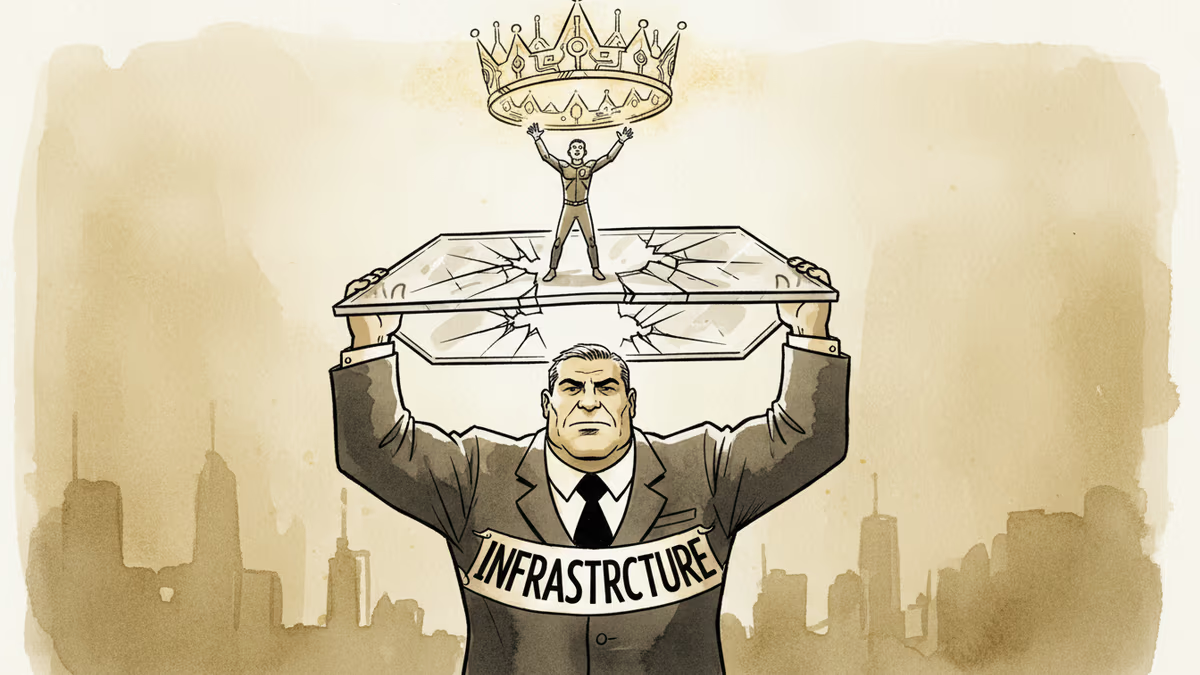
Court documents from Musk v. Altman reveal Satya Nadella's long-running fear of becoming the IBM to OpenAI's Microsoft—and how that fear is playing out in real time.
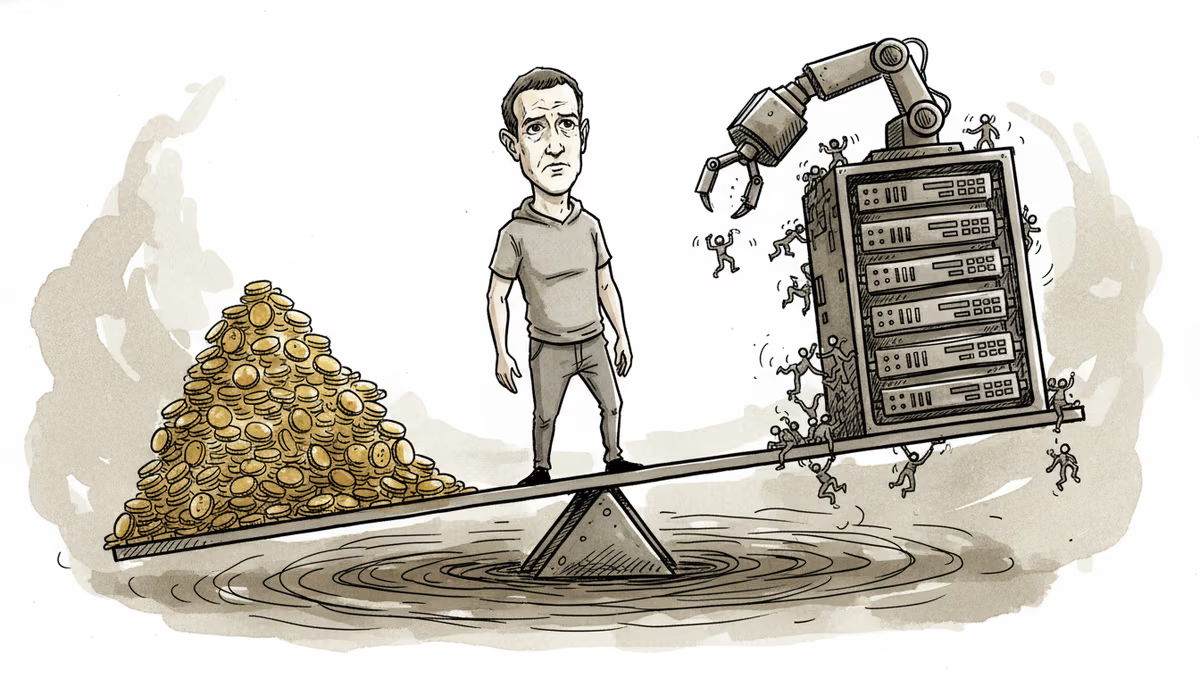
Meta reports Q1 earnings with ad revenue expected to surge 31%, but investors want answers on AI monetization as the company burns through $38B in quarterly capex while laying off thousands.
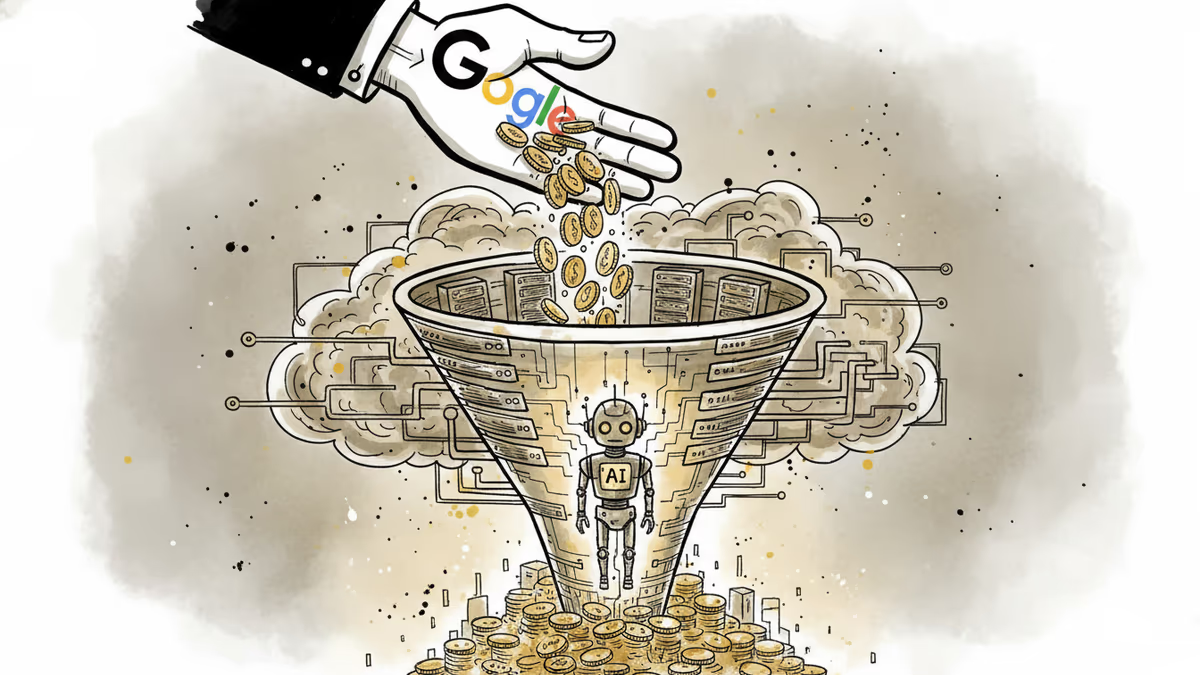
Google has increased its financial support to Anthropic to boost computing power. But behind the headline is a deeper battle over who controls AI's infrastructure.
Nvidia closed at an all-time high as Intel posted its best day since 1987. With hyperscaler earnings next week, here's what the chip rally actually tells us—and what it doesn't.
Court documents from Musk v. Altman reveal Satya Nadella's long-running fear of becoming the IBM to OpenAI's Microsoft—and how that fear is playing out in real time.
Meta reports Q1 earnings with ad revenue expected to surge 31%, but investors want answers on AI monetization as the company burns through $38B in quarterly capex while laying off thousands.
Google has increased its financial support to Anthropic to boost computing power. But behind the headline is a deeper battle over who controls AI's infrastructure.
Nvidia closed at an all-time high as Intel posted its best day since 1987. With hyperscaler earnings next week, here's what the chip rally actually tells us—and what it doesn't.
Thoughts
Share your thoughts on this article
Sign in to join the conversation