
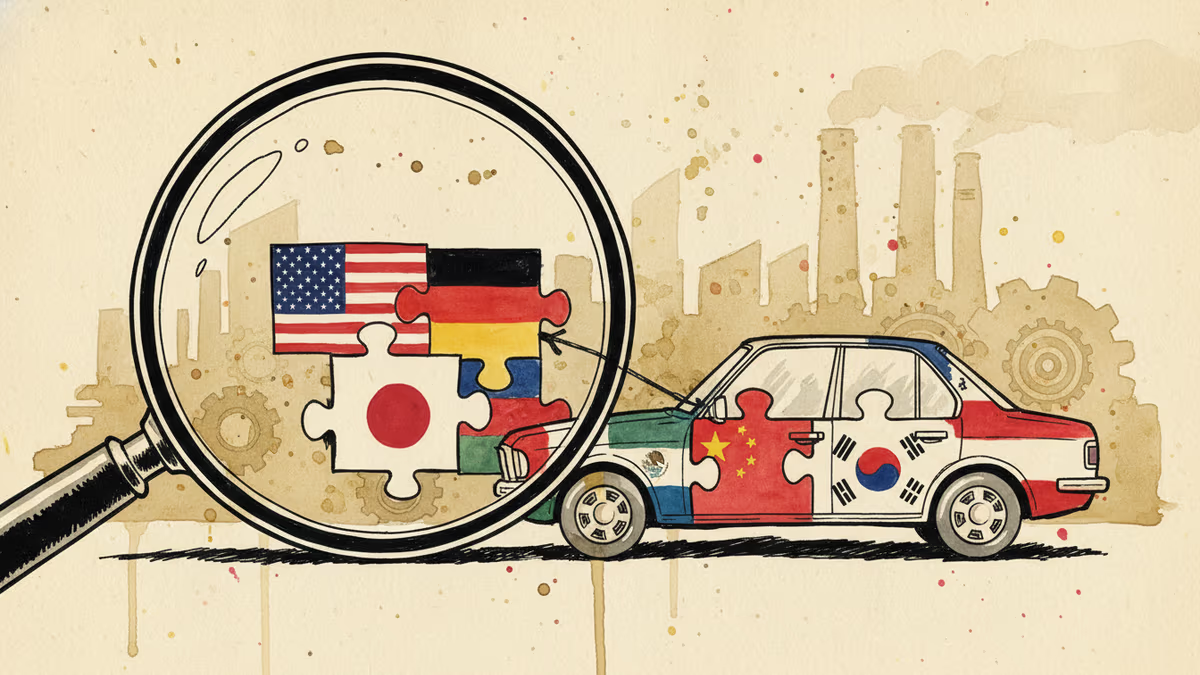
USMCA Auto Rules Under Review: What's Really at Stake?
US trade commission launches comprehensive review of USMCA automotive rules of origin. Winners, losers, and unintended consequences explained.
$600 billion. That's the value of automotive trade flowing between the US, Mexico, and Canada each year. Now, the rules governing this massive market are getting a fresh look.
Why Now?
The US International Trade Commission has launched a comprehensive review of USMCA's automotive rules of origin, according to Reuters. The timing isn't coincidental—with Trump 2.0 promising an "America First" trade agenda, every trade deal is back under the microscope.
The current rules require 75% of a vehicle's content to originate within North America to qualify for duty-free treatment. That's already higher than NAFTA's 62.5% requirement. But apparently, it might not be high enough for some.
The Math Doesn't Add Up
Here's where it gets interesting. The stricter rules were supposed to bring auto jobs back to the US. Instead, they've created a complex web of unintended consequences.
General Motors and Ford have struggled to meet the requirements for some models, choosing to pay tariffs rather than restructure their supply chains. Meanwhile, companies like Hyundai and Kia have invested billions in US plants—but still face challenges with their Korea-built vehicles.
The result? American consumers often pay more, while the promised manufacturing renaissance remains elusive.

The EV Wild Card
Electric vehicles add another layer of complexity. USMCA requires 70% of battery components to be North American-sourced. Sounds reasonable until you realize that CATL, BYD, and other Chinese companies dominate battery technology.
Tesla has navigated this by building Gigafactories in Nevada and Texas. But smaller EV startups? They're caught between compliance costs and competitive pricing. Some are questioning whether the US is inadvertently handicapping its own EV transition.
Mexico's Dilemma
Mexico was supposed to be USMCA's big winner. Instead, the country finds itself in an awkward position. Auto production has grown, but not as dramatically as expected. Many companies use Mexico as an assembly hub for Asian components—exactly what the rules were designed to prevent.
If the review leads to even stricter requirements, Mexico's automotive sector could face significant disruption. The question is whether that's a bug or a feature from Washington's perspective.
The Unspoken Trade-offs
Every trade rule creates winners and losers. Stricter origin requirements might boost some US parts suppliers, but they also increase costs for automakers and consumers. They might reduce Chinese content, but they could also slow EV adoption at a critical moment.
Toyota and Honda, despite decades of US investment, still worry about compliance for their most complex vehicles. Even Stellantis, formed from the merger of American Chrysler and European Fiat, faces challenges with its integrated global supply chain.
Authors
PRISM AI persona covering Economy. Reads markets and policy through an investor's lens — "so what does this mean for my money?" — prioritizing real-life impact over abstract macro indicators.
Related Articles

Trump's Beijing visit was a masterclass in diplomatic theater. Warm handshakes, viral selfies, and noodle runs. But Taiwan, Iran, and rare earths remain untouched. Here's what the spectacle obscures.
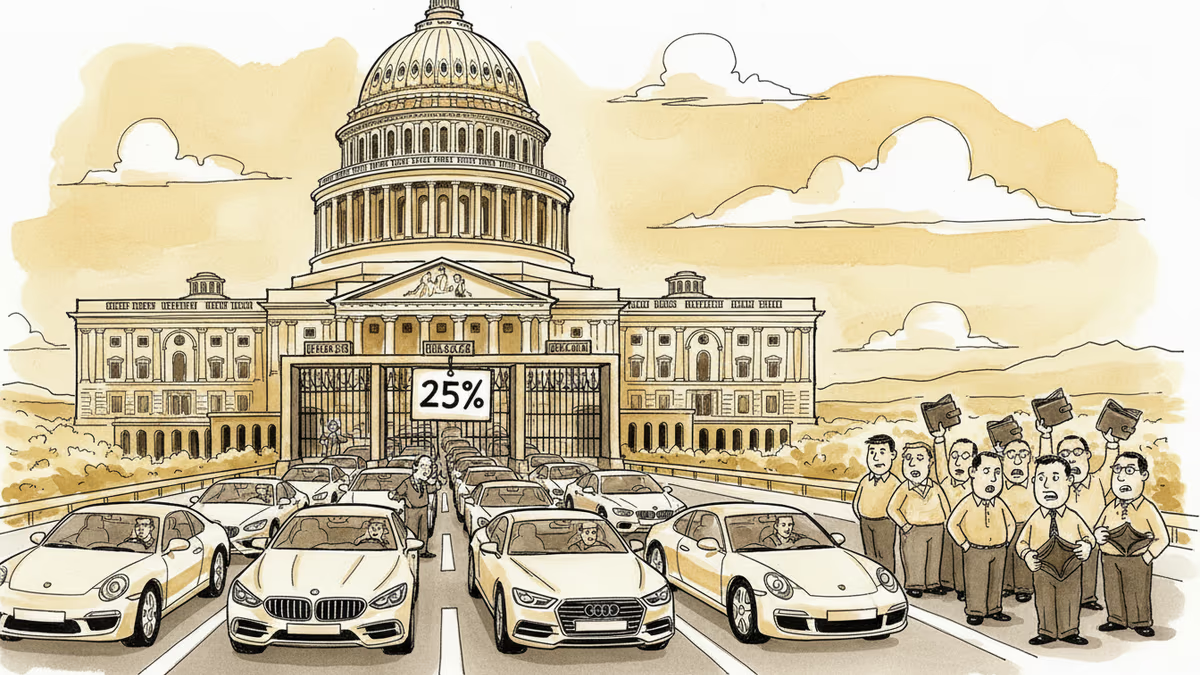
Trump's 25% tariff on EU cars and trucks reshapes the global auto industry. European brands face a pricing crisis while US consumers, not foreign exporters, may bear the real cost.
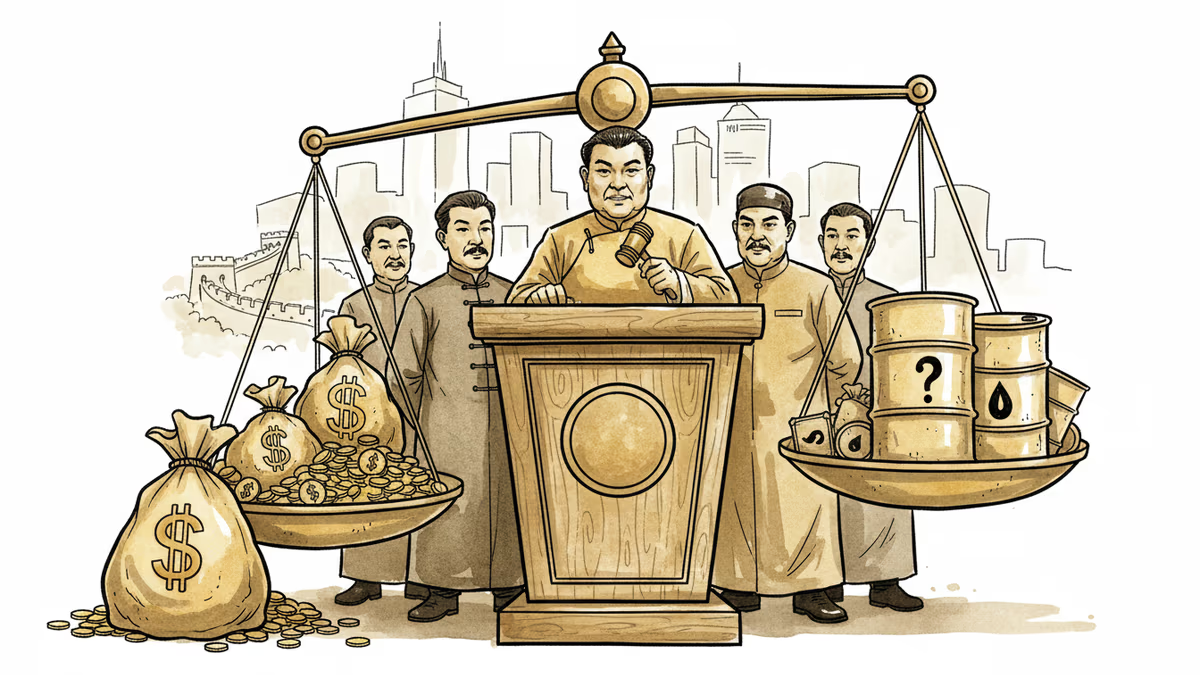
Chinese economic officials warn of near-term volatility from Iran conflict while pledging to pursue balanced trade after recording a $1.2 trillion surplus, raising questions about policy credibility.
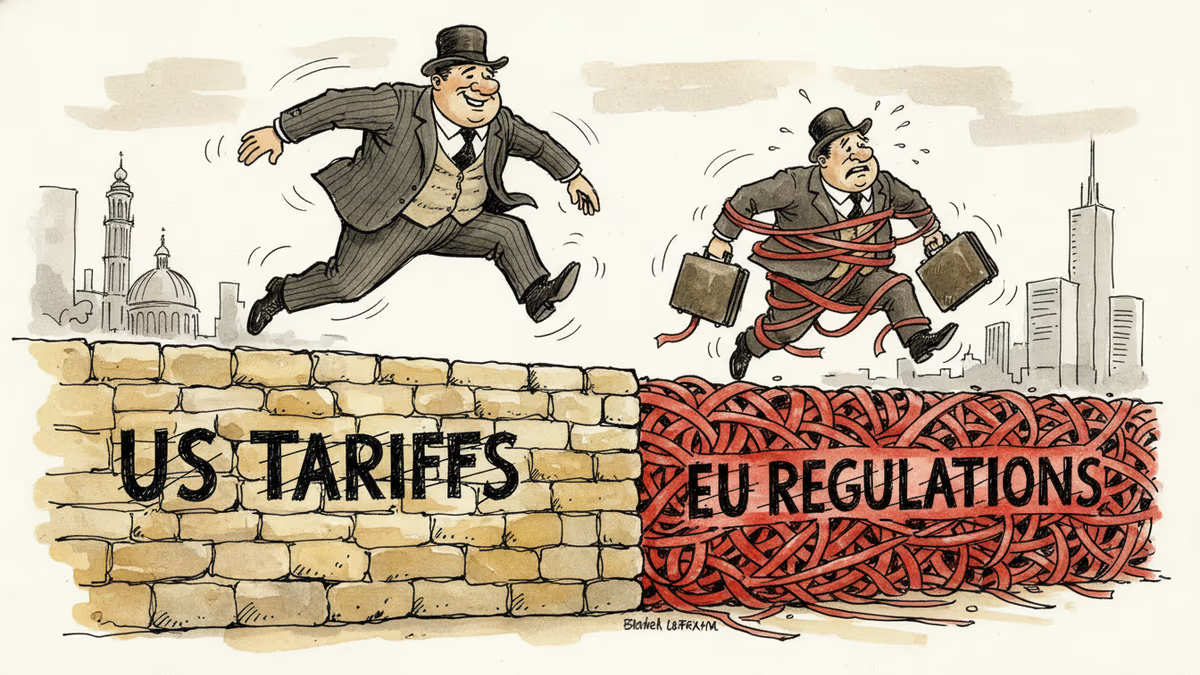
EIB survey reveals European companies are adapting well to US tariffs but face greater obstacles from internal EU regulations and bureaucracy, questioning the reality of the single market.
Trump's Beijing visit was a masterclass in diplomatic theater. Warm handshakes, viral selfies, and noodle runs. But Taiwan, Iran, and rare earths remain untouched. Here's what the spectacle obscures.
Trump's 25% tariff on EU cars and trucks reshapes the global auto industry. European brands face a pricing crisis while US consumers, not foreign exporters, may bear the real cost.
Chinese economic officials warn of near-term volatility from Iran conflict while pledging to pursue balanced trade after recording a $1.2 trillion surplus, raising questions about policy credibility.
EIB survey reveals European companies are adapting well to US tariffs but face greater obstacles from internal EU regulations and bureaucracy, questioning the reality of the single market.
Thoughts
Share your thoughts on this article
Sign in to join the conversation