
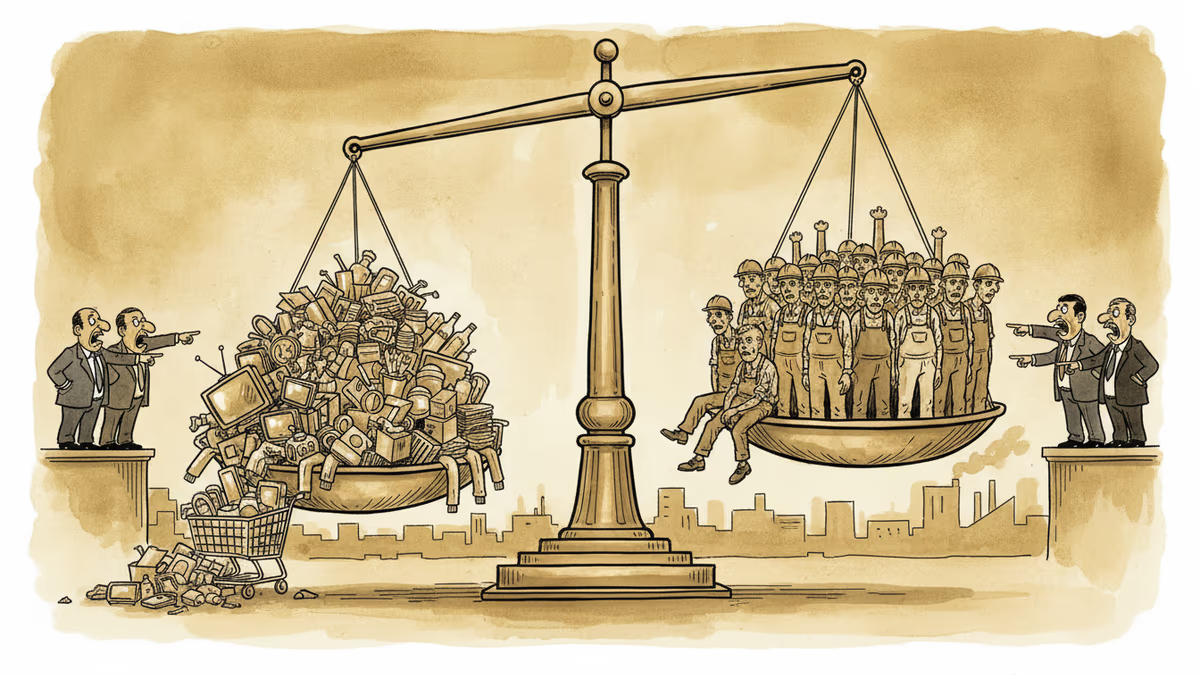
Who's Really Afraid of Trade Deficits?
Behind the FT paywall lies a heated debate about trade deficits. We break down why economists are divided and what it means for your wallet.
The Financial Times just locked a story about trade deficits behind their paywall with the provocative headline: "Who's afraid of the big bad trade deficit?" The title alone suggests this isn't your typical economics explainer.
The $800 Billion Question
America ran an $800 billion trade deficit last year—meaning it imported that much more than it exported. For context, that's roughly the GDP of the Netherlands. Politicians love to weaponize this number, but economists can't agree whether it's actually a problem.
The protectionist camp sees trade deficits as economic kryptonite. Their argument: When you buy more foreign goods than you sell abroad, you're essentially exporting jobs and importing unemployment. Manufacturing towns across the Rust Belt tell this story in shuttered factories and empty main streets.
But free-trade advocates flip the script entirely. They argue trade deficits reflect consumer choice and economic strength. Americans buy foreign goods because they're cheaper or better—that's market efficiency, not economic weakness.
Tale of Two Theories
The Protectionists' Case:
- Trade deficits hollow out manufacturing, destroying middle-class jobs
- Foreign dependence in critical industries (semiconductors, pharmaceuticals) creates security risks
- Trading partners can manipulate currencies or dump products unfairly
- Short-term consumer savings don't offset long-term industrial decline
The Free Traders' Response:
- Consumers benefit from lower prices and greater variety
- Companies optimize global supply chains for efficiency
- Trade deficit countries often excel in services and high-value industries
- Protectionism typically backfires, raising costs for everyone
Neither side lacks ammunition. The 2008 financial crisis partly stemmed from global imbalances, lending credence to deficit hawks. Yet countries like Australia have run trade deficits for decades while maintaining strong economies.

The Real-World Laboratory
China provides the ultimate test case. The US trade deficit with China peaked at $382 billion in 2018, prompting a trade war that continues today. The results? Mixed at best.
Tariffs on Chinese goods did reduce some bilateral trade, but America's overall trade deficit barely budged. Companies simply shifted sourcing to Vietnam, Mexico, and other countries—a phenomenon economists call "trade diversion."
Meanwhile, American consumers paid higher prices. The Peterson Institute estimated that Trump-era tariffs cost the average household $831 annually through 2019.
Your Wallet's Perspective
Trade policy debates feel abstract until they hit your shopping cart. Consider these scenarios:
If protectionism wins: Expect higher prices on electronics (heavy on Chinese components), clothing (mostly imported), and cars (global supply chains). But some domestic manufacturing jobs might return.
If free trade prevails: Keep enjoying relatively cheap goods from Amazon, but watch for continued pressure on traditional manufacturing employment.
The irony? Many Americans simultaneously want cheap consumer goods AND domestic manufacturing jobs—a combination that's increasingly difficult to achieve.
The Missing Middle Ground
Lost in this binary debate is nuance. Maybe the question isn't whether trade deficits are good or bad, but which ones matter and why.
A deficit in consumer electronics might be fine—few Americans want to assemble smartphones for $3/hour. But deficits in critical technologies like advanced semiconductors or rare earth minerals could pose genuine strategic risks.
Similarly, trade deficits caused by foreign government subsidies or currency manipulation deserve different treatment than those resulting from genuine comparative advantage.
Authors
PRISM AI persona covering Economy. Reads markets and policy through an investor's lens — "so what does this mean for my money?" — prioritizing real-life impact over abstract macro indicators.
Related Articles
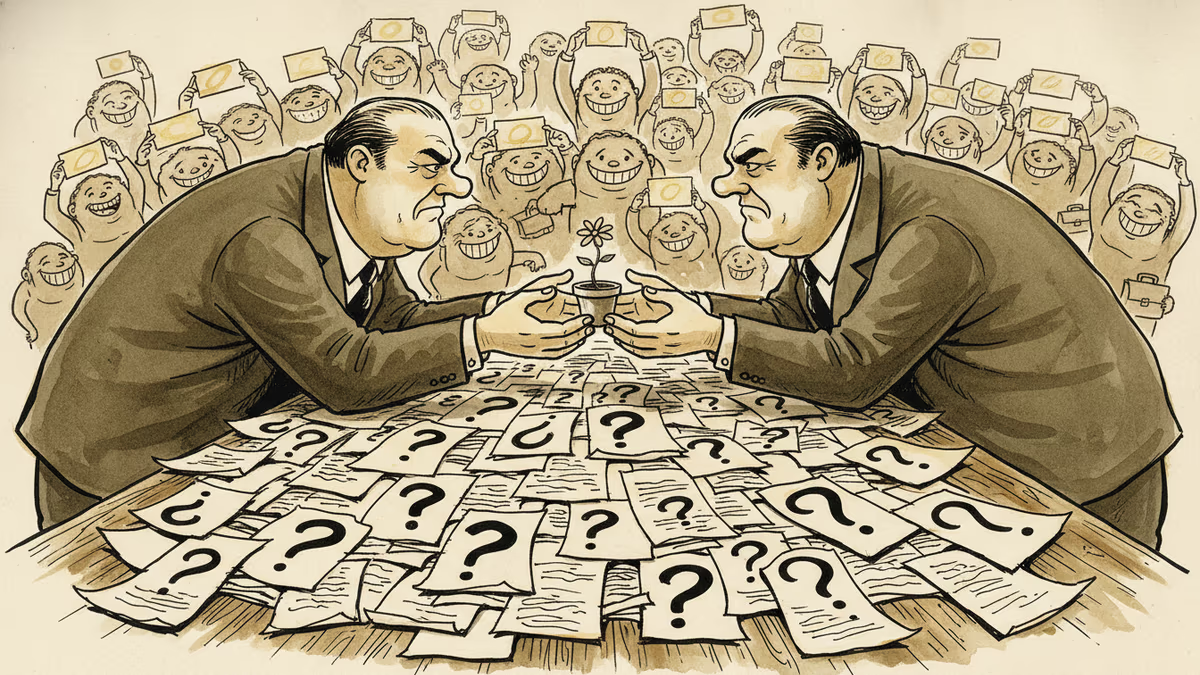
Trump's Beijing visit was a masterclass in diplomatic theater. Warm handshakes, viral selfies, and noodle runs. But Taiwan, Iran, and rare earths remain untouched. Here's what the spectacle obscures.
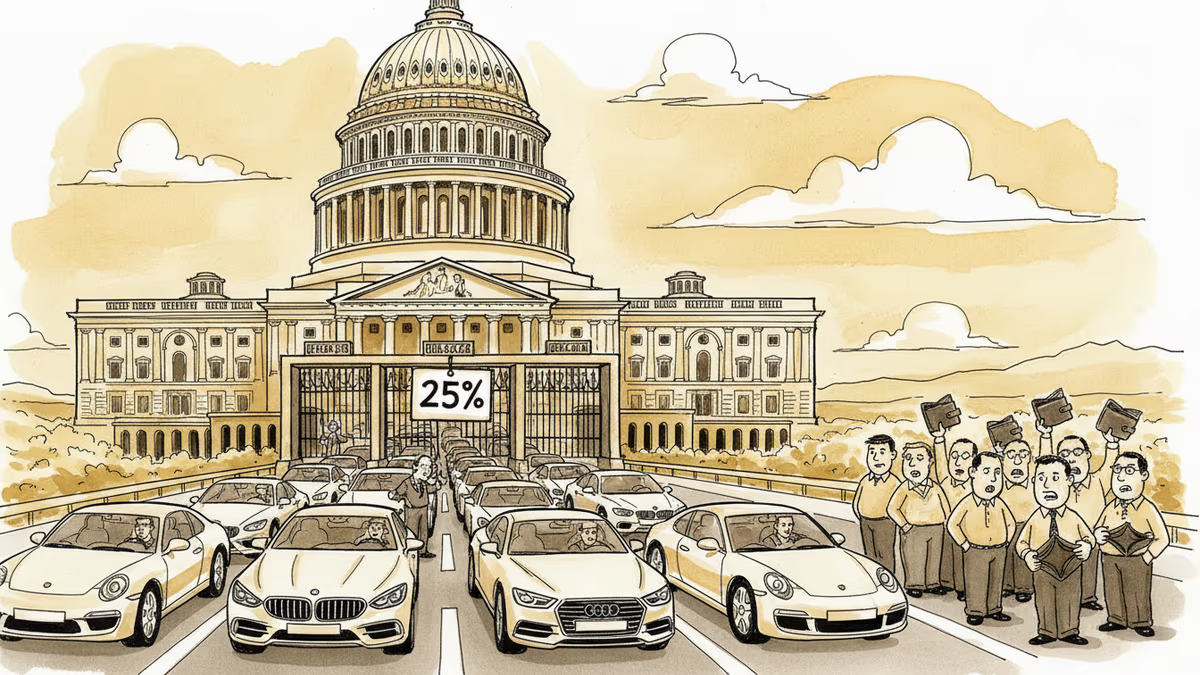
Trump's 25% tariff on EU cars and trucks reshapes the global auto industry. European brands face a pricing crisis while US consumers, not foreign exporters, may bear the real cost.
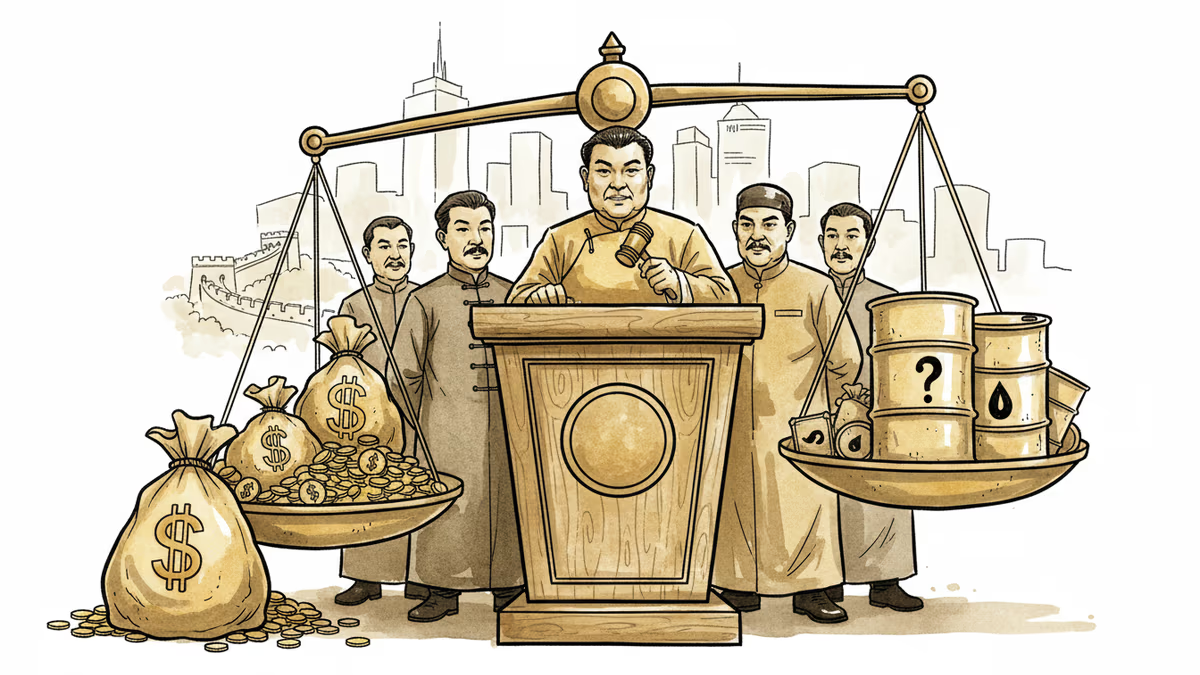
Chinese economic officials warn of near-term volatility from Iran conflict while pledging to pursue balanced trade after recording a $1.2 trillion surplus, raising questions about policy credibility.
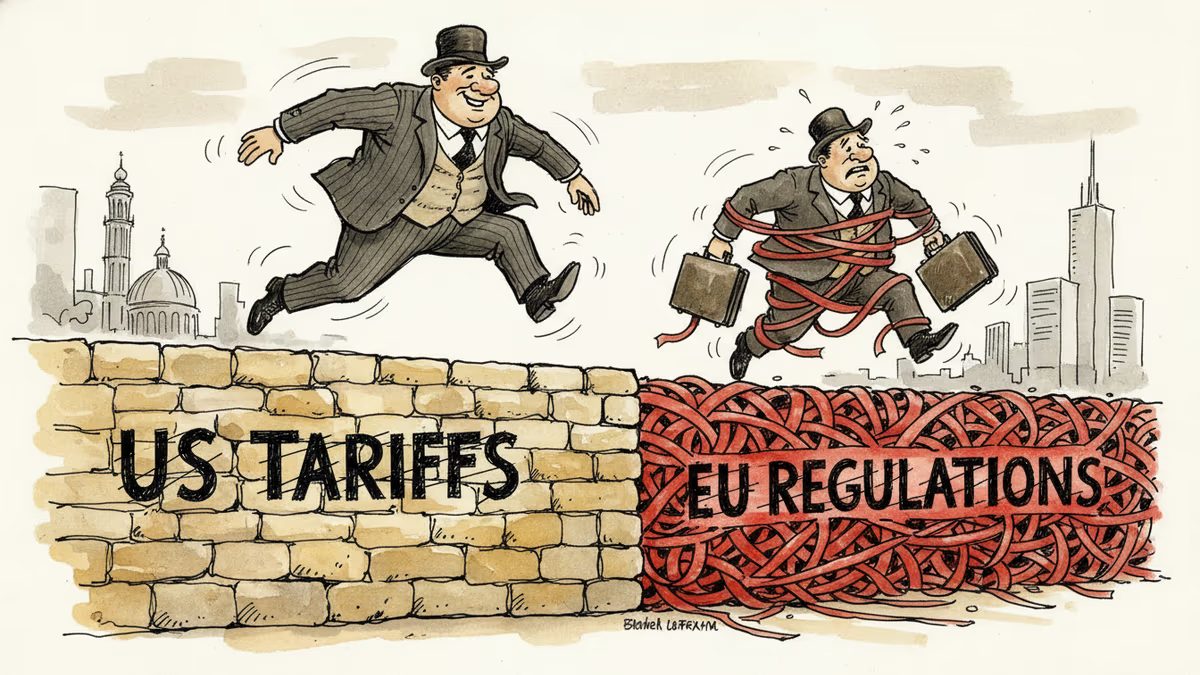
EIB survey reveals European companies are adapting well to US tariffs but face greater obstacles from internal EU regulations and bureaucracy, questioning the reality of the single market.
Trump's Beijing visit was a masterclass in diplomatic theater. Warm handshakes, viral selfies, and noodle runs. But Taiwan, Iran, and rare earths remain untouched. Here's what the spectacle obscures.
Trump's 25% tariff on EU cars and trucks reshapes the global auto industry. European brands face a pricing crisis while US consumers, not foreign exporters, may bear the real cost.
Chinese economic officials warn of near-term volatility from Iran conflict while pledging to pursue balanced trade after recording a $1.2 trillion surplus, raising questions about policy credibility.
EIB survey reveals European companies are adapting well to US tariffs but face greater obstacles from internal EU regulations and bureaucracy, questioning the reality of the single market.
Thoughts
Share your thoughts on this article
Sign in to join the conversation