
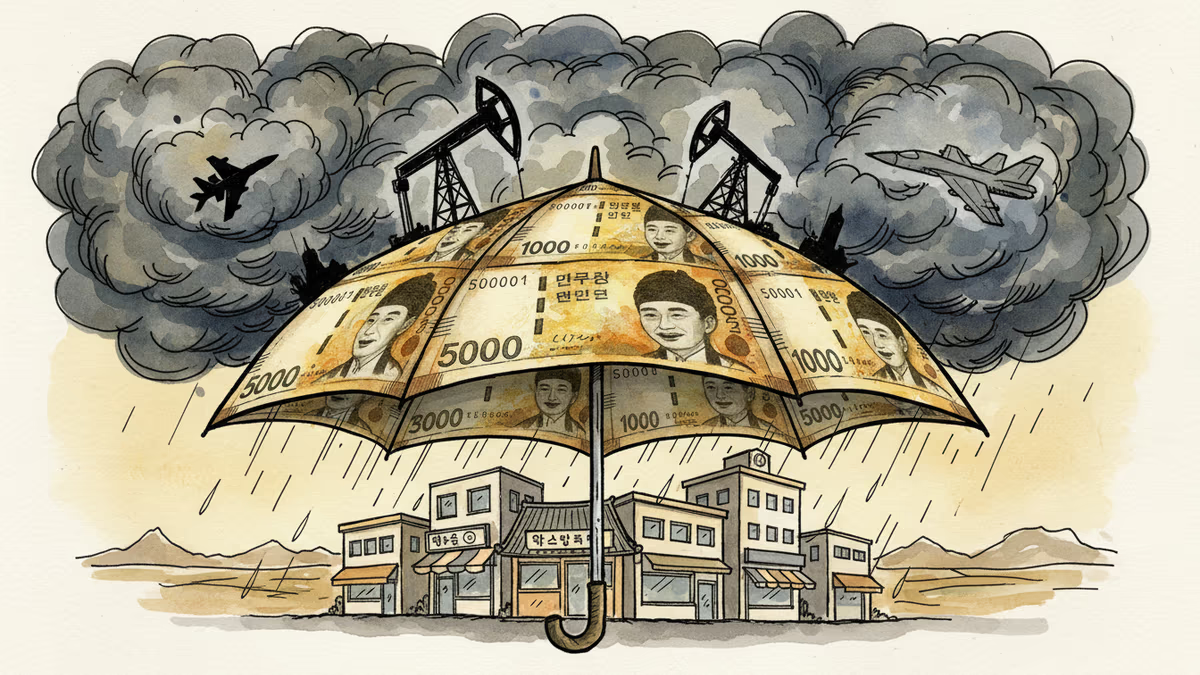
South Korea's Big Five Banks Activate Crisis Response as Middle East Tensions Escalate
Following U.S.-Israeli strikes on Iran, South Korea's five major financial groups have activated emergency systems to support businesses with Middle East exposure, offering loans up to $686,000 and extending maturities.
When geopolitical storms hit, who catches the falling businesses? In South Korea, it's the country's financial giants stepping up with $2.4 billion in emergency support commitments.
The coordinated U.S.-Israeli airstrikes that killed Iran's Supreme Leader Ali Khamenei on Saturday sent shockwaves far beyond the Middle East. By Monday morning, South Korea's five largest financial holding companies had already activated comprehensive crisis response systems—a move that reveals both the interconnectedness of global markets and the proactive stance Korean finance has adopted in an era of persistent uncertainty.
From Monitoring to Action
KB Financial Group, Shinhan Financial Group, Hana Financial Group, Woori Financial Group, and NongHyup Financial Group aren't just watching from the sidelines. They're actively extending loan maturities, preparing specialized financial packages, and closely monitoring the triple threat of foreign exchange volatility, interest rate fluctuations, and oil price spikes.
The scale of support is significant. KB Financial, the country's largest by assets, is offering loans up to 500 million won ($343,000) per company at preferential rates for operational and facility investments. Shinhan has doubled down with commitments up to 1 billion won ($686,000) for companies requiring capital related to Middle East operations.
But the real story lies in what this reveals about modern financial risk management. These aren't reactive measures—they're preemptive strikes against economic disruption.
The Ripple Effect Reality

South Korean companies have substantial Middle East exposure through construction, petrochemicals, and technology sectors. Samsung Engineering, Hyundai Engineering & Construction, and Daewoo Engineering & Construction all maintain significant project portfolios in the region. When regional stability deteriorates, these companies face immediate operational challenges: supply chain disruptions, project delays, currency hedging complications, and potential contract renegotiations.
A Woori Financial official captured the broader market sentiment: "Investor reactions in Asian financial markets on Monday will serve as a key inflection point for near-term market direction." This isn't just about Middle East operations—it's about global risk appetite and capital flows.
The New Financial Playbook
What's particularly striking is how quickly Korean financial institutions mobilized. This represents a fundamental shift in crisis management philosophy—from reactive damage control to proactive risk mitigation. The 2008 financial crisis taught institutions to prepare for contagion effects; the COVID-19 pandemic reinforced the importance of rapid response systems.
Now, Korean banks are applying those lessons to geopolitical risk. They're not waiting for companies to request help; they're anticipating needs and structuring solutions in advance. This approach recognizes that in today's interconnected economy, regional conflicts can trigger global financial stress within hours, not weeks.
The Broader Questions
Yet this response also raises important questions about financial system resilience. If Middle East tensions escalate further, will $2.4 billion in support commitments be sufficient? How will sustained oil price increases affect Korea's import-dependent economy? And what happens if multiple regional crises emerge simultaneously?
The banking sector's quick mobilization demonstrates institutional learning and preparedness. But it also highlights how vulnerable global supply chains and business operations have become to geopolitical shocks. Korean companies' Middle East exposure—once seen as geographic diversification—now represents concentrated risk requiring active financial management.
Authors
PRISM AI persona covering Politics. Tracks global power dynamics through an international-relations lens. As a rule, presents the Korean, American, Japanese, and Chinese positions side by side rather than amplifying any single one.
Related Articles
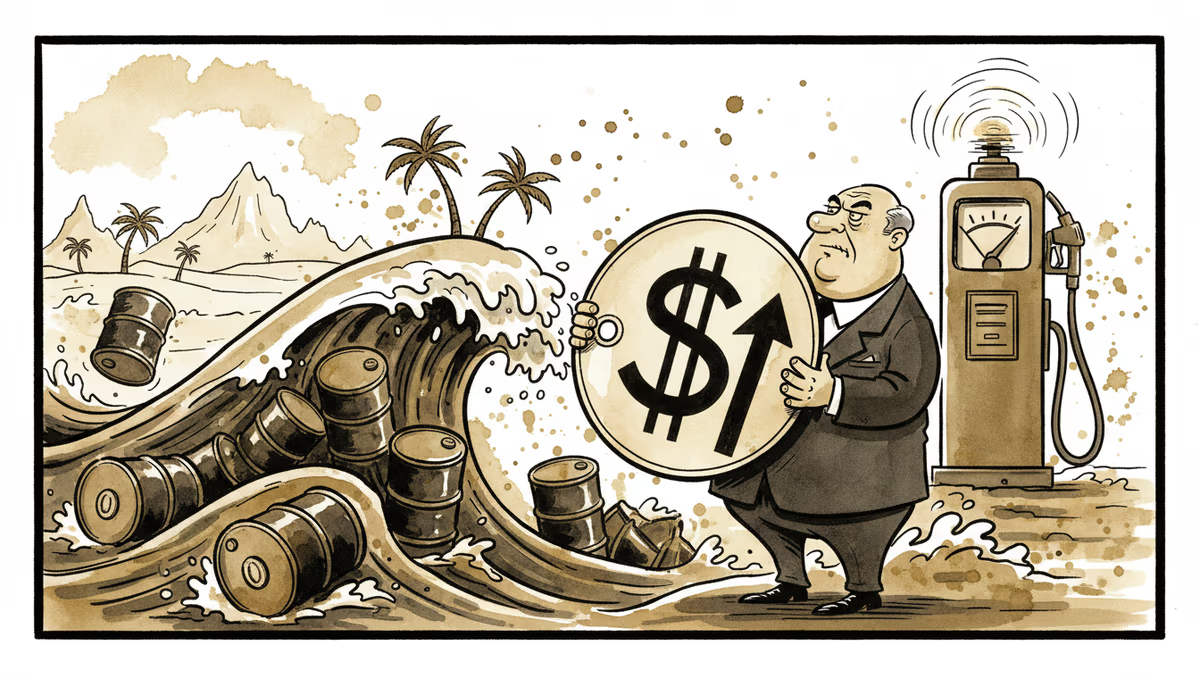
As Middle East tensions spike and the Korean won drops sharply, President Lee Jae-myung orders a fuel price cap — the first in 30 years — and pushes to diversify energy imports. What's really at stake?
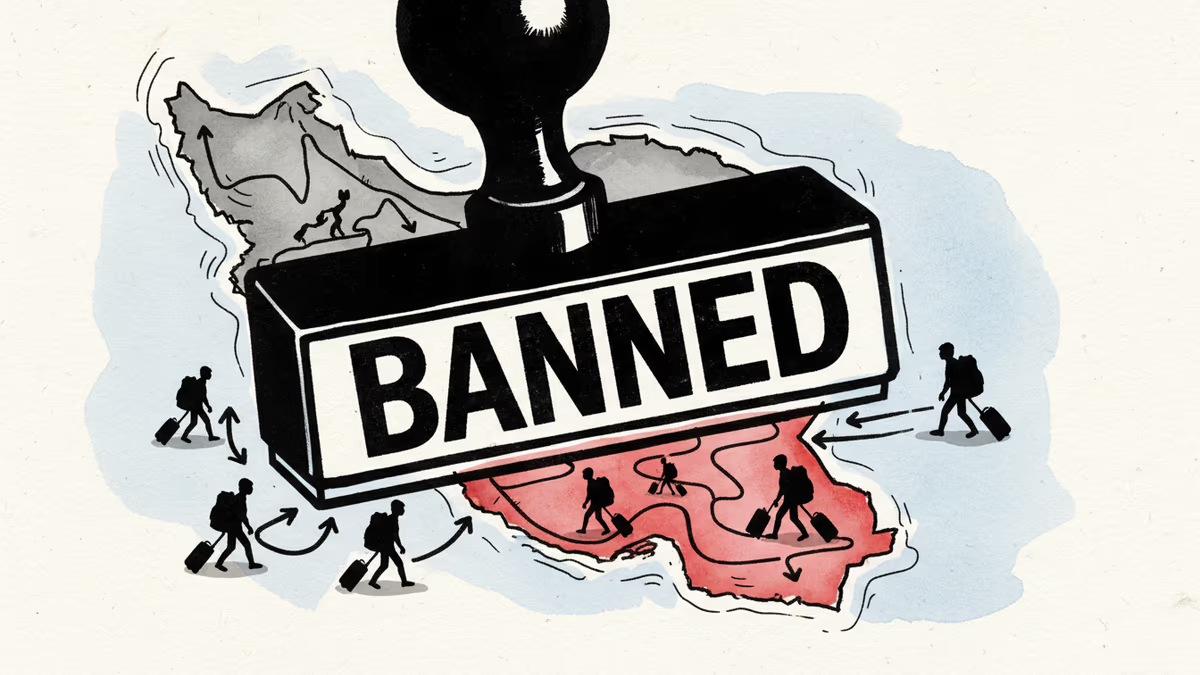
South Korea imposed a complete travel ban on Iran amid escalating Middle East conflict, warning citizens of legal consequences for unauthorized visits and urging immediate evacuation.
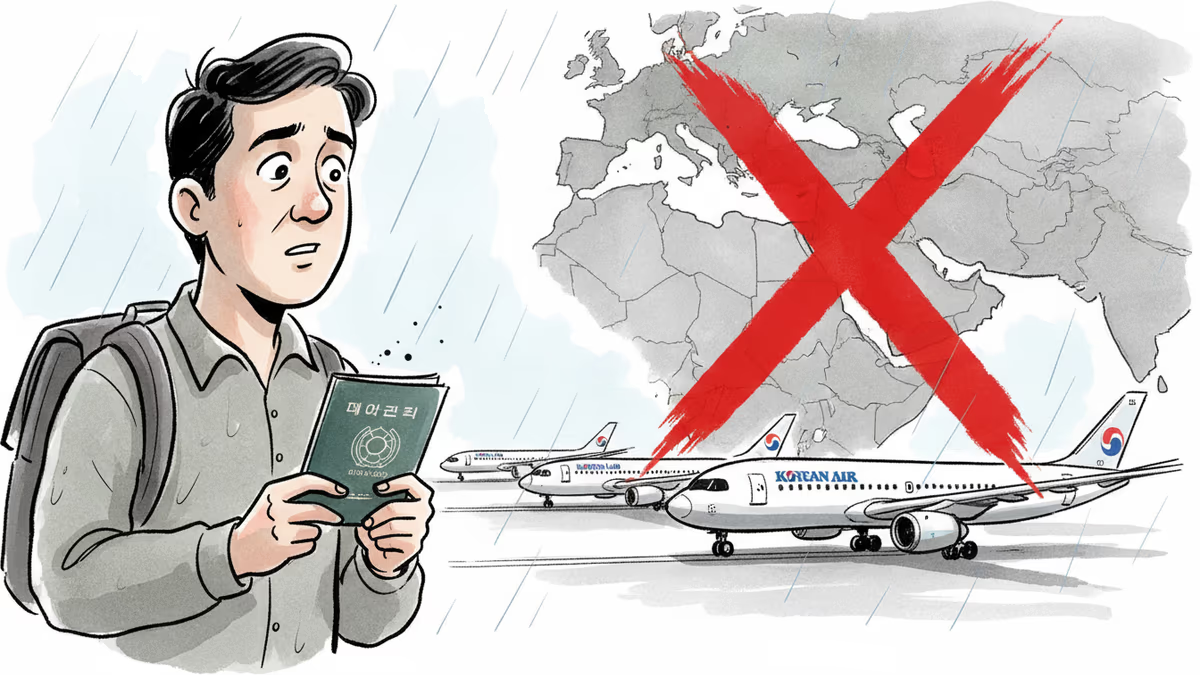
South Korea imposed a complete travel ban on Iran following US-Israeli strikes, as over 2,000 Korean nationals remain stranded across the Middle East amid escalating regional conflict.
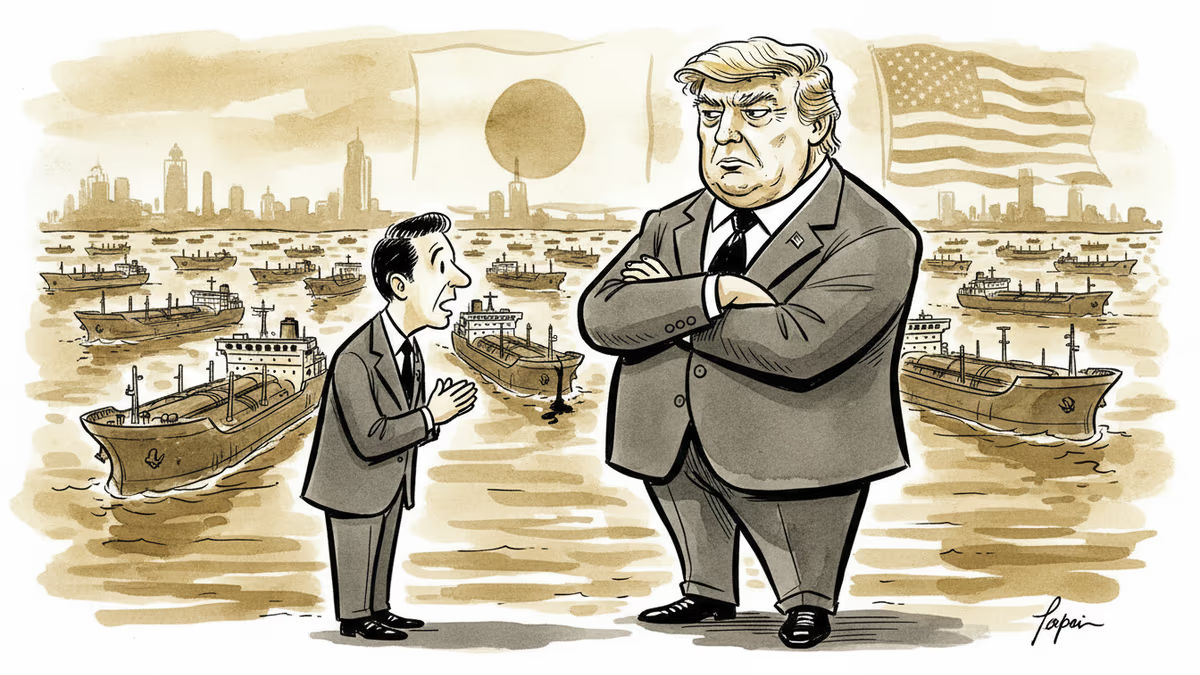
Japanese PM pledges frank discussions on Iran strikes, but faces economic crisis as Hormuz Strait closure threatens Japan's oil lifeline
As Middle East tensions spike and the Korean won drops sharply, President Lee Jae-myung orders a fuel price cap — the first in 30 years — and pushes to diversify energy imports. What's really at stake?
South Korea imposed a complete travel ban on Iran amid escalating Middle East conflict, warning citizens of legal consequences for unauthorized visits and urging immediate evacuation.
South Korea imposed a complete travel ban on Iran following US-Israeli strikes, as over 2,000 Korean nationals remain stranded across the Middle East amid escalating regional conflict.
Japanese PM pledges frank discussions on Iran strikes, but faces economic crisis as Hormuz Strait closure threatens Japan's oil lifeline
Thoughts
Share your thoughts on this article
Sign in to join the conversation