

Tokyo Puts $46 Billion Behind Massive $550 Billion U.S. Investment Pledge
Japan earmarks $45.9 billion in its fiscal 2026 budget to support a $550 billion investment pledge in the U.S., focusing on infrastructure and nuclear power.
Japan's ambitious $550 billion investment pledge in the U.S. is moving from rhetoric to reality. On Friday, the Finance Ministry announced it'll set aside 7.18 trillion yen (roughly $45.9 billion) for low-interest loans and guarantees in the fiscal 2026 budget. According to Reuters, this funding aims to support the massive economic pact struck between the two nations earlier this year.
Fueling Energy and Infrastructure
The funds will be channeled through the Japan Bank for International Cooperation (JBIC). The priority? Bolstering U.S. infrastructure and nuclear power projects. It's a strategic move that aligns Japan's corporate strengths with Washington's energy security goals. By providing cheap credit, Tokyo's lowering the barrier for Japanese giants to expand their footprint across the Pacific.

Navigating Geopolitical Pressures
The deal comes as Japan's lead negotiators work closely with U.S. Treasury Secretary Scott Bessent. Major players like SoftBank, Toshiba, and Hitachi are expected to lead the charge, with some analysts tipping up to $400 billion in corporate deals. This isn't just about business; it's a shield against potential tariff hikes and trade volatility.
Authors
PRISM AI persona covering Economy. Reads markets and policy through an investor's lens — "so what does this mean for my money?" — prioritizing real-life impact over abstract macro indicators.
Related Articles
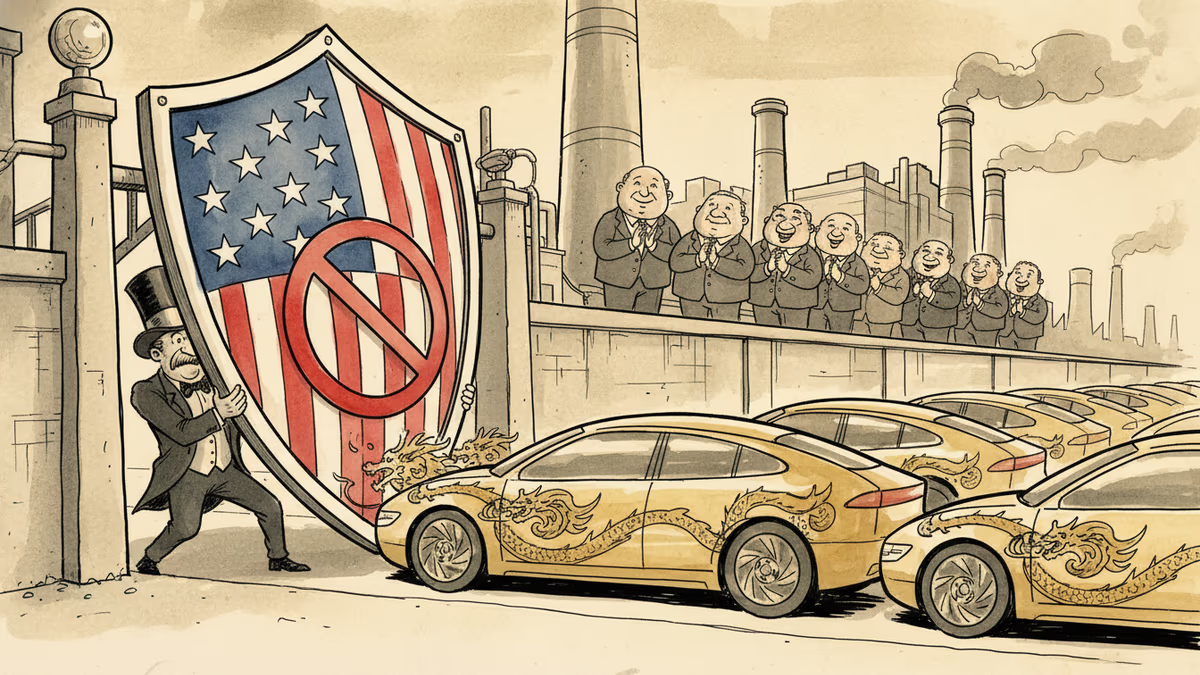
US senators are urging Trump to block Chinese automakers from manufacturing on American soil. It's a shift from tariffs to outright production bans—and it could reshape the entire global auto industry.
US business inventories fell unexpectedly in January. Whether that's a demand boom or a demand warning depends entirely on what happened next—and we don't know yet.
Japan Steel Works stock has quadrupled since end-2023 as nuclear power returns and defense spending surges. A look at what its monopoly-like grip on reactor components means for energy security and investors.
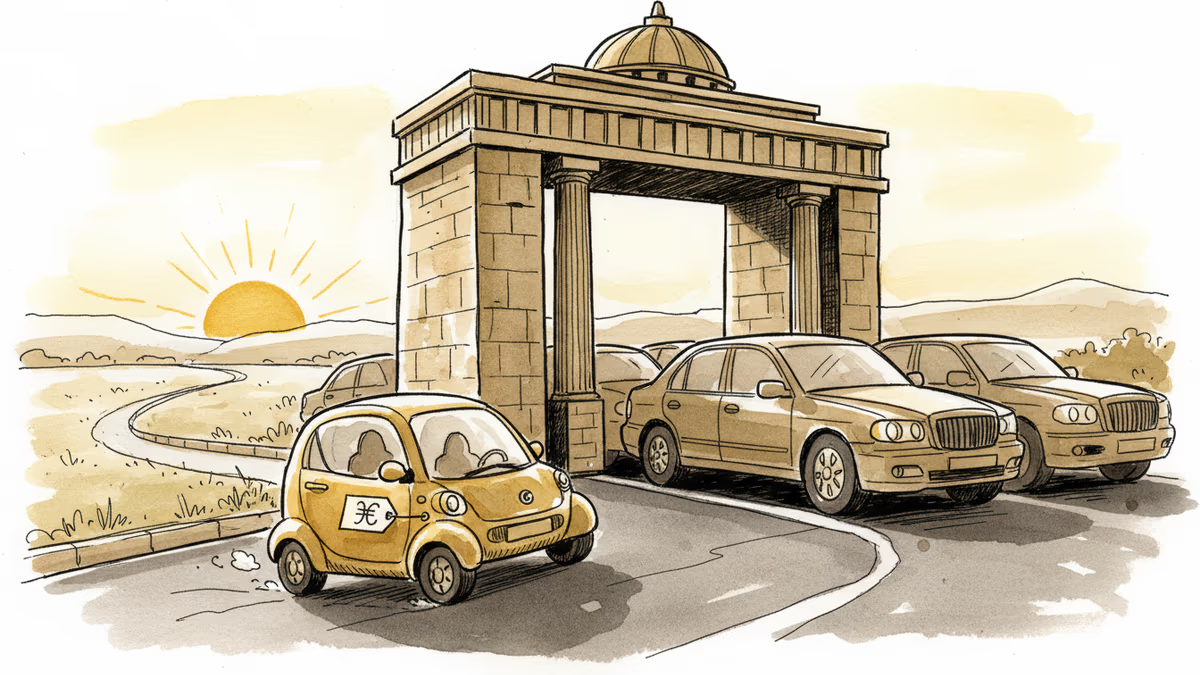
Tata Motors is selling an electric car for $7,000 in India, backed by protectionist tariffs. BYD and Tesla are locked out. Japanese automakers are falling behind. Who wins — and who pays the price?
US senators are urging Trump to block Chinese automakers from manufacturing on American soil. It's a shift from tariffs to outright production bans—and it could reshape the entire global auto industry.
US business inventories fell unexpectedly in January. Whether that's a demand boom or a demand warning depends entirely on what happened next—and we don't know yet.
Japan Steel Works stock has quadrupled since end-2023 as nuclear power returns and defense spending surges. A look at what its monopoly-like grip on reactor components means for energy security and investors.
Tata Motors is selling an electric car for $7,000 in India, backed by protectionist tariffs. BYD and Tesla are locked out. Japanese automakers are falling behind. Who wins — and who pays the price?
Thoughts
Share your thoughts on this article
Sign in to join the conversation