
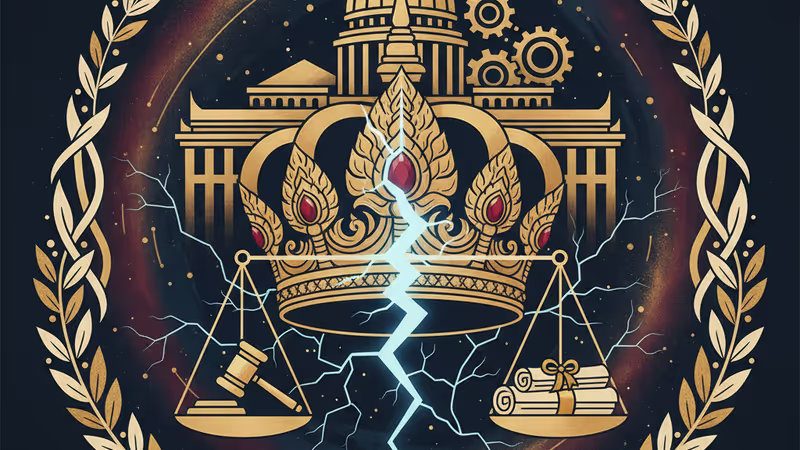
Cracks in the Kingdom: Why the World Is Dangerously Misreading Hun Sen's Cambodia
Hun Sen's decades-long grip on Cambodia is being tested by fractures within his own elite. But the international community is failing to see the shift, clinging to a flawed geopolitical playbook.
For years, Cambodia has been the definition of authoritarian stasis, immune to meaningful change. That assessment is starting to look dangerously out of date. While Hun Sen’s four-decade grip on power appears solid, incipient fractures within his own elite coalition are forming—yet the international response remains timid and miscalibrated.
Fractures From Within
This isn't about a popular revolt. The potential for change in Cambodia is emerging from a more familiar place in a one-party state: an intra-elite fracture. Hun Sen’s power has long derived from commanding the loyalty of venal powerbrokers. But his own choices this year—regional brinkmanship, embracing globally harmful cyber-scam economies, and a conflict he instigated and then lost—have imposed unprecedented costs on this coalition. Beneath the nationalist noise from Phnom Penh, there is likely growing dissatisfaction among the elites who matter: security figures, business magnates, and political actors.
The 2023 succession of his son, Hun Manet, was framed as a generational reset but proved to be mere choreography. Manet inherited a system built to monetize criminality and suppress dissent. His relative absence during the recent border crisis has only sharpened doubts about his competence and long-term viability as prime minister.
A Flawed International Playbook
As this true structural vulnerability emerges, the world is responding as if nothing has changed. Western policy, in particular, has long been subordinated to a single, flawed principle: that Cambodia can be pulled away from China. In service of this geopolitical fantasy, crucial issues like human rights abuses and criminal impunity became negotiable.
This strategy underestimates the regime's savvy at extracting concessions from competing powers without reorienting itself. It also ignores the profound influence of Cambodia’s illicit political economy—particularly its cyber-scam and trafficking industries—which bind elites and security forces together, blunting external pressure. The result has been a dramatic weakening of Western influence.
The institutional timidity of the U.N. has compounded the failure. The recent resignation of the U.N. special rapporteur for human rights in Cambodia, Vitit Muntarbhorn, shows how international accountability mechanisms collapse when they become politically inconvenient. This, coupled with recent U.S. funding cuts, has devastated what's left of Cambodian civil society.
This content is AI-generated based on source articles. While we strive for accuracy, errors may occur. We recommend verifying with the original source.
Related Articles
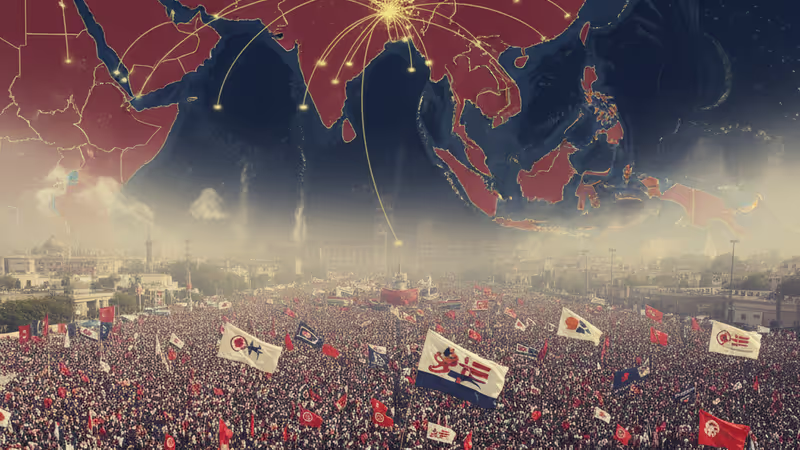
Bangladesh's main opposition party, the BNP, is preparing to welcome back its leader Tarique Rahman from a 17-year exile with a rally of up to 5 million supporters, a key event ahead of the February general election.
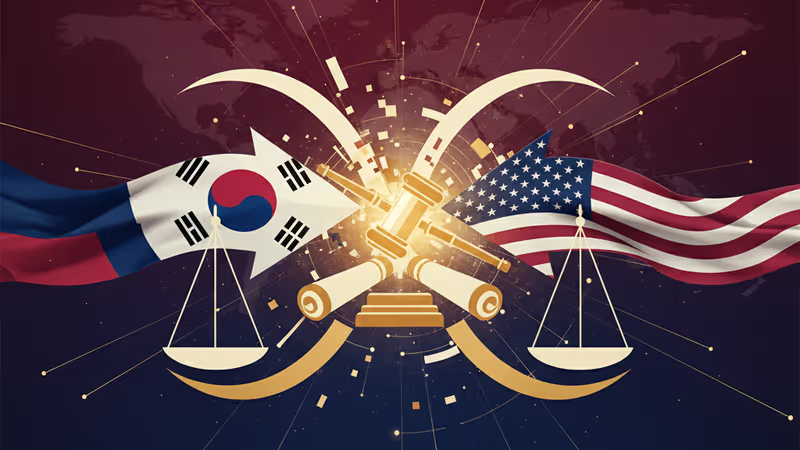
President Lee Jae-myung's backing of the Unification Ministry's role in North Korea policy is fueling a conflict between 'self-reliance' and 'pro-alliance' factions within Seoul, with major implications for the U.S. alliance amid growing U.S.-China tensions.

In 2025, Pakistan made a dramatic return to the world stage after military clashes with India, yet it remains plagued by deep-seated domestic political and economic turmoil. An analysis of the four turning points.

The British Empire is gone, but its legacy continues to shape 21st-century geopolitics and culture. An analysis of what 'Rule the Waves' means today.
Bangladesh's main opposition party, the BNP, is preparing to welcome back its leader Tarique Rahman from a 17-year exile with a rally of up to 5 million supporters, a key event ahead of the February general election.
President Lee Jae-myung's backing of the Unification Ministry's role in North Korea policy is fueling a conflict between 'self-reliance' and 'pro-alliance' factions within Seoul, with major implications for the U.S. alliance amid growing U.S.-China tensions.
In 2025, Pakistan made a dramatic return to the world stage after military clashes with India, yet it remains plagued by deep-seated domestic political and economic turmoil. An analysis of the four turning points.
The British Empire is gone, but its legacy continues to shape 21st-century geopolitics and culture. An analysis of what 'Rule the Waves' means today.